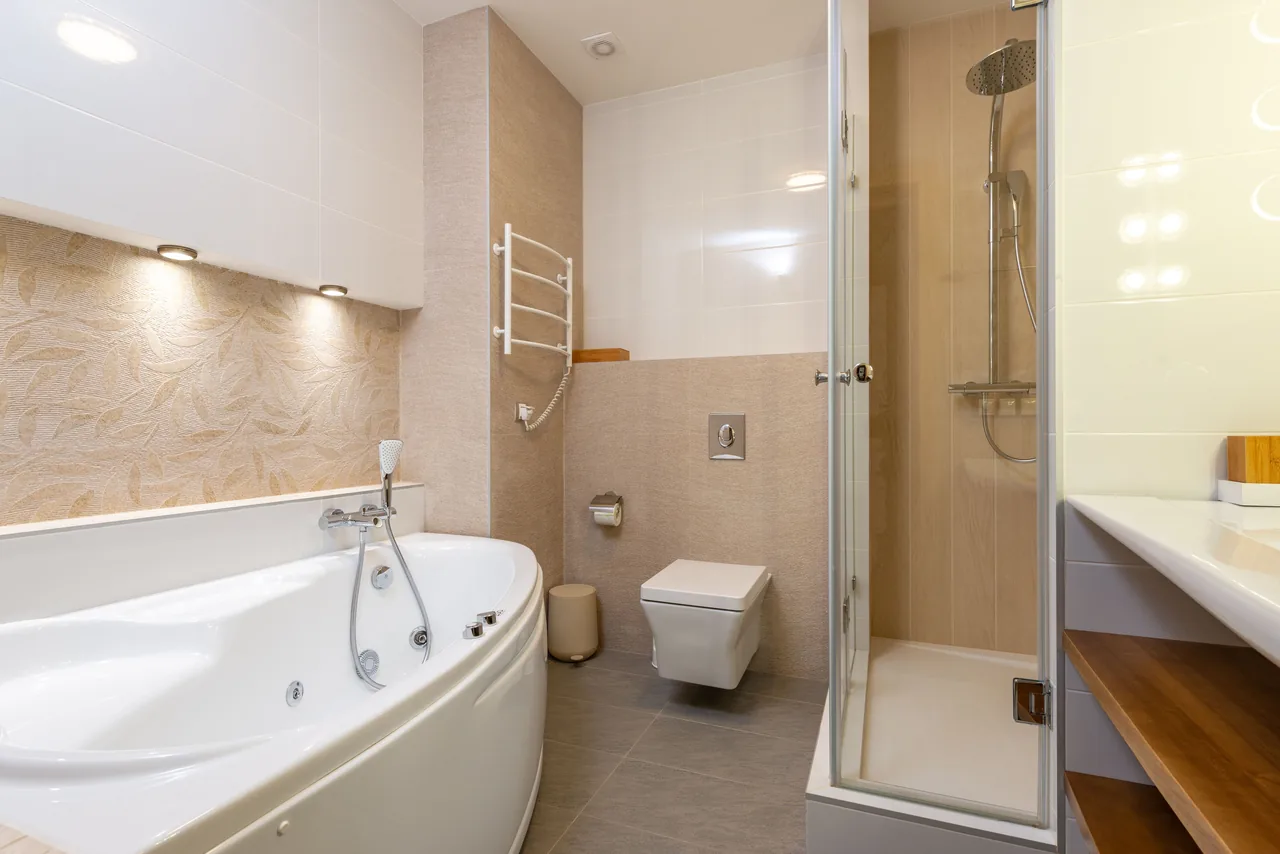
Tub-to-shower conversion in Florida means removing a bathtub you no longer use and rebuilding its alcove as a full tiled walk-in shower — a roomier, far safer space to bathe. It is the single most-requested aging-in-place upgrade in the state, because stepping over a tub wall is the leading fall risk in a home bathroom, and Florida's large retiree population wants to stay put. The conversion that lasts, though, is defined by what happens after the tub comes out: in a humid Florida bath, years of splash past a failing surround and a slow drain leak almost always leave hidden moisture and rot in the wall cavity behind the tub. We remove the tub, inspect and remediate that damage, install a bonded waterproof membrane across the entire new wet area, add a properly sized exhaust fan, and finish with slip-rated tile — rather than tiling a pretty new shower over old, wet framing. We quote with a free written estimate after an in-home visit, never a number sight unseen.
Watch
See Tub to Shower Conversion Done Right in Florida
What Is a Tub-to-Shower Conversion, and Why Is It So Popular in Florida?
A tub-to-shower conversion replaces a bathtub with a walk-in shower in the same footprint — pulling the tub and surround, rebuilding the walls and pan, and finishing with tile and glass. It is not a tub liner or a one-day acrylic insert; it is a proper rebuild of the wet area. Florida's climate and demographics make it the most common bathroom project the state's homeowners ask for.
- Safer entry — a low-threshold or curbless shower removes the high tub wall that causes most bathroom falls, the top aging-in-place concern
- More usable space — a shower in the tub footprint feels larger and is easier to clean than a cramped tub-shower combo
- Curbless or low-threshold — fully barrier-free for wheelchair access, or a small easy-step curb where slab work is impractical
- Re-waterproofed wet area — the entire alcove gets a new bonded membrane, not just a new surface over the old one
- Accessibility built in — a bench, grab-bar blocking, slip-rated tile, and a handheld shower at an accessible height
Tired of Climbing Over a Tub Wall?
Free in-home visit, a moisture check behind the tub, and an easy-entry shower plan matched to your bathroom — written estimate, no pressure.
The Hidden Damage Behind the Tub: Why Re-Waterproofing Is the Whole Job
The reason a Florida conversion must re-waterproof, not resurface, lives in the wall behind the tub. Old tub surrounds leak slowly at the corners and the drain, and in a humid climate that moisture sits in the cavity for years. A conversion that ignores it traps the problem behind the new tile.
- Inspect the open cavity — with the tub out, we check the framing, subfloor, and bottom plate for rot, slab moisture, and mold before anything is rebuilt
- Remediate before rebuild — any damaged framing is replaced and any mold is removed and the source corrected, not sealed back inside
- New bonded membrane — a continuous waterproof membrane across the new pan and walls, the layer the old tub surround never had
- Sloped, flood-tested pan — the shower pan is sloped to the drain and flood-tested watertight before tile
- Ventilation added — a shower generates more steam than a tub, so an exhaust fan sized to the room and ducted outside keeps the converted space mold-free
Why Florida Tub-to-Shower Conversions Are Different
Florida converts for safety on a wet slab in a humid climate. The state's aging-in-place demand drives the project, most bathrooms sit on slab-on-grade, and the humidity that hid the original damage will attack the new shower too unless it is built right. Coastal HVHZ rules also apply to any new glass.
- Hidden-moisture discovery is the norm, not the exception, because Florida humidity accelerates the rot behind aging tub surrounds
- Aging-in-place detailing — barrier-free or low-threshold entry, in-wall grab-bar blocking, a bench, and a handheld at an accessible height — for the state's retiree population
- Slab-on-grade shapes the pan: a curbless conversion usually means recessing the slab or building up the floor in the tub footprint
- Slip-rated floor tile (DCOF ≥ 0.42) and added ventilation to handle the extra steam a shower produces in humidity
- FBC-compliant waterproofing and slope, with HVHZ product-approved glass where coastal South Florida requires it
Brands & Systems We Build With
The waterproofing system carries the result, not the finish. Glass and fixtures are chosen for humidity and accessibility.
- Schluter KERDI pan & membrane
- Wedi shower & bench systems
- Laticrete HYDRO BAN waterproofing
- Infinity Drain / QuickDrain linear drains
- Daltile / MSI slip-rated porcelain
- DreamLine frameless shower glass
- Moen / Delta handheld & valve trim
- Panasonic / Broan humidistat exhaust fans
Will Your Conversion Uncover Hidden Damage First?
In an older Florida bathroom, it usually does. A tub that has been in place for decades almost always hides some moisture at the drain, the corners, or the bottom plate — the advantage of a true conversion is that we find and fix it before the new shower goes in.
We document and photograph any moisture or mold the moment the tub is out, remediate it, and fold the repair into the same crew and schedule — so the project does not stall waiting on a separate restoration contractor. Walk-In Shower Estimate →
Florida Building Code, HVHZ, and Permits for Conversions
A tub-to-shower conversion in Florida generally requires a permit, because it touches the drain, the wet-area assembly, and sometimes the slab — all governed by the Florida Building Code, which sets the slope-to-drain and waterproofing requirements. The tub drain is typically a different size than a shower drain, so the plumbing change alone often triggers the permit. If the conversion adds a glass enclosure in a coastal High-Velocity Hurricane Zone, that glazing carries product-approval requirements as well.
Our 6-Step Tub-to-Shower Conversion Process
- Free in-home consultation. We measure the tub alcove, discuss entry type and accessibility, and assess the existing waterproofing. You see tile, glass, and bench options. No commitment.
- Written estimate. Line-item breakdown — tub removal, any remediation, waterproofing, pan, tile, glass, fixtures, and timeline — delivered after the visit so you see exactly what you are paying for.
- Tub removal & moisture inspection. Remove the tub and surround, then inspect the open cavity for rot, slab moisture, and mold. Remediation handled before the rebuild begins.
- Pan, waterproofing & flood test. Build and slope the new pan, apply a bonded membrane across the pan and walls, then flood-test the pan watertight before tile.
- Tile, glass & fixtures. Slip-rated tile, the bench and niche, grab-bar blocking, frameless glass, and the valve and handheld trim. Daily cleanup, single point of contact.
Skip the One-Day Tub Liner Gamble
Fast reply. Hidden damage inspected. Whole wet area re-waterproofed. A true walk-in shower built to last, the first time.
How to Identify a Qualified Florida Conversion Contractor
The new tile matters less than what happens when the old tub comes out. A shower tiled over hidden rot will fail no matter how good it looks. Verify all of the following before signing anything:
- Moisture inspection when the tub comes out
- A qualified contractor inspects the open cavity for rot, slab moisture, and mold before rebuilding. A "tub-out, shower-in" quote with no inspection step seals the existing damage inside the new shower.
- Full re-waterproofing, not resurfacing
- The entire wet area should get a new bonded membrane. Beware liner or acrylic-overlay pitches that put a new surface over the old, leaking assembly — that is not a real conversion.
- Pan flood-tested before tile
- The new shower pan should be flood-tested watertight before any tile. Skipping the test means a pan leak is found only after the shower is finished.
- Slip-rated tile and grab-bar blocking
- An aging-in-place conversion needs slip-resistant floor tile (DCOF ≥ 0.42) and solid in-wall blocking for grab bars. Bars screwed into tile later will not hold weight. Confirm both are in the scope.
- Written line-item estimate after a site visit
- A reputable contractor measures the alcove, assesses condition, and itemizes removal, remediation, waterproofing, tile, and labor. A phone quote with no inspection is a red flag.
Florida Tub-to-Shower Conversion Case Study
Our Installation Standards
Every Pro Work tub-to-shower conversion meets these installation standards:
- Florida Building Code compliance
- Drain, slope-to-drain, and wet-area waterproofing built to FBC requirements, with HVHZ product-approved glass where coastal South Florida requires it.
- Hidden-damage inspection
- The open cavity behind the removed tub is inspected for moisture, rot, and mold before rebuild — the step that turns a conversion into a permanent fix instead of a cover-up.
Why Florida Homeowners Choose Pro Work for Tub-to-Shower Conversions
Most one-day conversion outfits resurface the alcove and move on. We treat the wall behind the tub as the real project. The same crew that designs your easy-entry shower also inspects the open cavity, remediates the damage, re-waterproofs the wet area, and flood-tests the pan — so the safer shower you paid for is dry behind the tile.
- A real rebuild, not a liner. We re-waterproof the whole wet area instead of surfacing over the old, leaking one.
- Hidden damage found and fixed. Florida humidity hides rot behind old tubs — we inspect and remediate before rebuilding.
- Built for aging-in-place. Low-threshold or curbless entry, a bench, grab-bar blocking, and slip-rated tile.
- Free in-home estimate. On-site measurement, moisture assessment, line-item breakdown, no high-pressure sales tactic.
- One crew, tub-out to glass. Removal, remediation, waterproofing, tile, and glass under one schedule — no bouncing between contractors.
Related Bathroom Work We Coordinate
A conversion is often the first step in a larger aging-in-place update. We hold it all under one crew so the room comes together re-waterproofed, accessible, and finished:
- Walk-In Shower Installation — curbless and linear-drain showers built into the tub footprint.
- Accessible Bathroom Remodel — full aging-in-place detailing around the new shower.
- Shower Door Installation — frameless glass panels sealed for humidity.
- Shower Tile Installation — slip-rated tile over the new bonded membrane with proper movement joints.