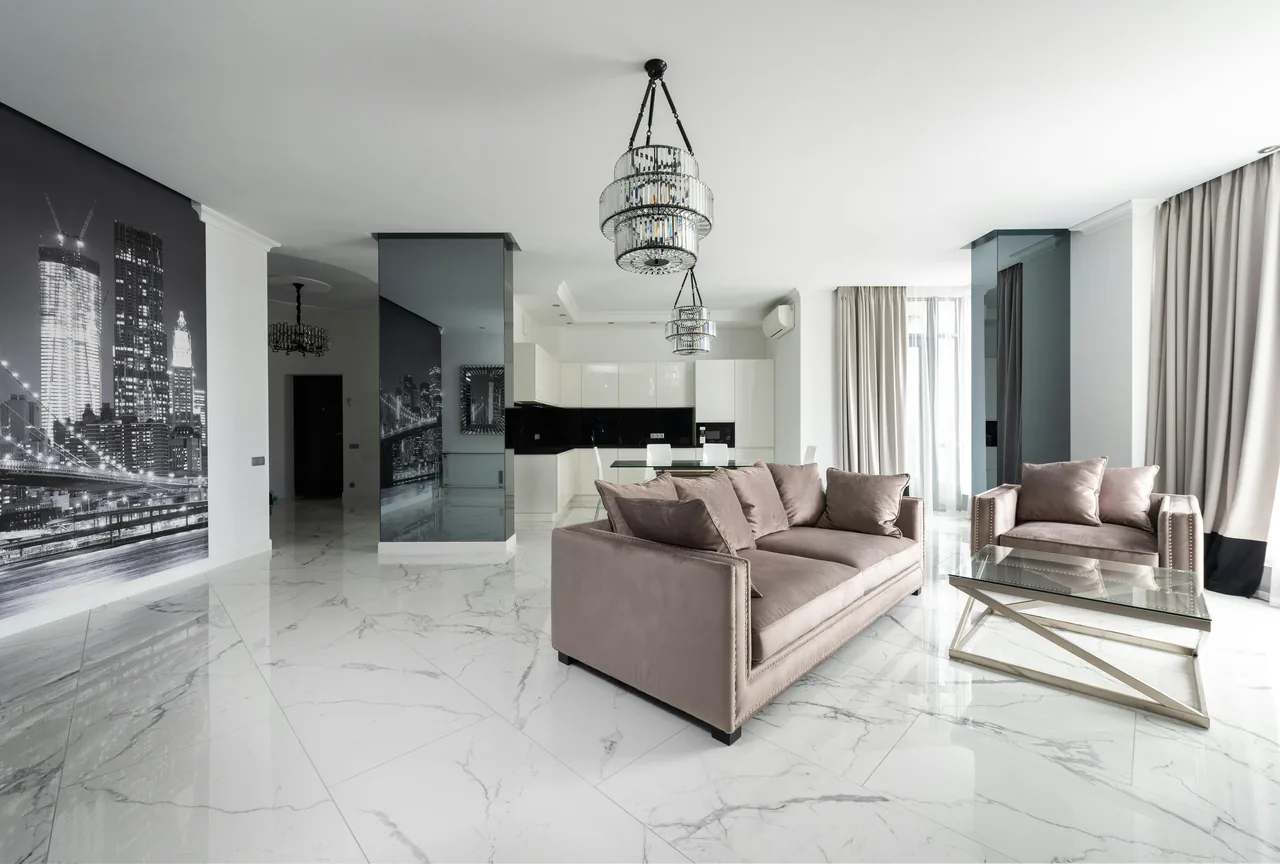
Porcelain tile installation in Florida means setting the densest, lowest-absorption tile made — and it is the material most often specified for Florida wet areas, floors, and flood recovery for good reason. By definition, true porcelain absorbs 0.5% water or less (the ANSI/TCNA threshold), which is what makes it stain-resistant, mold-resistant, and flood-recoverable: it survives standing water from a hurricane or slab leak and dries out instead of swelling. Up north, freeze-thaw drives the absorption spec; in Florida it is irrelevant, so the absorption number is really about stain and moisture control in a humid, flood-prone state. The catch is that a lot of big-box "porcelain" is actually higher-absorption ceramic, so we verify the real spec. Then we test the slab, set the porcelain over an uncoupling membrane to handle slab movement, and match the PEI and wet-slip DCOF ratings to the room, all to TCNA
Watch
See Porcelain Tile Installation Done Right in Florida
What Is Porcelain Tile, and Why Is It the Florida Workhorse?
Porcelain tile is a denser, harder, lower-absorption member of the ceramic family, fired hotter and pressed tighter so it takes on less than 0.5% water. That single property is why it dominates Florida installs: it resists the moisture, staining, and standing water that punish lesser tile in this climate.
- ≤ 0.5% water absorption — the ANSI/TCNA definition of true porcelain, and the spec that makes it stain- and moisture-resistant
- Flood-recoverable — survives standing water and dries out; after a Florida flood, porcelain often cleans up where other materials are scrapped
- Through-body and glazed options — through-body porcelain hides chips; glazed porcelain offers more color and pattern
- High PEI for floors — PEI 4–5 porcelain handles sand, traffic, and furniture
- DCOF-rated for wet areas — textured porcelain hits the 0.42 wet-slip benchmark for Florida bathrooms, entries, and lanais
Want to Be Sure It's Actually Porcelain?
Free in-home visit, slab assessment, and verification of true porcelain matched to your application — written estimate, no pressure.
Porcelain and Florida Flood Recovery
When a Florida ground floor floods, the floor material decides whether you mop up or tear out. Hurricanes, storm surge, and slab leaks put standing water on ground-floor tile across much of the state — and porcelain is one of the few finishes that survives it. Its low absorption means it does not swell, delaminate, or harbor mold from a wet event.
- Survives standing water — the tile body is nearly impervious, so a flood event sits on top and dries off
- Cleans and disinfects — non-porous porcelain wipes down and sanitizes after floodwater, unlike carpet, laminate, or porous stone
- Often re-usable — if the substrate is sound, porcelain frequently comes through a flood intact while the subfloor is dried
- Pairs with waterproof rebuilds — we reinstall porcelain as part of a flood-resistant assembly so the next storm is a cleanup, not a teardown
Why Florida Porcelain Installs Are Different
The tile is built for Florida; the install still has to be. Porcelain handles the climate, but a Florida slab moves, and coastal South Florida adds HVHZ and wind-load rules to the larger projects porcelain is part of.
- Slab moisture and movement evaluated before setting — even moisture-tolerant porcelain needs an uncoupling membrane so slab shift does not crack it
- Hard, dense porcelain demands the right blade, thinset, and technique — it is less forgiving to cut and set than soft ceramic
- Wet-slip DCOF selected for Florida bathrooms, entries, pool decks, and lanais where water lands
- Large-format porcelain leveled to a flat substrate to avoid lippage, common on Florida open floor plans
- HVHZ and wind-load-aware material selection for coastal and South Florida projects where the surrounding assembly requires it
Porcelain Brands & Setting Systems We Install
We verify true porcelain and back it with engineered membrane and setting systems.
- Daltile porcelain floor & wall
- Florida Tile Florida-distributed porcelain
- MSI Everlife & large-format porcelain
- Marazzi / Emser through-body & glazed
- Schluter Ditra uncoupling membrane
- Laticrete large-format mortar & grout
- Mapei Ultraflex porcelain mortar
- Bostik epoxy & pre-mixed grout
Slab Testing and Membrane: What Porcelain Needs Underneath
Porcelain's low absorption protects the tile, not the assembly. The Florida slab beneath still moves and can read high on moisture, so we test it and isolate the tile from movement before setting. A flat, sound, uncoupled substrate is what lets a porcelain floor reach its full lifespan instead of cracking along a slab crack.
We bundle slab assessment, leveling, and the uncoupling membrane into the same crew and schedule as the porcelain install — test, level, membrane, set — so the floor is built right from the slab up. Floor Tile Estimate →
Florida Building Code, HVHZ, and Permits for Porcelain Tile
A like-for-like porcelain floor or wall install over a sound substrate usually does not require a permit, because it is a finish rather than a structural change. The picture changes when porcelain is part of a wet-area waterproofing assembly, a structural change, or a coastal project where High-Velocity Hurricane Zone and wind-load requirements apply — in Miami-Dade, Broward, and other coastal South Florida jurisdictions certain assemblies and materials carry product-approval requirements under the Florida Building Code.
Our 6-Step Porcelain Tile Process
Every Pro Work porcelain project follows the same six-step framework — built for a flat, isolated, flood-recoverable result on a Florida slab.
- Free in-home consultation. We measure, verify true porcelain, check the slab and substrate, and assess wet-slip needs. You see porcelain, PEI, and DCOF options matched to your application. No commitment.
- Written estimate. Line-item breakdown — porcelain, membrane, slab prep, setting labor, grout, and timeline. Delivered after the visit so you see exactly what you are paying for.
- Slab test & prep. Moisture and flatness check, then grinding, patching, or self-leveling so the slab meets porcelain's flatness spec. The step that prevents lippage and hollow tile.
- Uncoupling membrane. A bonded anti-fracture membrane over the prepped slab — the layer that isolates the porcelain from seasonal Florida slab movement.
- Porcelain setting. Full-coverage porcelain mortar, the right blade and technique for dense tile, and TCNA movement joints. Daily cleanup, single point of contact.
Get Real Porcelain, Set the Florida Way
Fast reply. Slab-tested and uncoupled. Porcelain done right, the first time.
How to Identify a Qualified Florida Porcelain Installer
Dense porcelain is unforgiving — wrong blade, wrong mortar, or an un-isolated slab and the result shows. Verify all of the following before signing anything:
- Verifies true porcelain (≤ 0.5% absorption)
- A qualified installer confirms the tile is real porcelain, not higher-absorption ceramic sold as porcelain. The absorption spec is what delivers the stain and moisture resistance you are paying for.
- Uncoupling membrane over the slab
- Porcelain is rigid; the slab moves. A bonded membrane isolates the tile from slab movement. Setting porcelain straight to a Florida slab invites cracks.
- Correct mortar and blade for dense porcelain
- Porcelain needs a porcelain-rated mortar and a sharp blade. An installer using standard ceramic thinset and a worn blade will get weak bonds and chipped edges.
- Slab flatness corrected for large-format
- Large-format porcelain telegraphs every dip as lippage. A reputable installer levels to the flatness the tile demands. Confirm leveling is in the scope.
- Wet-slip DCOF for wet areas
- Smooth porcelain is slick when wet. For Florida bathrooms, entries, and pool decks, a DCOF-rated textured porcelain is the safe choice. Confirm slip rating is considered.
Florida Porcelain Tile Case Study
Our Installation Standards
Every Pro Work porcelain project meets these installation standards:
- Florida Building Code compliance
- Installed to FBC requirements where wet-area or coastal assemblies apply, with HVHZ product-approved materials where coastal South Florida requires them.
- Slab-tested, uncoupled installation
- Slab moisture and flatness tested, with an uncoupling membrane before any porcelain — the steps that prevent the cracking and lippage Florida slabs are known for.
Why Florida Homeowners Choose Pro Work for Porcelain Tile
Most crews set whatever is in the box. We verify the porcelain and treat the Florida slab as the project. The same installer who confirms the absorption spec also tests the slab, isolates it, and sets dense porcelain with the right tools — so you get the stain-resistant, flood-recoverable floor porcelain is supposed to be.
- True porcelain, verified. We confirm the ≤ 0.5% absorption spec, not big-box "porcelain" that is really ceramic.
- Slab-tested and uncoupled. Moisture check plus an uncoupling membrane so the rigid porcelain does not crack on a moving slab.
- Free in-home estimate. On-site measurement, slab and slip check, line-item breakdown, no high-pressure sales tactic.
- One crew, prep to grout. Test, level, membrane, set, and grout under one schedule — no bouncing between contractors.
Related Tile Work We Coordinate
A porcelain project in Florida often pairs with prep and adjacent tile work. We hold it all under one crew so the porcelain goes down flat, isolated, and finished:
- Floor Tile — porcelain floors set over an uncoupling membrane on the slab.
- Bathroom Tile — porcelain floors and walls in waterproofed Florida bathrooms.
- Ceramic Tile — cost-effective ceramic where the application allows, matched to porcelain.
- Grout Sealing — sealing cement grout to resist Florida moisture and staining.