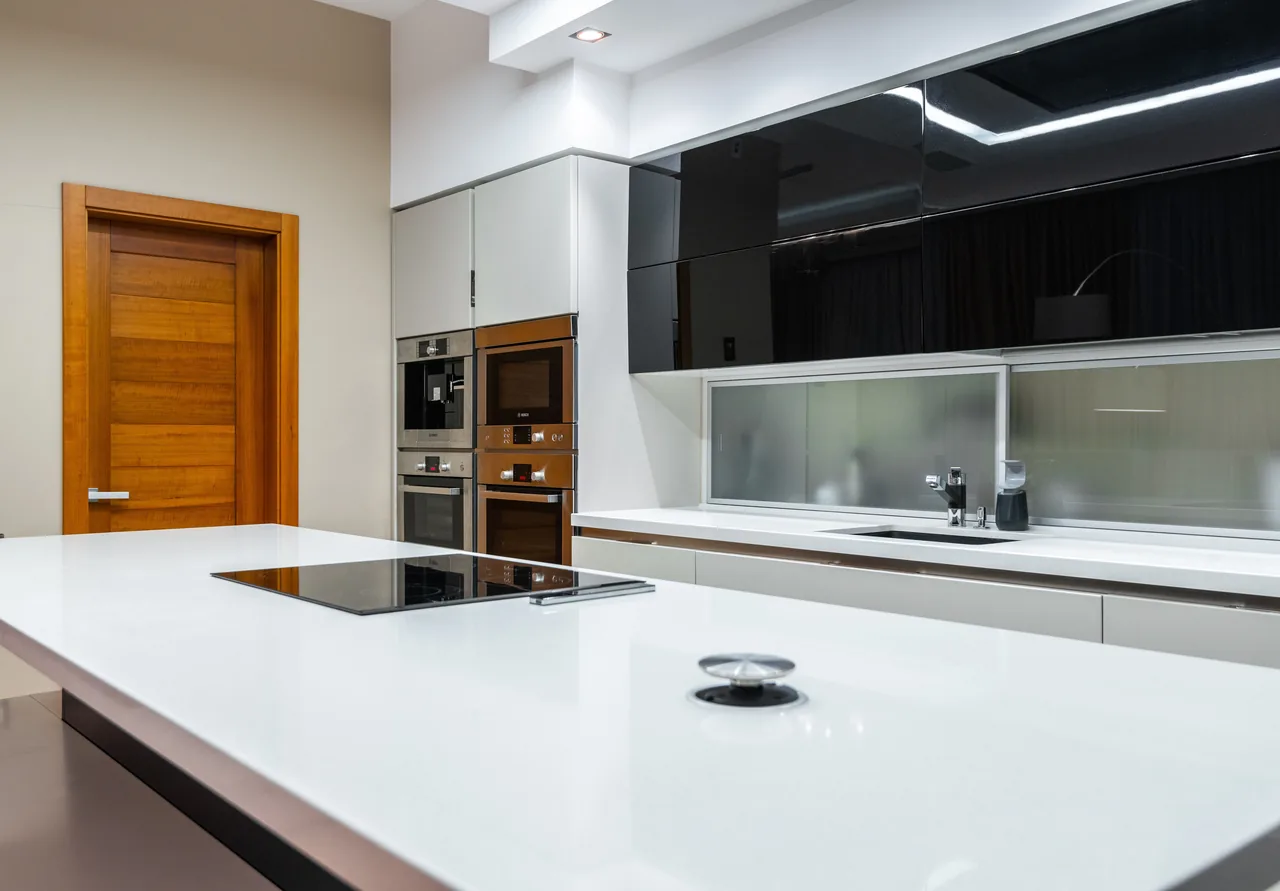
Kitchen island installation in Florida adds a freestanding work surface — with prep space, storage, seating, and sometimes a sink or cooktop — to the center of the kitchen. An island is the most-wanted kitchen upgrade and the one most likely to go wrong, because it lives or dies on clearance and the work triangle. Drop a box in the middle of the room without checking the walkway and you choke traffic, block appliance doors, and break the path between sink, cooktop, and refrigerator. Add the electrical and plumbing most islands now carry — GFCI outlets at minimum, often a sink drain or a cooktop circuit — routed through a Florida slab-on-grade to FBC, and the install is real construction. We confirm the clearances, route the services to code, and fabricate the island top to match your existing counters — then deliver a free written estimate after an in-home visit.
Watch
See Kitchen Island Installation Done Right in Florida
What a Kitchen Island Installation Includes in Florida
A kitchen island is a small building project in the middle of the room. Done right, it combines cabinetry, a counter, electrical, sometimes plumbing, and seating into one anchored unit.
- Island cabinetry — a base of cabinets or drawers in moisture-tolerant boxes, anchored to the slab so the island does not shift
- Countertop — a non-porous quartz, porcelain, or granite top fabricated to match or complement your perimeter counters
- Electrical — GFCI-protected outlets, and a dedicated circuit where the island carries a cooktop or appliance, routed through the slab to code
- Plumbing — where the island holds a prep or main sink, supply and drain lines run through the slab and vented to code
- Seating overhang — a counter overhang and supports sized for stools, turning the island into a breakfast bar
- Ventilation — where a cooktop sits in the island, a ducted downdraft or island hood to pull cooking moisture out

Will an Island Fit Your Kitchen?
Free in-home visit, a clearance and work-triangle check, and an island plan with matched countertop — written estimate, no pressure.
Clearance and the Work Triangle: Whether an Island Fits
The first question is not what the island looks like — it is whether your kitchen has room for one. An island needs walkway clearance on all sides so traffic flows and appliance and cabinet doors open. Crowd it and the island that was supposed to make the kitchen better makes it unusable. The island also has to respect the work triangle rather than block the path between sink, cooktop, and refrigerator.
- Walkway on every side — enough aisle around the island for a person to pass and for doors and dishwasher to open fully
- Triangle preserved — the island should sit inside or beside the triangle, not split it, so the cook is not walking around it constantly
- Door and drawer swings — perimeter cabinet doors, the oven, and the dishwasher all need to clear the island
- Seating side kept clear — stools need knee room and a path behind them when someone is seated
We measure the room and map the clearances on the in-home visit, and if a full island will not fit, we will tell you — a peninsula or a smaller island often delivers the prep and storage without choking the space.
Why Florida Island Installs Are Different
Running power and plumbing to a center island means working through a Florida slab. Unlike a wood-floor home where services run in the joist space below, a Florida slab-on-grade kitchen requires the electrical and plumbing to be routed through or trenched into the concrete — code-governed work that also has to respect moisture.
- Electrical and plumbing runs cut into or routed through the slab to reach a center island, then patched, with the floor restored over the top
- GFCI protection required for island outlets, and a dedicated circuit where a cooktop or appliance lives in the island
- Plumbing for an island sink supplied, drained, and vented to FBC, with leak-tight connections to protect the cabinets from Florida moisture
- Waterproof flooring restored continuously around and under the island after the slab work, over a moisture check
- Coastal High-Velocity Hurricane Zone areas may add product-approval requirements on certain electrical and mechanical components
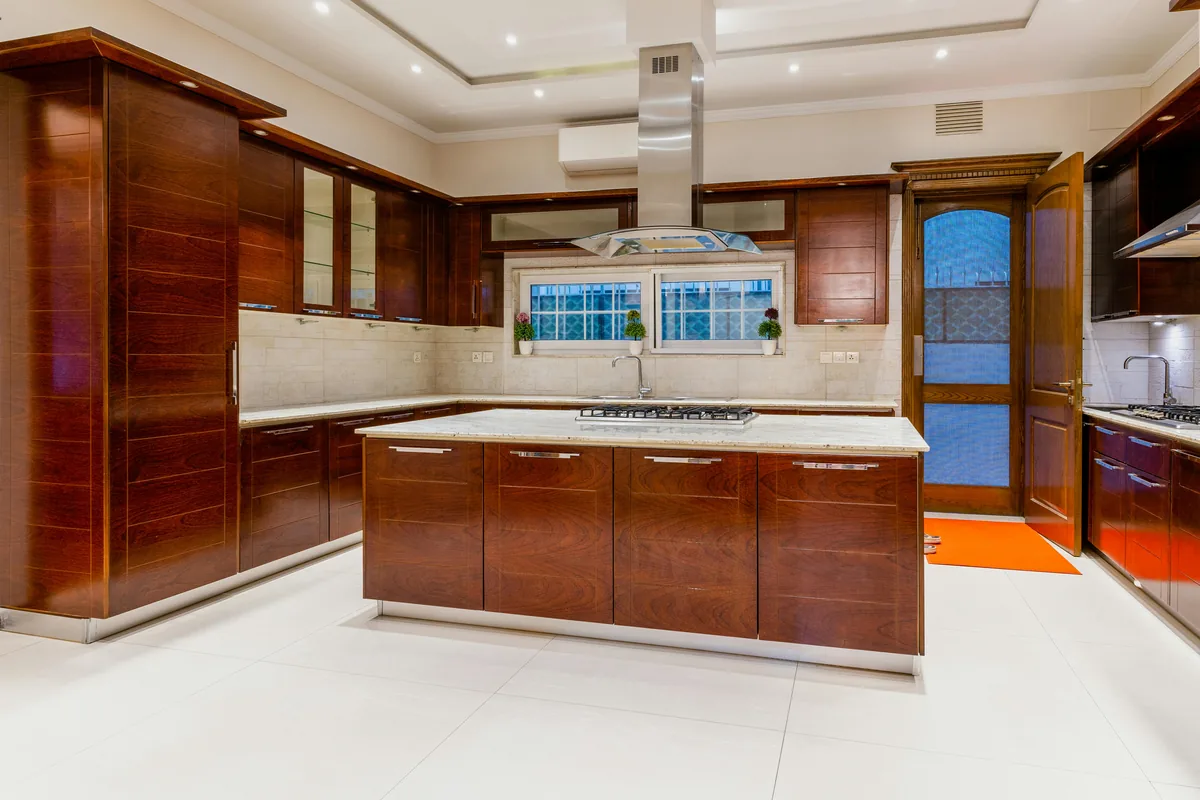
Materials We Build Kitchen Islands With
An island top takes heavy use, so surface durability and a solid anchored base matter more than the brand.
- KraftMaid / Wellborn island cabinetry
- Cambria / Silestone quartz island tops
- MSI / Daltile porcelain & granite slabs
- Kohler / Moen island prep sinks & faucets
- Broan / Zephyr island & downdraft ventilation
- Leviton GFCI outlets & pop-ups
- Shaw / COREtec waterproof flooring restoration
- Mapei / Schluter waterproofing & transitions
Will Your Island Need a Permit?
An island that is purely cabinetry and a countertop — no power, no plumbing — usually does not require a permit. The moment the island carries electrical or plumbing, that work is permitted and inspected under the Florida Building Code. Adding GFCI outlets, a dedicated cooktop circuit, or a sink with supply and drain all trigger that path, and the slab work has to be done correctly so the floor can be restored over it.
We tell you on the estimate whether your island needs a permit, pull it where it does, and coordinate the licensed electrical and plumbing trades the code requires. Kitchen Countertop Installation →
Florida Building Code, GFCI, and Island Permits
The Florida Building Code governs the services in the island, not the cabinetry. Island receptacles require GFCI protection, an island cooktop or appliance needs a properly sized dedicated circuit, and a sink needs supply, drain, and venting to code — all permitted and inspected work. In coastal High-Velocity Hurricane Zone jurisdictions, certain components carry additional product-approval requirements.
We design the island's services to the FBC, pull the permit where required, and pass the inspections — so the island is safe, legal, and protected, and the floor goes back down clean over the slab work.
Our 6-Step Kitchen Island Process
Every Pro Work island install follows the same six-step framework — clearances first, services to code, then a solid, matched build.
- Free in-home consultation. We measure, check clearances and the work triangle, and review island size, features, and countertop options. No commitment.
- Written estimate & plan. Line-item breakdown — cabinetry, countertop, electrical, any plumbing, ventilation, flooring restoration, permits, and timeline — delivered after the visit.
- Permit & slab routing. Where the island carries services, we pull the FBC permit and route power and plumbing through the slab to code.
- Cabinet set & anchor. The island base is set, leveled, and anchored to the slab so it cannot shift or rock.
- Countertop & finish. The top is templated to the installed base and the perimeter counters, fabricated, installed, and the waterproof floor restored around the island.
An Island That Works, Not Just Looks Good
Fast reply. Clearances checked. Power and plumbing to code. Countertop matched. Done right, the first time.
How to Identify a Qualified Florida Island Installer
An island looks simple and is not — the slab work and the clearances separate a good install from a regret. Verify all of the following before signing anything:
- Clearance and triangle check before design
- A qualified installer measures the room and confirms the island fits with full walkway clearance before designing it. If a contractor sizes the island without checking the aisle, the result can choke the kitchen.
- Code-correct slab routing for services
- Running power or plumbing to a center island on a Florida slab is permitted work that has to be done right. Confirm the installer routes services to the Florida Building Code and restores the floor properly.
- GFCI and dedicated-circuit handling
- Island outlets require GFCI protection, and a cooktop or appliance needs a dedicated circuit. A reputable installer designs the electrical to code and pulls the permit.
- Solid anchoring to the slab
- An island must be anchored so it does not rock or shift. Ask how the base is secured — a freestanding island that moves is a sign of a rushed install.
- Countertop matched to the kitchen
- The island top should coordinate with the perimeter counters and be templated to the installed base. A good installer fabricates the top to fit, not from a guess.
Florida Kitchen Island Case Study
Our Installation Standards
Every Pro Work kitchen island install meets these installation standards:
- Florida Building Code compliance
- Island electrical and plumbing built to FBC requirements with GFCI protection, and HVHZ product-approved components where coastal South Florida requires them.
- Leak-tight & moisture detailing
- Slab routing patched, plumbing connections leak-tested, and waterproof flooring restored — the details that protect a Florida island base from moisture.
Why Florida Homeowners Choose Pro Work for Islands
An island is a deceptively involved project, and we treat it like one. The same crew that checks your clearances also routes the slab services to code, anchors the base, and fabricates a matched top — all on one schedule.
- Clearances checked first. We confirm the island fits with full walkway clearance before we design it.
- Slab services to code. Power and plumbing routed through the concrete to the FBC, then the floor restored.
- GFCI and dedicated circuits. Electrical designed and permitted correctly for outlets, cooktops, and appliances.
- Matched countertop. Island top fabricated to coordinate with your perimeter counters.
- Free in-home estimate. On-site measurement, clearance and triangle check, line-item breakdown, no high-pressure sales tactic.
Related Kitchen Work We Coordinate
An island ties into counters, cabinets, and flooring. Each has its own detailed page, and we build them all under one project and one schedule:
- Kitchen Countertop Installation — the island top fabricated to match your perimeter counters in one go.
- Custom Cabinet Installation — island base cabinets that match the rest of the kitchen.
- Open-Concept Conversion — an island to anchor the open layout after a wall comes down.
- Kitchen Flooring Installation — waterproof flooring restored continuously around the new island.