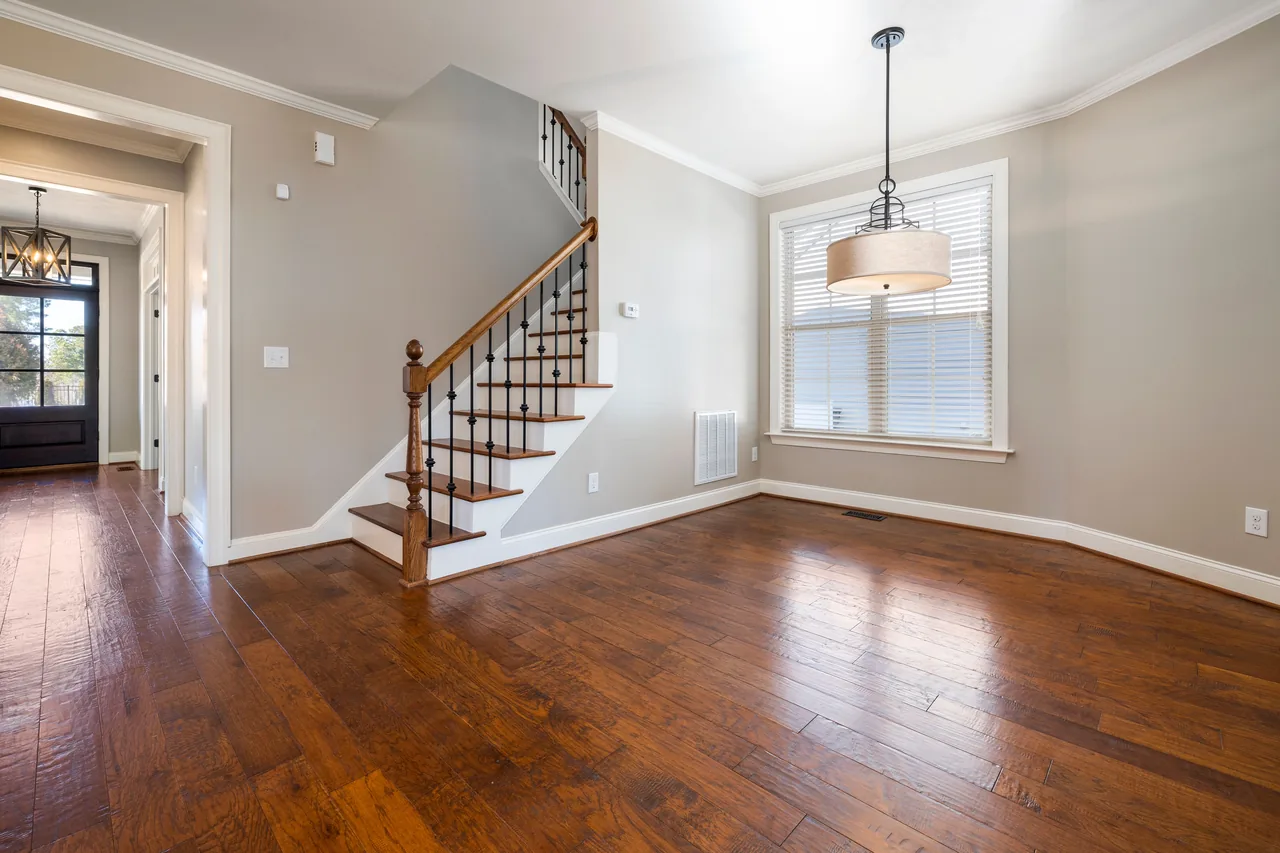
Crown molding installation in Florida is a material problem before it is a style problem. The profile you choose is the easy part; the decision that actually determines whether the line stays crisp is the material, because Florida humidity makes solid wood crown swell, gap at the joints, and even rot in moisture-prone rooms. The answer most Florida homes want is lightweight polyurethane — a detailed, paint-ready molding that does not absorb moisture, resists insects, and installs cleanly and fast, especially on the high ceilings common here. Beyond the material, a crown that looks built-in comes down to joinery and finishing: coped inside corners that stay tight, runs glued and fastened to framing, and every line caulked, filled, and painted. We match the material to each room's humidity and install to a furniture-grade finish.
Watch
See Crown Molding Installation Done Right in Florida
What Crown Molding Installation Covers, and Why Material Comes First in Florida
Crown molding is the trim that wraps the joint where the wall meets the ceiling, and a good installation is equal parts the right material and clean joinery. In Florida, the material decision comes first because humidity punishes the wrong one. Here is what a complete crown installation involves.
- Material selection — polyurethane, MDF, or solid wood chosen by room and moisture exposure
- Profile scaling — a profile sized to the ceiling height so it looks proportioned, not lost or overbearing
- Corner joinery — inside corners coped or mitered, outside corners mitered, for tight, continuous lines
- Secure fastening — runs glued and fastened to the framing so the molding stays put as the home moves
- Caulk, fill, and finish — wall and ceiling lines caulked, nail holes filled, and the molding painted or finished

Which Profile and Material Fit Your Rooms?
Free in-home visit, profile and material help, and a recommendation matched to your ceilings and humidity — written estimate, no pressure.
Polyurethane vs Wood vs MDF: The Florida Material Decision
The biggest crown decision in a Florida home is the material, and humidity is the reason. Each option has a place, but they behave very differently in this climate. Matching the material to the room is what keeps the joints tight and the molding sound for years.
- Lightweight polyurethane — does not absorb moisture, will not swell or rot, resists insects, and installs fast and seamlessly; the go-to for humid and high-ceiling Florida rooms
- MDF — smooth and paint-ready for conditioned living areas, but it swells if it gets wet, so it stays out of moisture-prone spots
- Solid wood — the choice for stain-grade, natural-wood looks in dry rooms, with acclimation and careful joinery to manage movement
- Moisture-tolerant profiles in wet rooms — polyurethane or similar in bathrooms and humid spaces so the molding does not mildew or warp
- Profile scaled to the ceiling — taller ceilings carry a larger profile; standard 8-foot rooms take a proportioned smaller one
Why Florida Crown Molding Installs Are Different
Humidity and high ceilings shape every Florida crown job. A finish carpenter used to a dry climate can default to wood and a single approach. In Florida, the material has to tolerate moisture, the corners have to be coped so they stay tight as the house moves, and the often-tall ceilings here favor a lightweight profile that installs safely at height.
- Moisture-tolerant materials specified so the molding does not swell, gap, or rot in Florida humidity
- Inside corners coped rather than only mitered so the joint stays tight as the home moves seasonally
- Lightweight polyurethane used on the high and vaulted ceilings common in Florida homes for a cleaner, safer install
- Runs glued and fastened to framing and every line caulked so movement does not open visible gaps
- Material matched room by room — wet and humid rooms get polyurethane, dry living areas can take MDF or wood

Coped Corners and Caulked Lines: Why the Detail Lasts
The reason cheap crown looks cheap is the corners and the caulk lines. A simple miter on an inside corner opens into a visible gap as the house moves; a coped joint, where one piece is cut to the profile of the other, stays tight through that movement. After the molding is up, caulking the wall and ceiling lines and filling the nail holes is what makes the run read as one continuous, built-in detail.
We cope inside corners, miter outside corners, glue and fasten the runs, then caulk, fill, and paint — the finish-carpentry steps that separate trim that looks built from trim that looks tacked on. See our trim installation service
Permits and Scope for Crown Molding in Florida
Crown molding and trim are cosmetic finish carpentry and do not require a permit. The only time the picture changes is when your project is part of a larger remodel that involves structural, electrical, or moisture work — those portions can fall under the Florida Building Code. If your crown is part of a bigger scope, we tell you up front which parts go beyond trim so there are no surprises.
Most crown projects are exactly what they sound like: measure, choose the profile and material, install, and finish. We keep the written estimate clear so you can see the material, the linear footage, the corners, and the finishing room by room, and we coordinate with any painting or trim work happening at the same time.
Our 6-Step Crown Molding Process
Every Pro Work crown molding project follows the same six-step framework — built for tight corners, a humidity-tolerant material, and a furniture-grade finish in a Florida home.
- Free in-home consultation. We measure, check ceiling height and wall straightness, and help you pick a profile and the right material for the home's humidity. No commitment.
- Written estimate. Line-item breakdown — material, linear footage, corners, finishing, and timeline. Delivered after the visit.
- Profile & material selection. Lightweight polyurethane, MDF, or solid wood chosen by room and humidity exposure, with a profile scaled to the ceiling.
- Cut & install. Inside corners coped or mitered, outside corners mitered, runs glued and fastened to the framing, joints tightened for a continuous line.
- Caulk, fill & finish. Gaps caulked, nail holes filled, and the molding primed and painted or finished to a furniture-grade line.
Crown That Looks Built Into the Room
Fast reply. Experienced finish carpenters. Humidity-tolerant material, coped corners. Done right, the first time.
How to Identify a Qualified Florida Crown Molding Installer
A crisp profile cannot rescue the wrong material or sloppy corners. Verify all of the following before signing anything:
- Matches the material to humidity
- A qualified Florida installer uses polyurethane or another moisture-tolerant material in humid and wet rooms, not solid wood that will swell and rot. Ask what goes where and why.
- Copes inside corners
- Coped joints stay tight as the house moves; simple inside miters open into gaps. A finish carpenter who copes corners is building it to last.
- Glues and fastens to framing
- Crown glued and fastened to the framing stays put. A reputable crew secures the runs properly rather than relying on a couple of nails into drywall.
- Scales the profile to the ceiling
- A profile sized to the ceiling height looks proportioned. The right scale, especially on Florida's tall ceilings, is the mark of someone who has done this before.
- Caulks, fills, and finishes
- Caulked lines, filled nail holes, and a painted finish are what make crown look built-in. A quote that stops at installation leaves the part that matters undone.
Florida Crown Molding Case Study
Our Installation Standards
Every Pro Work crown molding project meets these installation standards:
- Humidity-tolerant material
- Polyurethane and moisture-tolerant profiles in humid and wet rooms — the spec that keeps Florida crown from swelling, gapping, and rotting.
- Coped & finished
- Coped inside corners and caulked, filled, painted lines — the joinery and finishing that keep the line tight and built-in.
Why Florida Homeowners Choose Pro Work for Crown Molding
Most installers default to wood and a simple miter. We treat the Florida humidity and the ceiling height as the project. The same crew that helps with your profile also matches the material to the room, copes the corners, and finishes the lines — so the crown stays tight and looks built-in.
- Material matched to the room. Polyurethane where the humidity is, MDF or wood where it is dry — not one material everywhere.
- Coped corners. Joints that stay tight as the Florida house moves, not miters that open into gaps.
- Free in-home estimate. On-site measurement, profile and material help, line-item breakdown, no high-pressure sales tactic.
- Scaled to your ceilings. A proportioned profile, installed cleanly even on tall and vaulted Florida ceilings.
- Caulked and finished. Lines caulked, holes filled, and painted to a furniture-grade result.
Related Trim Work We Coordinate
A crown molding project in Florida often pairs with other finish carpentry and paint. We hold it under one crew so the trim package is consistent:
- Trim Installation — door and window casing matched to the crown in the same material family.
- Interior Painting — walls and trim painted together for a finished look.
- Baseboard Installation — the floor-line counterpart, coordinated with new floors (canonical in our Flooring silo).
- All Walls & Surfaces — drywall, texture, and finish carpentry under one crew.