2cm vs 3cm Thickness
Thickness is a structure decision, not a looks decision: it sets how far the top can overhang before brackets are required. Here is 2cm vs 3cm by overhang, substrate, and Florida bar-seating reality.
9 min readRead →
Free In-Home Estimate
One Crew · Flooring to FinishOne Project Director · Statewide Florida Service
Free In-Home EstimateStatewide Florida
Pro Work Flooring Editorial
Waterproof ratings, wear-layer mils, PEI wear grades, Janka hardness, and slab MVER numbers — explained for the climate they have to survive. Humidity, slab-on-grade moisture, salt air, and the FBC: the Pro Work Flooring editorial by the install crew that does the work statewide.
400 articles · updated as specs and code change · one crew, flooring to finish.
/// The Latest ///
Material specs that decide whether a floor survives a Florida summer. Waterproof ratings, slab moisture limits, PEI wear grades, and FBC permit reality. The full archive — sorted newest first, filterable by topic and format above.
Thickness is a structure decision, not a looks decision: it sets how far the top can overhang before brackets are required. Here is 2cm vs 3cm by overhang, substrate, and Florida bar-seating reality.
9 min readRead →
Cosmetic work is usually exempt; touching a structural, electrical, plumbing, or mechanical system is not. Here is the line the Florida Building Code draws, scope by scope, and why unpermitted work follows you to closing.
9 min readRead →
STC is airborne noise; IIC is footsteps. Florida Building Code Section 1207 sets both at 50 between units, a bare slab fails impact, and your HOA wants the spec sheet to prove the floor passes.
11 min readRead →
A straight crack running across several tiles and the grout usually traces a slab crack reflecting through. A random isolated crack points to impact or a void. Here is how to read the difference before you re-tile.
10 min readRead →
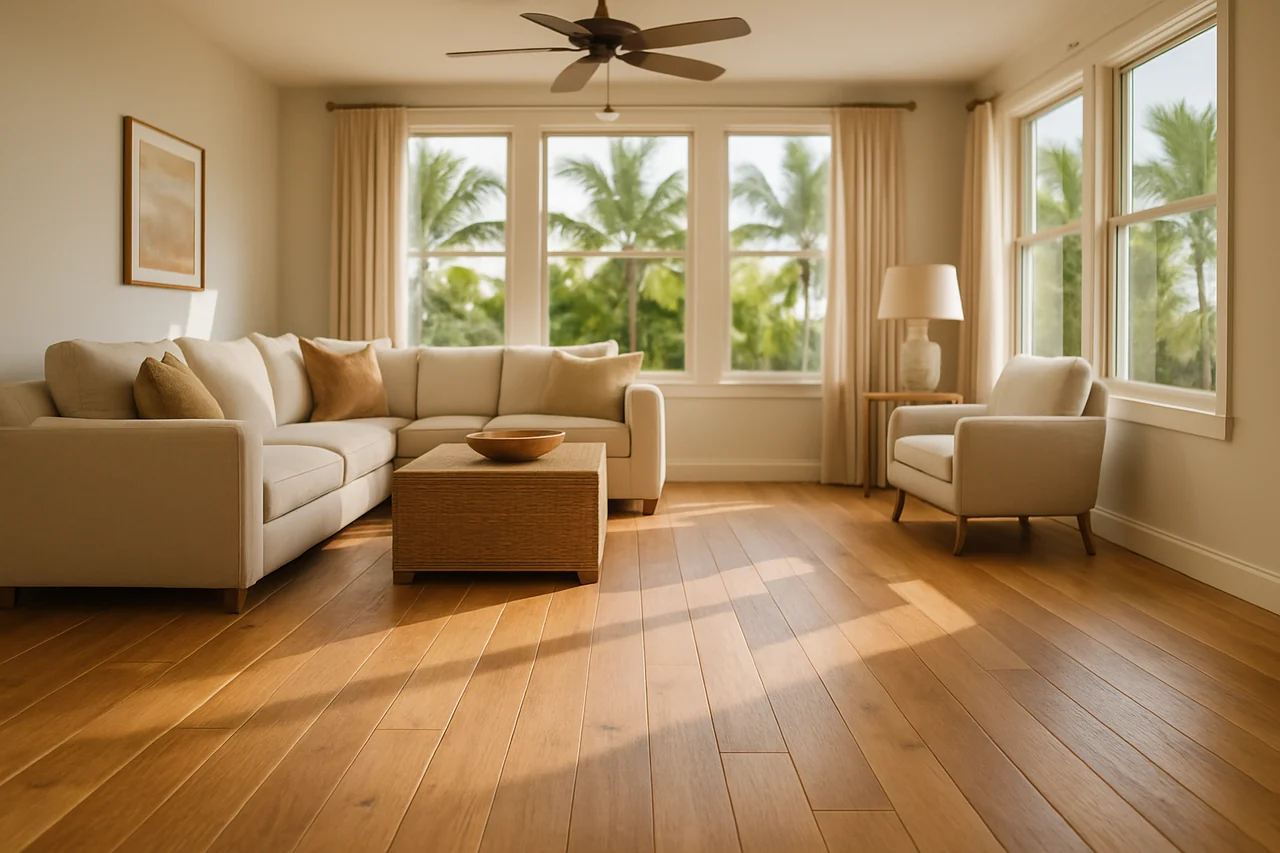
The number that moves a Florida flooring quote is rarely the plank. It is the prep underneath — moisture mitigation, leveling to tolerance, demo and disposal, and stairs.
10 min readRead →
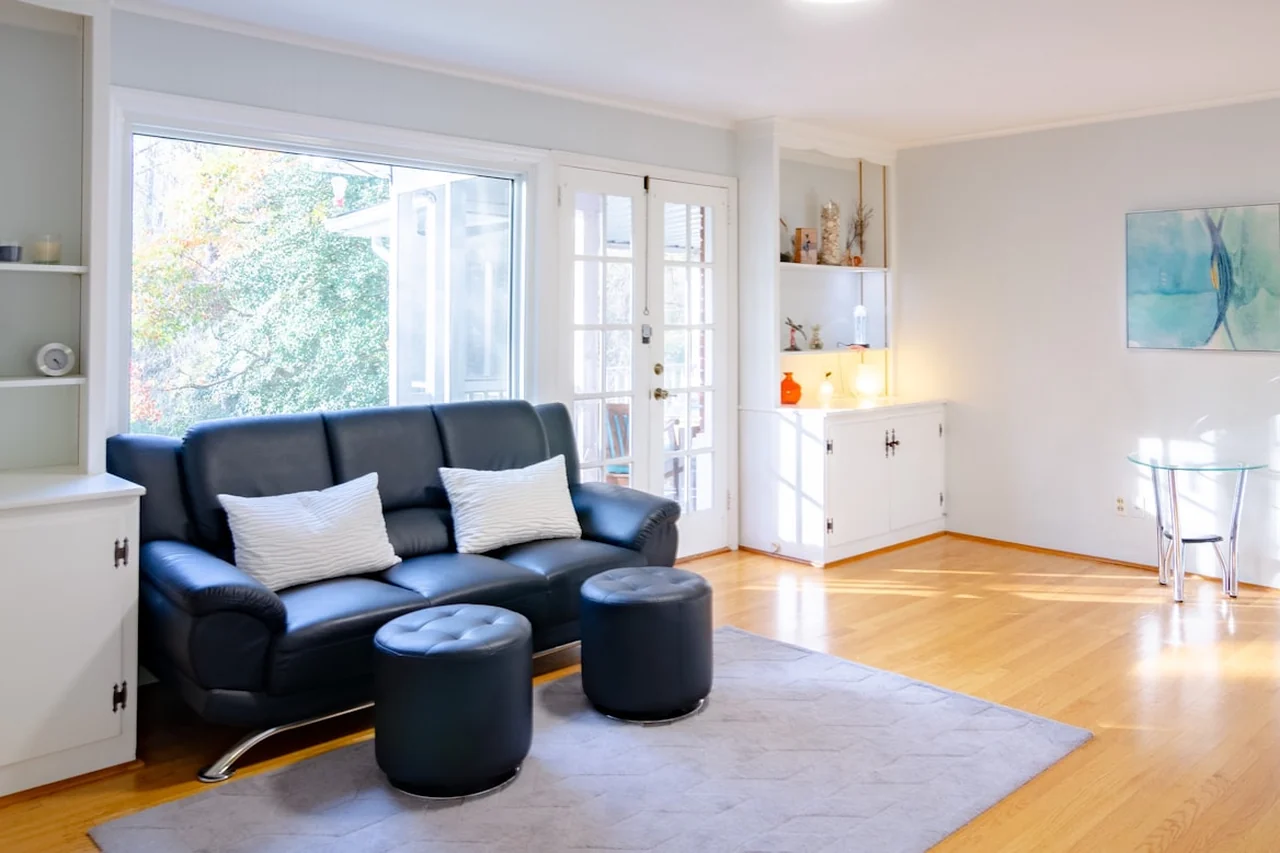
Swollen laminate edges are a core failure, not a surface one. Here is how the fiberboard wicks water at the seams, why the swell is irreversible, and the 24-hour line that decides salvage in Florida.
10 min readRead →
You can keep your cabinets when you replace the countertop — if the old top is detached the right way. Here is the Florida removal sequence, from cutting the silicone to checking the box for moisture.
10 min readRead →
A waterfall edge is a 45-degree mitered joint that runs the slab to the floor. Here is how much slab it consumes, why vein matching matters, where it chips, and which material survives a sun-facing leg in Florida.
10 min readRead →
Gravity is only half the question in Florida. Here is how to tell a load-bearing wall from a hurricane shear wall, what the code requires, and the engineer-sealed permit path to an open-concept kitchen.
11 min readRead →

The mil number is an abrasion spec, not a waterproof spec. Here is how 12, 20, and 28 mil compare, and why tracked-in Florida sand makes a thin wear layer fail sooner here than up north.
10 min readRead →
Tampa is widely called a radon hot spot. The EPA county map actually says Zone 2 — but the slab under your new floor is still the moment to test and seal. Here is the spec-level truth.
11 min readRead →
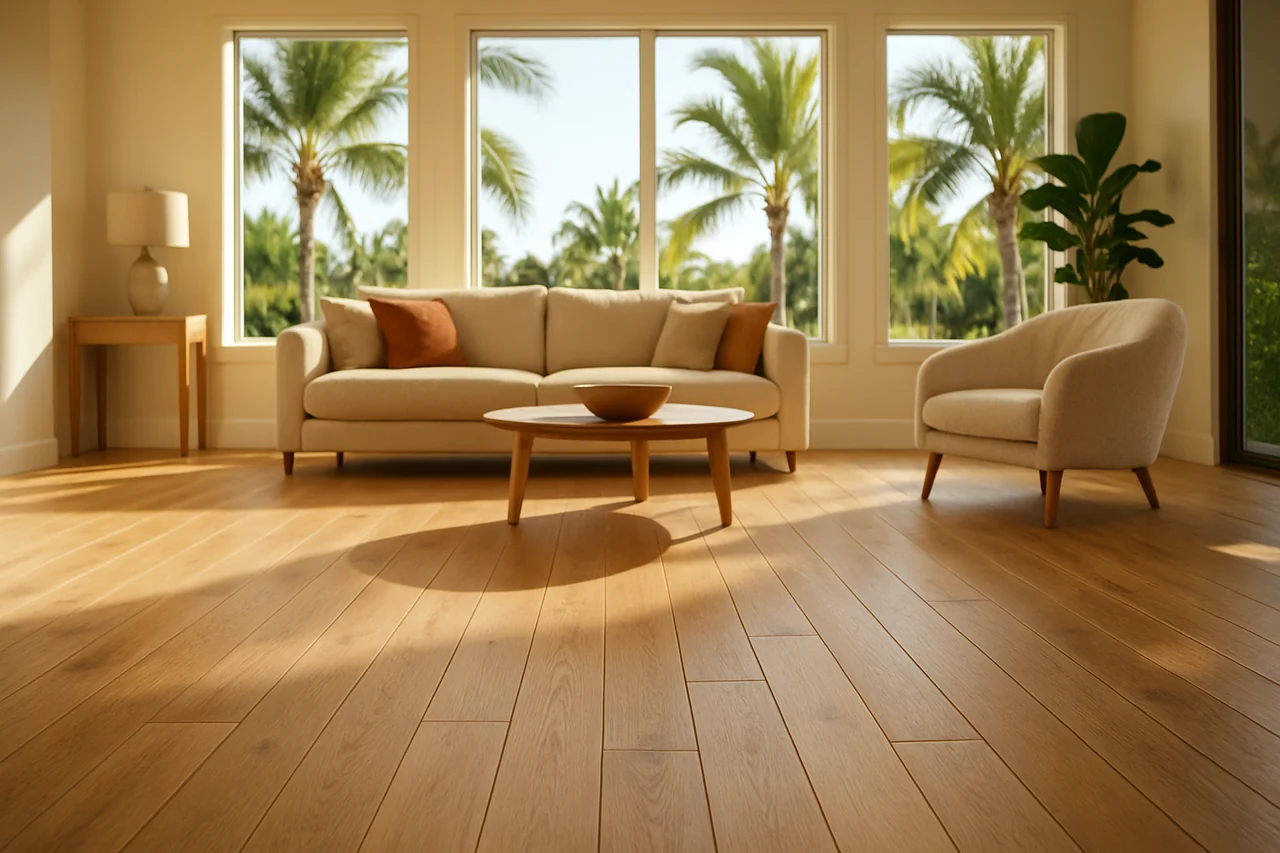
A Florida kitchen takes constant splash plus year-round humidity, so the realistic field is waterproof porcelain or thick-wear SPC. Comfort underfoot and a continuous run into the next room break the tie.
11 min readRead →
Page 24 of 34 · 400 articles total
Browse by Format
Every Pro Work Flooring article is built around one format. Comparisons for material selection, buying guides for specs, code explainers for permits, and how-to playbooks for the step-by-step of a Florida install.
Editor's Picks
If you read three Pro Work Flooring articles before you pick a floor for a Florida home, read these: the waterproof-flooring breakdown for humidity, the slab moisture testing every install depends on, and the porcelain-versus-ceramic call by PEI wear grade.
By Service Silo
Every silo surfaces its most recent article here. Click the silo name to drop into the full set of services; click the latest article to read it.
Browse by Silo
Each silo has its own set of articles and service guides. Pick the one that matches your project — every link below leads to the full silo with services, specs, and FAQs.
01
Waterproof LVP and rigid-core SPC for humidity, engineered wood acclimation, slab moisture testing, polished concrete, carpet, and refinishing.
Read Flooring →02
Porcelain vs ceramic by PEI wear grade and water absorption, natural stone, mosaics, backsplashes, regrouting, and TCNA-detailed shower tile.
Read Tile →03
Waterproof wet-room assemblies, walk-in and tub-to-shower conversions, ANSI-rated membranes, vanities, and accessible bath layouts.
Read Bathrooms →04
Full and small kitchen remodels, islands, pantries, backsplashes, lighting, and open-concept layouts coordinated with flooring and counters.
Read Kitchens →05
Quartz vs granite for Florida kitchens, quartzite, marble, butcher block, fabrication, and template-to-install sequencing.
Read Countertops →06
Custom and built-in cabinets, refacing vs replacement, cabinet painting, closet systems, and moisture-aware box construction.
Read Cabinets →07
Drywall install and repair, wall texturing, crown molding, trim, wainscoting, and interior and exterior painting for humid walls.
Read Walls →08
Garages, laundry rooms, lanai and patio conversions, mudrooms, and the finish work that turns extra square footage into living space.
Read Spaces →Editorial Standards
This is an install crew's blog, not a content farm. Every article goes through the same standard before it runs — no syndicated boilerplate, no specs we can't point to a published source for.
Waterproof ratings, wear-layer mils, PEI grades, Janka numbers, and MVER limits come from manufacturer data sheets and published standards — TCNA, NWFA, ASTM — cited by name, not paraphrased.
Every recommendation is filtered through Florida conditions: year-round humidity, slab-on-grade moisture, salt air on the coast, and the wet-room reality of a hot, rainy state.
When a project touches the Florida Building Code or High-Velocity Hurricane Zone rules, we name the code and section rather than summarize it loosely. If we're unsure, we say so.
Each article has to add something the rest of the internet doesn't — a spec table, a moisture limit, a code reference, or a field detail. If a topic already has 50 generic guides, we bring data or we don't publish.
Read enough to know your project? A Pro Work Flooring project director measures in person, tests the slab where it matters, and sends a written estimate. Statewide Florida service.
Free Callback · Statewide Florida
Tell us about the project. A real Pro Work Flooring project manager — not a bot — picks up the phone in 5 minutes during business hours. No pitch, no pressure.