Watch
Shiplap & Slat Accent Walls for Florida Humidity: Materials
Why Shiplap Warps in Florida
Shiplap warps in Florida because the boards do not sit flat against the wall — they trap a thin, humid air gap behind every plank. Shiplap is a board milled with an overlapping rabbet joint, and a slat wall spaces vertical battens over a backer, so both styles hold the face material off the substrate. In a climate where indoor humidity runs high year-round, that cavity becomes a moisture trap, and a porous board absorbs it from the back where no paint protects it.
The trapped air gap, not the paint, is the failure point
Homeowners assume paint is the waterproofing. It is not. Paint is a thin film on the visible face; the back of the board, the cut ends, and the fastener holes stay raw. Water vapor in the cavity condenses on cool surfaces — and in a Florida home the wall behind an exterior-facing accent wall can run cooler than room air when the air conditioning cycles. Vapor reaches the unsealed core and the board cups, swells at the joints, or grows mold.
How a humid cavity behaves on an air-conditioned wall
That mechanism is why the rest of this guide is organized around the substrate and the board core, not around color or pattern. Fix the material and the ventilation, and the accent wall lasts; get them wrong and no finish saves it.
PVC vs MDF vs Wood
For a humid-climate accent wall, three materials dominate, and they sort cleanly by how much water their core absorbs. Cellular PVC is fully waterproof, moisture-resistant MDF tolerates ambient humidity on dry walls, and solid wood is the most reactive of the three.
| Material | Water behavior | Controlling spec | Best Florida use |
|---|---|---|---|
| Cellular PVC board | Waterproof; will not rot or swell | Water absorption < 0.5% (ASTM D570) | Bathrooms, near tubs/showers, laundry |
| Moisture-resistant MDF | Resists ambient humidity; swells if wetted | ANSI A208.2 MR grades | Dry living walls, bedroom features, above chair rail |
| Standard MDF | Swells once vapor reaches the core | ANSI A208.2 standard grade | Low-humidity interior walls only |
| Solid wood / pine | Expands and contracts with humidity | Equilibrium moisture content | Acclimated, ventilated, dry rooms |
Cellular PVC: the waterproof baseline
Cellular PVC is a closed-cell rigid plastic board that machines like wood but absorbs almost no water. Independent testing under ASTM D570 puts its water absorption under 0.5% by mass — in practice often near 0.15% — so it cannot warp from the humid cavity behind it, and mold has no organic food source on its surface. That makes it the default for any wall within roughly three feet of a tub or shower spray zone.
Moisture-resistant MDF: the dry-wall workhorse
Moisture-resistant MDF is engineered with a modified resin so its core resists swelling under humidity. The ANSI A208.2 standard defines graduated moisture-resistance levels — referred to with an MR prefix — tested by accelerated aging. It holds paint beautifully and gives the crisp factory edge designers want, but it is humidity-tolerant, not waterproof: a leak or splash that wets the panel still ruins it.
Why "MR" is not the same as "waterproof"
An MR grade survives the ambient moisture of a Florida room with working air conditioning. It does not survive standing water, a dripping window, or shower overspray. Treat MR-MDF as a dry-zone material that tolerates humidity — never as a substitute for PVC in a wet zone.
Solid wood and pine: the most reactive
Real wood expands and contracts as its moisture content chases the room's humidity. In an acclimated, well-ventilated dry room it is a legitimate choice with the right look, but it needs the same discipline as a wood floor: let it adjust to interior conditions before fastening, and keep it away from wet zones.
What to verify on any board's spec sheet
Whatever the category, a few line items on the product data tell you how it will behave in a Florida cavity:
- Water absorption — for PVC, an ASTM D570 figure under 0.5% by mass confirms it is waterproof.
- Moisture-resistance grade — for MDF, an ANSI A208.2 MR designation, not a standard-grade panel.
- Recommended exposure — the maker's own wet-area versus dry-area guidance, which voids the warranty if ignored.
- Primed or raw edges — pre-primed boards still need their freshly cut ends sealed on site.
If a board's data sheet will not state a water-absorption number or a moisture grade, treat it as a dry-zone-only product no matter how it is marketed.
Shiplap in a Florida Bathroom
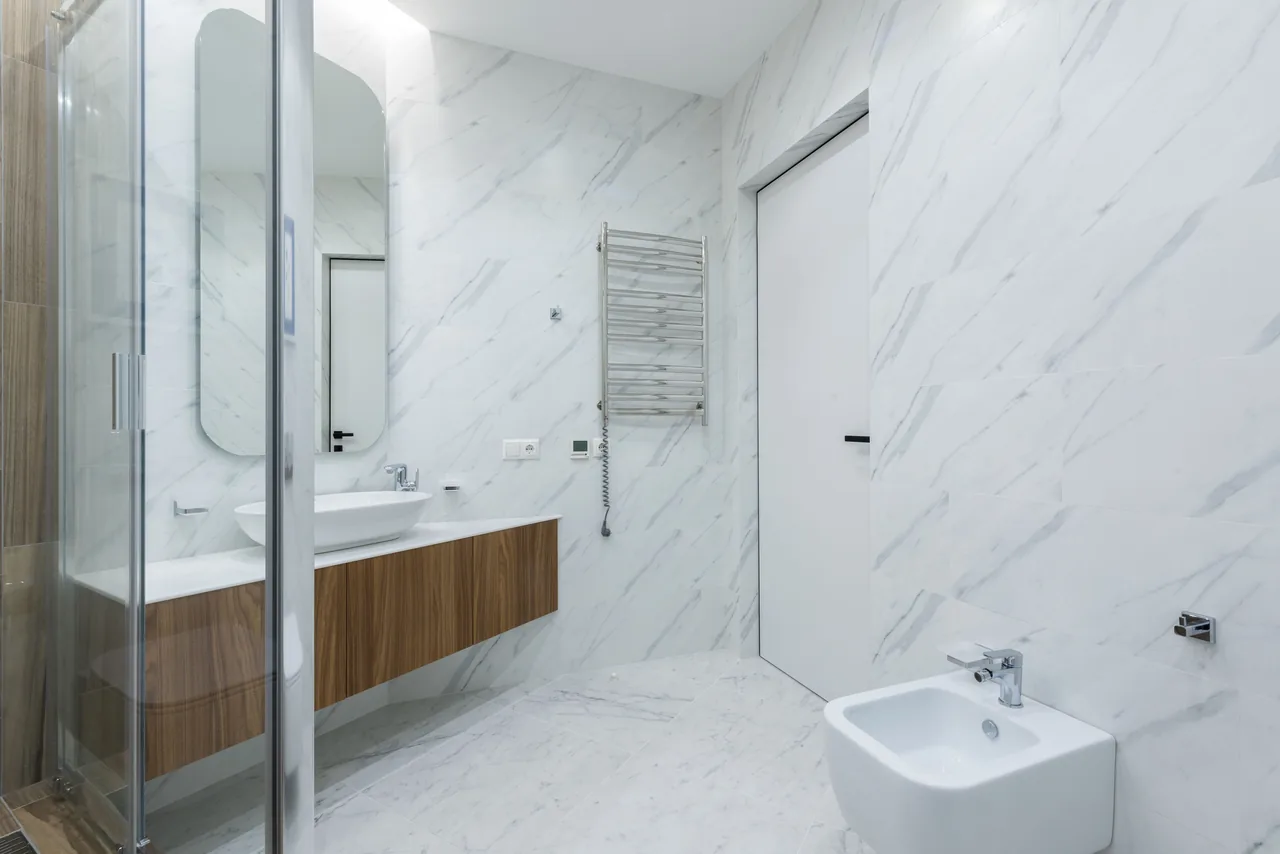
Yes, you can put shiplap in a Florida bathroom — but only cellular PVC near the wet zone, and only with an exhaust fan running. The bathroom is the hardest test in the house: shower plumes push relative humidity toward saturation, and the trapped cavity behind shiplap holds that moisture against the boards.
The three-foot wet-zone rule
Inside roughly three feet of a tub or shower, use cellular PVC board and nothing else. Beyond that radius — the wall behind a vanity or toilet, for instance — moisture-resistant MDF is defensible if the room ventilates well. The wettest surfaces still belong to tile over a bonded membrane, which we cover in the Florida wet-room waterproofing guide.
Ventilation is the real waterproofing
The single most effective defense against bathroom shiplap warping is moving humid air out of the room. ASHRAE Standard 62.2 sets local bathroom exhaust at a minimum of 50 CFM for an intermittent fan or 20 CFM running continuously. The EPA recommends keeping indoor relative humidity below 60% — ideally 30% to 50% — because sustained moisture above that line on an organic surface is what germinates mold.
Best Material by Zone
The fastest way to choose is to start from where the wall lives, then read across to the material. Humidity load drops as you move away from plumbing, and the material can soften with it.
Pick by location
- Within 3 ft of a tub or shower — cellular PVC board only; it is the only fully waterproof option.
- Elsewhere in a bathroom or laundry — cellular PVC, or moisture-resistant MDF if the room has a 50 CFM exhaust fan.
- Kitchen backsplash-adjacent wall — cellular PVC behind the cooking and sink zone; MR-MDF on the far wall.
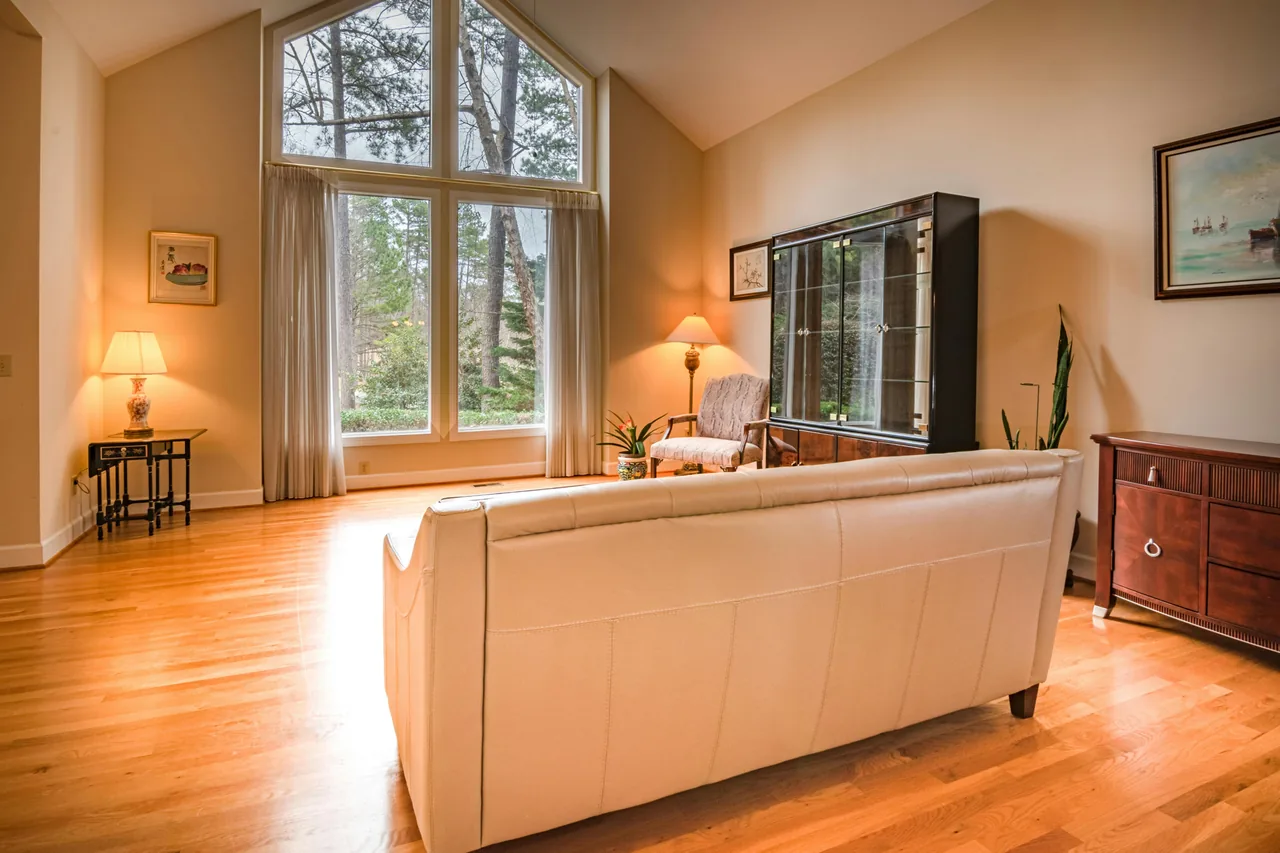
- Bedroom or living-room feature wall — moisture-resistant MDF or acclimated wood; standard MDF is acceptable only in a consistently conditioned room.
- Enclosed lanai or sunroom — cellular PVC, because these rooms swing closest to outdoor humidity.
Reading the list top to bottom, the pattern is simple: the wetter and less conditioned the space, the more you lean on PVC; the drier and more climate-stable it is, the more freedom you have to use MDF or wood for the look you want.
Pattern choice follows the material
Horizontal shiplap, vertical board-and-batten, and a modern slat accent wall we build are all achievable in PVC or MDF. The look is a style decision; the material is a survival decision, and in Florida the material has to be settled first.
How to Install a Slat Wall
A slat accent wall in Florida follows the same sequence as shiplap, with extra attention to the cavity and the back of every board. The goal is a flat, ventilated assembly with every raw surface sealed before it is closed in.
- Step1
Confirm the material and let it acclimate
Choose PVC for any wet zone, MR-MDF for dry walls. If using wood or MDF, stand the boards in the finished, air-conditioned room for several days so they reach the room's humidity before cutting.
- Step2
Map and mark the studs
Locate every stud and snap level vertical lines. Slats and battens must fasten into framing, not into drywall alone, so the wall stays flat as humidity cycles.
- Step3
Prime or seal the back and the cut ends
For MDF or wood, prime the back face and every freshly cut end before fastening. This is the step most installers skip — and the unsealed edge is exactly where Florida moisture enters first.
- Step4
Fasten with corrosion-resistant nails
Use stainless or hot-dipped galvanized fasteners. Standard steel brads bleed rust through paint in humid air, leaving stains that telegraph through a light finish within a season.
- Step5
Leave a movement gap and caulk smart
Hold the boards slightly off the floor and ceiling so the assembly can move. Caulk the visible perimeter with a flexible sealant, but never seal the bottom edge airtight in a damp room — the cavity needs a path to dry.
- Step6
Finish, then verify ventilation
Apply the finish coats, then confirm the room's exhaust or AC keeps humidity under the EPA's 60% line. The finish is the last step, not the protection.
Done in that order, the wall is sealed on every face before it is closed in, fastened into solid framing, and left able to dry — the three things a Florida cavity needs.
Sealing, Priming, and Fasteners
Finishing choices matter more in Florida than in a dry climate because every gap is a moisture entry point. The priorities are sealing the hidden surfaces, choosing a humidity-tolerant paint system, and using fasteners that will not corrode.
- Back-priming
- Coating the unseen back face and cut ends of MDF or wood before installation. It slows vapor uptake from the cavity and is non-negotiable on any porous board in Florida.
- Paint system
- A bonding primer plus a washable acrylic or enamel topcoat. Cellular PVC needs a primer formulated for plastics; MDF needs a primer that seals its absorbent edges. Our interior painting crews specify the system to the substrate.
- Fasteners
- Stainless or hot-dipped galvanized brads and screws. In humid, sometimes salt-laden air, plain steel corrodes and bleeds through the finish.
Caulk for movement, not for a moisture seal
Use a flexible, paintable sealant at visible seams and corners so the joint flexes instead of cracking. The aim is a clean line that accommodates seasonal movement — not a hermetic seal that traps moisture against the boards. Related lower-wall paneling like wainscoting we install follows the same logic: tolerate movement, seal the porous surfaces, and let the wall breathe.
Free In-Home Estimate
Not sure which material your wall needs?
A Pro Work Flooring project director checks the room's humidity and location on site and sends a written estimate for the right substrate.
Florida-Specific Mistakes
Most failed accent walls in Florida repeat the same handful of errors, and all of them come back to the trapped cavity and the porous core. Avoiding them is cheaper than rebuilding.
- Trusting paint as waterproofing. Paint protects one face; the back, edges, and fastener holes stay exposed to cavity humidity.
- Using standard MDF or pine in a bathroom. Both swell as vapor reaches the core, regardless of how carefully they were finished.
- Skipping the exhaust fan. Without ASHRAE-rated ventilation, shower humidity sits in the room and migrates into the wall.
- Leaving cut ends raw. An unsealed edge wicks moisture far faster than a primed face — and cut ends are everywhere on a slat wall.
- Plain-steel brads. They rust in humid air and bleed stains through a light finish within months.
Each mistake has the same fix: choose the material for the moisture load, seal every surface, fasten into framing with corrosion-resistant nails, and ventilate the room. Handle those four, and a shiplap or slat wall looks as good in its fifth Florida summer as on the day it went up — see the full accent wall service for how we build it.
Frequently Asked Questions
Can you put shiplap in a Florida bathroom?
Does shiplap warp in humidity?
Is PVC or MDF shiplap better for moisture?
What is the best material for an accent wall in a humid climate?
How do you install a slat wood accent wall so it lasts in Florida?
Do I need an exhaust fan if I use waterproof PVC shiplap?
References & Sources
- ASTM D570 — Standard Test Method for Water Absorption of Plastics. https://www.astm.org/d0570-98r18.html
- ANSI A208.2 — Medium Density Fiberboard (MDF) for Interior Applications. https://www.compositepanel.org/products-applications/medium-density-fiberboard/
- ANSI/ASHRAE Standard 62.2 — Ventilation and Acceptable Indoor Air Quality in Residential Buildings. https://www.ashrae.org/technical-resources/bookstore/standards-62-1-62-2
- US EPA — A Brief Guide to Mold, Moisture and Your Home. https://www.epa.gov/mold/brief-guide-mold-moisture-and-your-home
- Florida Building Code. https://floridabuilding.org/