Watch
St. Augustine Historic Remodeling: HARB & COA Guide
Do I Need a COA to Remodel Here?
If your property sits inside one of St. Augustine's five Historic Preservation zoning districts, the answer is almost always yes. A Certificate of Appropriateness (COA) is required for most exterior work — and for interior work that touches a permit-triggering system — and it must clear during plan review before the building permit is issued, not after.
This is the part that surprises people moving from Orlando or Tampa. In most Florida cities you pull a permit and start. In the Nation's Oldest City, historic review is a gate upstream of the permit. The City states that Zoning, Historic, Archeology, Public Works, and Utilities reviews are all completed before a building permit application proceeds, so the COA is sequenced into that pre-permit stack rather than handled as a separate downstream approval.
Interior-only work is not automatically exempt
A common assumption is that interior remodeling escapes review because the HARB protects the streetscape. That holds for purely cosmetic, like-for-like interior finishes. The moment your scope crosses into a building permit — moving a wall, altering plumbing or electrical, structural floor framing — the project enters the same pre-permit review that the COA lives in, and historic constraints follow it inside.
When an Opinion of Appropriateness helps
For early-stage projects, St. Augustine offers an optional Opinion of Appropriateness (OOA) — a non-binding read on a concept before full drawings exist. It is the cheapest way to learn whether a material or layout idea will survive review, which is why we route uncertain historic scopes through it first via our permit handling for historic districts.
Scopes that pull a coquina home into review
Use this checklist to gauge whether your interior project will engage the COA gate rather than slip past it as cosmetic.
- Relocating a wall that changes the historic floor plan or load path.
- Moving plumbing or electrical, which triggers a building permit on its own.
- Altering floor framing or the structure of a raised wood floor over crawl space.
- Any change visible from a street facing an HP-1, HP-2, or HP-3 district.
If your scope hits any line above, plan for the COA up front; if it is strictly like-for-like finish replacement, it usually does not — confirm the boundary before committing materials.
What a Certificate of Appropriateness Actually Is
A Certificate of Appropriateness is the City's formal finding that proposed work is consistent with the character of a historic district. It is reviewed against St. Augustine's Architectural Guidelines for Historic Preservation, which themselves draw on the federal Secretary of the Interior's Standards for the Treatment of Historic Properties.
Those federal Standards define four treatment approaches — preservation, rehabilitation, restoration, and reconstruction. Most occupied homes pursue rehabilitation, which the National Park Service describes as keeping a building's historic character while allowing compatible alterations for continued contemporary use. Understanding which approach your project claims shapes what the reviewer will accept.
- Preservation
- Maintains existing form and material; precludes major additions or demolition. The most restrictive path.
- Rehabilitation
- Keeps historic character but permits compatible alterations for modern use. The path most interior remodels take.
- Restoration
- Returns a property to a specific period, removing later changes. Used on landmark structures.
- Reconstruction
- Recreates a non-surviving building with new material. Rare in occupied homes.
Because the COA is judged against these treatment standards, the documents you submit should name the approach and show how new flooring, walls, or fixtures stay compatible and reversible rather than erasing original fabric.
The Five HP Zoning Districts
St. Augustine maps its historic core into five Historic Preservation zoning districts, labeled HP-1 through HP-5. The Architectural Guidelines apply to development inside any of them, and also to projects facing HP-1, HP-2, or HP-3 — so a property's review burden depends on both where it sits and what it faces.
Why the district label changes your scope
Districts differ in how strictly visible change is controlled. A rear-yard interior renovation in a lower-sensitivity district reads differently than the same work on a contributing structure facing a primary historic street. Confirming your HP designation and your structure's contributing status is the first research step before any material is specified.
Two facts to pull before you design
Before a single drawing, resolve the two parcel facts that set the entire review burden.
- Which HP district the parcel sits in — HP-1 through HP-5.
- Whether the structure is contributing, and whether it faces an HP-1, HP-2, or HP-3 street.
Those two answers, taken together, predict whether your work clears at staff level or goes to a public board hearing — so they belong at the top of the project file, not the end.
The HARB Approval Process, Step by Step
The Historic Architectural Review Board (HARB) is the citizen board that issues the COA. The path from idea to approval is predictable once you know the order, and it rewards complete drawings over fast ones.
- Step1
Confirm district and status
Verify the parcel's HP district (HP-1 through HP-5) and whether the structure is contributing. This sets which guidelines apply and how visible your changes may be.
- Step2
Test the concept with an OOA
For uncertain ideas, file an optional Opinion of Appropriateness to get a non-binding read before investing in full construction documents.
- Step3
Assemble the COA application
Submit drawings, material specs, and photographs showing existing conditions and proposed work, mapped to a treatment approach under the Secretary's Standards.
- Step4
Staff review or HARB hearing
Minor work may clear at staff level; larger or visible projects go to a public HARB meeting where the board votes on the COA.
- Step5
COA issued, then permit
With the COA and the other pre-permit reviews cleared, the building permit can issue and construction — and inspections — proceed.
The slowest applications are the ones that arrive with incomplete material data; the board cannot approve what it cannot see, so front-loading specs for flooring, finishes, and any visible exterior change is what keeps the timeline honest.
Can You Renovate a Coquina House?
You can, but coquina rewrites the rules for what touches its walls. Coquina is a soft, porous sedimentary shell-limestone — cemented seashell fragments — quarried locally and used in St. Augustine since the first Spanish period. The City has documented dozens of pre-1820 coquina structures in its historic core, and their behavior is the opposite of dense modern stone.
Coquina has to breathe
Because coquina is open-pored, it manages moisture by letting water vapor pass through and evaporate. Trap that moisture behind a film-forming sealer, a vinyl wall finish, or a vapor-impermeable floor abutting the wall base, and salts and water concentrate inside the stone, spalling the face from within. Any interior finish meeting a coquina wall must stay vapor-open.
Compatible, reversible, documented
The Secretary's Standards favor work that is compatible with the original and reversible without harm. For floors, that means assemblies that do not bond destructively to historic substrates and that let the building keep breathing — principles we apply on every historic interior remodel. The same logic governs sealing the stone itself, which we cover in our guide to breathable coquina and shell-stone sealing.
Flood-Proofing a Historic Home in Lincolnville
Many of St. Augustine's historic homes sit low. The Lincolnville Historic District around Lake Maria Sanchez is one of the most flood-prone areas of the historic core, and much of it falls inside a FEMA AE Special Flood Hazard Area — land with a 1%-annual-chance of flooding. That puts two rulebooks on the same project at once.
The City's coquina flood guidance
St. Augustine publishes dedicated flood-mitigation guidance for historic coquina buildings because standard elevate-everything tactics can destroy a landmark. The recognized strategies fall into three families, and the right one depends on the structure.
| Strategy | What it does | Historic fit |
|---|---|---|
| Dry flood-proofing | Seals the building envelope so water stays out below a set height | Limited on coquina — sealing can trap vapor; used selectively |
| Wet flood-proofing | Lets water enter and exit, using flood-damage-resistant materials low down | Often best fit; preserves walls, protects only finishes |
| Site flood-proofing | Grading, drainage, and barriers that keep water off the parcel | Non-invasive to the structure; pairs with City stormwater work |
Wet flood-proofing aligns naturally with how coquina already works — allow the lowest level to flood and dry while keeping the historic walls intact — which is why interior finishes here are chosen to be sacrificial-tolerant rather than sealed shut.
The historic-structure exemption from the 50% Rule
FEMA's Substantial Improvement rule — the 50% Rule — normally forces a structure fully into current flood code once a project's cost reaches half the building's market value. A designated historic structure can be exempt if the program that designated it determines the work will not preclude its continued historic designation. That exemption is a major reason your COA scope must be documented carefully; it protects the building two ways at once. The mechanics are detailed in our FEMA 50% Rule explainer for Florida flood-zone remodels.
Free In-Home Estimate
Working inside a St. Augustine HP district?
A Pro Work Flooring project director walks the coquina, checks the flood zone, and maps the COA-then-permit sequence in a written estimate.
Floors That Satisfy Historic and Flood Rules
The flooring that works in a Lincolnville coquina home has to clear three filters at once: compatible under the Secretary's Standards, flood-damage-resistant for the AE zone, and vapor-open so the slab and walls keep breathing. A few categories do this well; some popular choices do not.
Pick by condition
- If the floor sits below the flood elevation in an AE zone — choose flood-damage-resistant materials that survive wetting and drying, such as porcelain tile or solid masonry, set so they can dry.
- If a finish meets a coquina wall base — keep it vapor-open; avoid film-forming sealers and impermeable membranes tight to the stone.
- If the substrate is original historic fabric — favor reversible, non-destructive assemblies over permanent bonded systems that cannot be removed without damage.
- If the structure relies on the 50% Rule historic exemption — document the scope so the work clearly preserves the historic designation.
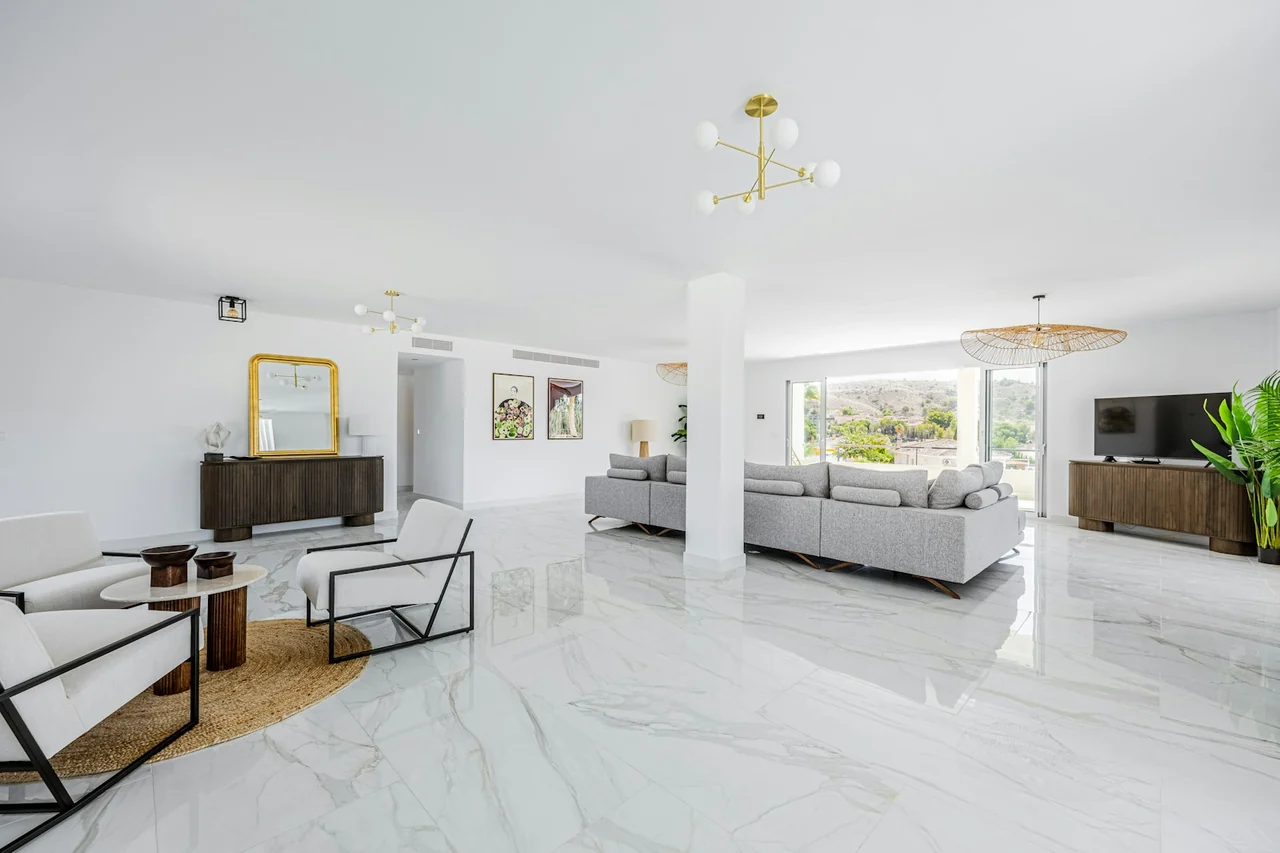
Practically, low-absorption porcelain set with breathable detailing tends to win in flood-exposed historic spaces, while wood and laminate — reactive to both moisture and flooding — are kept out of the wet zone. The full reasoning sits in our guides to flood-zone flooring for AE and VE areas and to coordinating the build through whole-home historic renovation, where the floor decision is sequenced after the COA, not before it.
Frequently Asked Questions
Do I need a COA to remodel inside St. Augustine's historic district?
What is a Certificate of Appropriateness in Florida?
How does the St. Augustine HARB approval process work?
Can you renovate a coquina house in St. Augustine?
Does the FEMA 50% Rule apply to a historic home in Lincolnville?
What flooring works in an AE flood-zone coquina home?
References & Sources
- City of St. Augustine — Historic Architectural Review Board (HARB). https://www.citystaug.com/601/Historic-Architectural-Review-Board-HARB
- City of St. Augustine — Historic Architectural Review Board Applications (COA). https://www.citystaug.com/195/Historic-Architectural-Review-Board-Appl
- City of St. Augustine — Flooding and Historic Properties (coquina flood guidance). https://www.citystaug.com/905/Flooding-and-Historic-Properties
- National Park Service — The Secretary of the Interior's Standards for the Treatment of Historic Properties. https://www.nps.gov/tps/standards.htm
- FEMA — Substantial Improvement / Substantial Damage and the 50% Rule. https://www.fema.gov/floodplain-management/manage-risk/substantial-improvement-substantial-damage