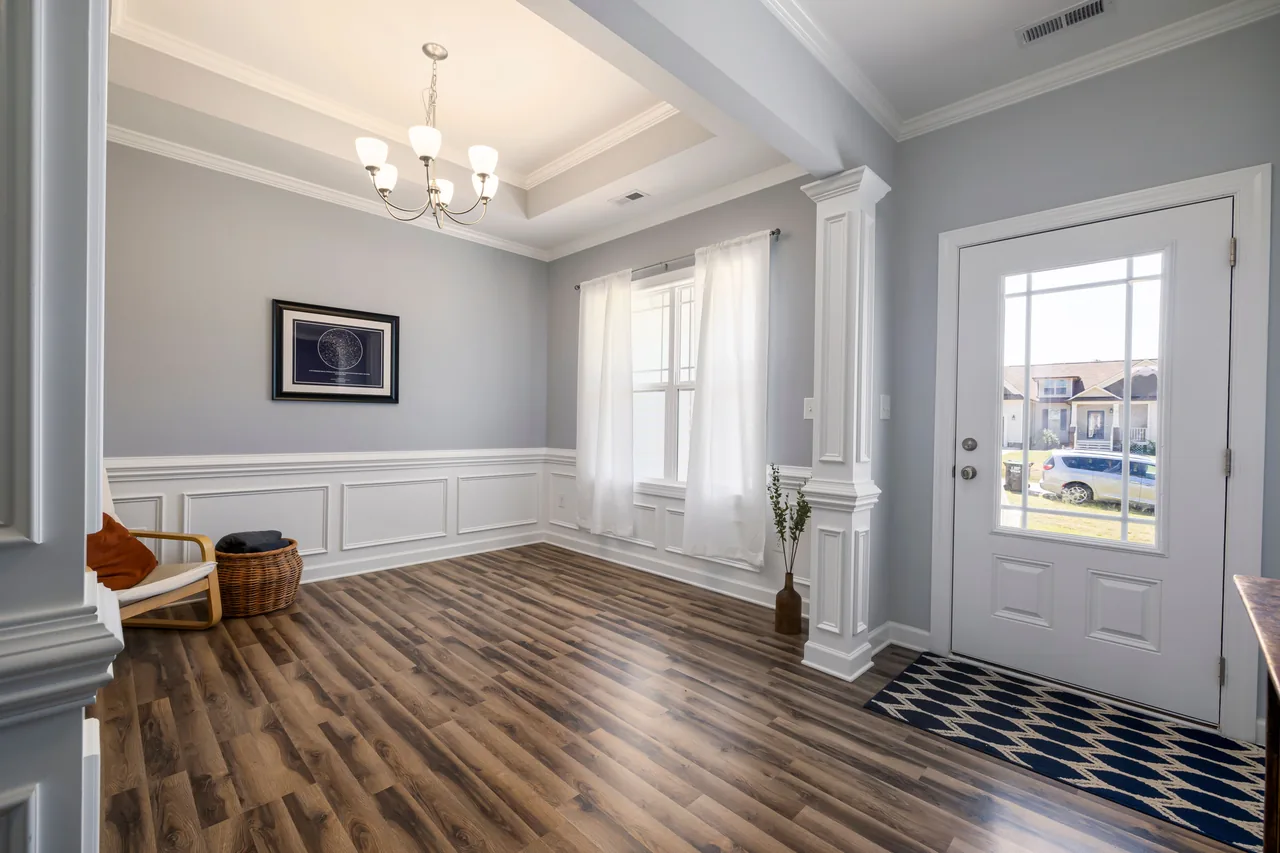
Wainscoting installation in Florida adds architectural paneling to the lower wall — a raised-panel run in a dining room, board-and-batten in an entry, or beadboard in a bath — capped with a chair rail and finished into the room. Because wainscoting so often goes exactly where Florida humidity lives — bathrooms, mudrooms, entries — the decision that protects the work is the material. Paper-faced MDF and untreated wood swell, peel, and lift in a damp room within a couple of seasons, so we install cellular PVC and other moisture-tolerant paneling in wet zones and reserve MDF and wood for dry, conditioned rooms. The second half of the job is the craft: the panel layout balanced so it looks intentional on the wall, the rails and stiles set level and plumb, everything fastened to the framing, and the joints caulked, the holes filled, and the surface finished to a clean line.
Watch
See Wainscoting Installation Done Right in Florida
Wainscoting Installation in Dunnellon: What Matters Locally
Climate, code, and construction style all factor into wainscoting-installation in Marion County. The essentials:
Dunnellon's climate runs more variable than South Florida, and we plan wainscoting-installation for that range.
Inland Dunnellon, in Marion County, contends with slab moisture and sustained humidity more than salt exposure, which shapes subfloor prep and material choice for wainscoting-installation.
The best material for wainscoting-installation in Dunnellon depends on your subfloor and how the space is used:
What Wainscoting Is, and Where It Works in Florida
Wainscoting is decorative paneling applied to the lower portion of a wall, traditionally for protection and now mostly for character. It frames a room, adds depth, and stands up to scuffs better than bare drywall. In Florida homes, a handful of rooms are the classic spots for it.
- Dining rooms — raised-panel or flat-panel wainscoting that gives a formal room depth and a finished, custom feel
- Bathrooms — PVC beadboard that brings cottage and coastal character to a wet room without the swelling risk of wood
- Entries and hallways — board-and-batten or beadboard that protects high-traffic walls and makes a strong first impression
- Mudrooms and laundry rooms — durable, wipeable paneling on walls that take abuse and moisture
- Stairwells — paneling that follows the rake of the stairs for a built-in, architectural look
Adding Character to a Room?
Free in-home visit, a style and material recommendation matched to the room's moisture — written estimate, no pressure.
The Three Wainscoting Styles, and How to Choose
The style sets the character of the room, and each suits a different look. All three install as a system — paneling, a chair-rail cap, and a base — and all three can be built in a moisture-tolerant material for Florida's wet rooms.
- Raised-panel — framed panels with a profiled center, the most traditional and formal look, classic in dining rooms
- Board-and-batten — flat panel with vertical battens at intervals, clean and versatile for modern, farmhouse, and coastal rooms
- Beadboard — narrow vertical grooves, a cottage and coastal staple that suits Florida baths and entries, especially in PVC
- Flat / picture-frame panel — applied molding boxes on the wall for a tailored, custom look without full panels
- Height and layout — scaled to the ceiling and the wall, with the panel spacing balanced so the run looks intentional rather than chopped
Why Florida Wainscoting Is Different
Humidity and wet rooms drive the material choice on nearly every wainscoting job here. Because the paneling so often lands in a bathroom, an entry, or a mudroom, the wrong material is on borrowed time. The style can be anything; the material has to match the room.
- PVC and moisture-tolerant paneling in bathrooms, mudrooms, and entries, where Florida humidity and splashes reach the lower wall
- MDF and wood reserved for dry, conditioned rooms like dining rooms and offices, kept away from moisture
- Fastening to the framing and caulking the joints so the paneling stays tight as the house moves with seasonal humidity
- Mold-conscious detailing in wet rooms, using materials that give mildew nothing to feed on behind the panel
- Cap and base profiles tied into existing trim so the wainscoting reads as original to the Florida home, not applied
Materials We Panel With
The paneling stock decides how the wainscoting holds in Florida humidity. We install moisture-tolerant PVC paneling for wet rooms and stain- or paint-grade materials for dry ones, fasten and glue to the framing, and finish to a clean line.
- Azek / Versatex cellular PVC beadboard & panel
- Kleer PVC paneling & trim
- Metrie wainscoting & profiled molding
- MDF panel stock for painted dry-room work
- Titebond / Loctite panel adhesives
- DAP / Sherwin-Williams paintable caulk
- Benjamin Moore trim enamel
- Bona wood sealers for stained work
Tying Wainscoting Into the Room
Wainscoting works best when it reads as part of the house, not a panel kit stuck on the wall. We tie the chair-rail cap and the base into your existing trim, balance the panel layout so it lands evenly on the wall and around outlets and openings, and finish it to match the room's woodwork. The result is a lower wall that looks like it was framed with the house.
For the casing and baseboard the wainscoting ties into, or crown at the ceiling, we coordinate the matching finish carpentry. Trim Installation Estimate →
Florida Building Code and Permits for Wainscoting
Wainscoting is cosmetic finish carpentry that does not require a permit on its own. The picture changes only when paneling is part of a larger remodel — if that project involves structural, electrical, or moisture work, those portions can fall under the Florida Building Code, handled by the right licensed trade.
We tell you during the estimate whether your scope includes anything beyond paneling, and we lay out, fasten, and finish the wainscoting correctly so it stays tight and clean.
Our 6-Step Wainscoting Process
- Free in-home consultation. We measure the walls, check the wall type and any moisture exposure, and help you pick a style and the right material for the room's humidity. No commitment.
- Written estimate. Line-item breakdown — material, wall area, cap and base molding, finishing, and timeline. Delivered after the visit.
- Style & material selection. Raised-panel, board-and-batten, or beadboard, in PVC or a moisture-tolerant material for baths and entries or MDF and wood for dry rooms, with a height scaled to the wall.
- Layout & install. Panel layout balanced on the wall, rails and stiles set level and plumb, panels and battens fastened to the framing, and the cap and base run continuous.
- Caulk, fill & finish. Joints and edges caulked, nail holes filled, and the wainscoting primed and painted or finished to a clean, furniture-grade surface.
Give a Room Custom Character
Fast reply. Moisture-tolerant materials, balanced layout, clean finish. Wainscoting that looks original.
How to Identify a Qualified Florida Wainscoting Installer
Anyone can glue panel boxes to a wall; wainscoting that lasts and looks right in Florida takes the right material and a balanced layout. Verify all of the following before signing anything:
- Uses moisture-tolerant material in wet rooms
- A qualified Florida installer specs PVC or a moisture-tolerant paneling for baths, mudrooms, and entries, not paper-faced MDF. Confirm the material by room.
- Balances the panel layout
- The panels should land evenly on the wall and around outlets and openings, not get chopped at a corner. Ask how they lay out the run.
- Fastens to framing and caulks the joints
- Paneling should be fastened to the studs and the joints caulked so it stays tight as the house moves. Confirm it is not just glued to the drywall.
- Written line-item estimate after a site visit
- A reputable installer measures the walls and itemizes material, install, and finishing. A phone quote with no measurement is a red flag.
- Ties the cap and base into existing trim
- The chair rail and base should match your woodwork so the wainscoting reads as original. Ask how they tie into existing trim.
Florida Wainscoting Case Study
Our Installation Standards
Every Pro Work wainscoting project meets these installation standards:
- Florida Building Code compliance
- Any structural, electrical, or moisture work behind a larger remodel handled by the right licensed trade to FBC requirements.
- Moisture-tolerant materials
- PVC and moisture-tolerant paneling in baths, mudrooms, and entries rather than paper-faced MDF — the step that keeps Florida wainscoting from swelling and peeling.
Why Florida Homeowners Choose Pro Work for Wainscoting
Most crews glue up panel boxes and move on. We spec the paneling to the room's moisture, balance the layout, and finish to a clean line — because that is what makes wainscoting look original and last in a humid Florida home. The same crew that picks the material also lays out the panels, fastens the run, and ties the cap and base into your trim.
- Material matched to the room. PVC and moisture-tolerant paneling where moisture lives, MDF and wood where it is dry.
- Balanced, intentional layout. Panels that land evenly on the wall and around openings.
- Free in-home estimate. On-site measurement, style and material recommendation, line-item breakdown, no high-pressure sales tactic.
- Tied into your trim. Chair-rail cap and base matched to existing woodwork.
- Caulked and finished. Joints closed, holes filled, sprayed to a furniture-grade line.
Related Wall & Surface Work We Coordinate
A wainscoting project in Florida usually connects to a larger finish or remodel. We hold it under one crew so the room comes together:
- Trim Installation — casing and baseboard the wainscoting ties into, in matching materials.
- Crown Molding — ceiling molding to balance the paneling below.
- Interior Painting — primer and enamel that finish the wainscoting to a clean line.
- Wall Texturing — the wall above the chair rail matched or refreshed alongside the paneling.
Wainscoting Installation Near Dunnellon
Outside Dunnellon? We cover wainscoting-installation throughout the surrounding area: