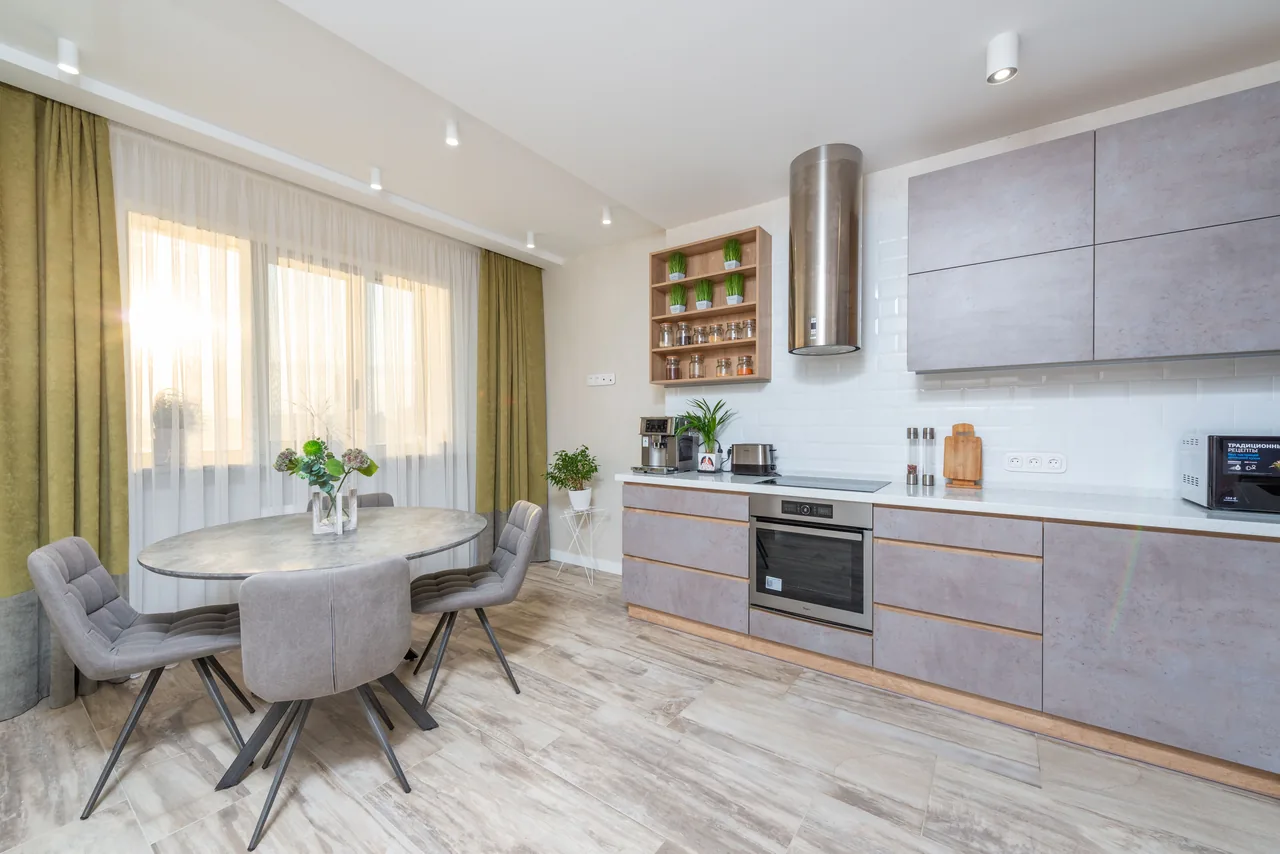
Kitchen flooring installation in Florida means installing the hardest-working floor in the house — a surface that absorbs spills, dropped cookware, foot traffic at the sink and stove, and the occasional dishwasher or ice-maker leak, all in air that holds humidity above 70% most of the year. The right kitchen floor here is waterproof, dent- and stain-resistant, and laid to work with the cabinet run and island. The numbers that decide whether a kitchen floor lasts are the spec, not the price: a 100% waterproof or low-absorption wear surface, a heavy-traffic rating (porcelain at PEI 4–5, or LVP at a 20-mil or thicker wear layer), and a slab moisture-vapor check before anything goes down.
Watch
See Kitchen Flooring Installation Done Right in Florida
Kitchen Flooring Installation in Green Cove Springs: What Matters Locally
Florida's climate changes what works for kitchen-flooring-installation. Here's what matters specifically in Green Cove Springs and Clay County:
Green Cove Springs's climate runs more variable than South Florida, and we plan kitchen-flooring-installation for that range.
Inland Green Cove Springs, in Clay County, contends with slab moisture and sustained humidity more than salt exposure, which shapes subfloor prep and material choice for kitchen-flooring-installation.
The material under your feet matters most in Northeast Florida. Options for kitchen-flooring-installation in Green Cove Springs:
What Makes a Florida Kitchen Floor Different From Any Other Room?
A kitchen floor is a high-traffic, high-spill, appliance-loaded surface — and in Florida it carries the added burden of slab moisture and humidity. It earns its keep only when the material survives the four kitchen realities: water, impact, staining, and the weight of an island and appliances. The best Florida kitchen floors are waterproof or near-waterproof, hard enough to resist dents, and easy to wipe clean.
- Porcelain or ceramic tile — dense, hard, and stain-resistant; the Florida kitchen workhorse, rated PEI 4–5 for heavy traffic
- Rigid-core LVP — 100% waterproof and warmer underfoot than tile; a 20-mil or thicker wear layer handles kitchen traffic and pets
- Engineered wood — a real-wood look that stays more dimensionally stable over a Florida slab than solid plank, for kitchens that flow into living space
- Spill and leak resilience — a kitchen floor sees dishwasher, fridge, and sink leaks, so a waterproof surface turns a leak into a wipe-up instead of a replacement
- Stain and impact resistance — dropped pans, dragged stools, and tomato sauce all test a kitchen floor in ways a bedroom never does
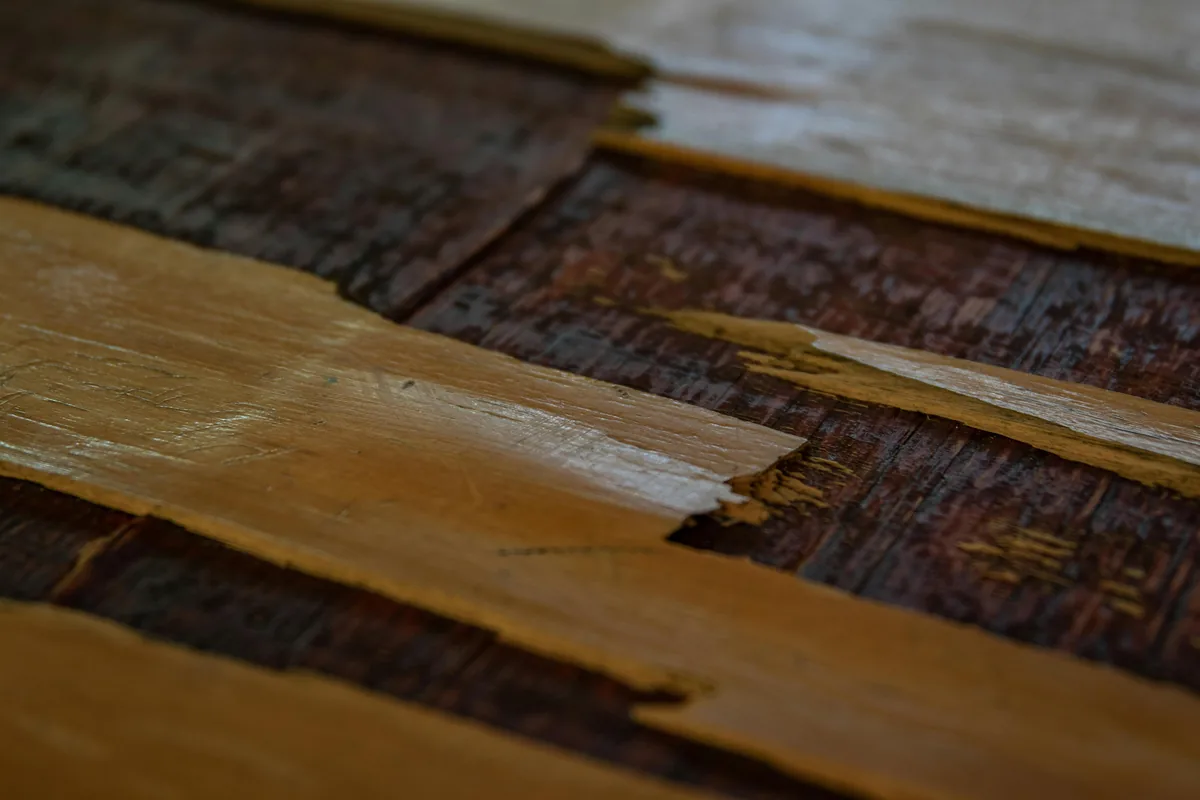
Tile, Waterproof Plank, or Engineered Wood?
Free in-home visit, slab moisture check, and a material recommendation matched to your kitchen's traffic and appliances — written estimate, no pressure.
Spills, Leaks, and Humidity: Why Waterproof Wins in a Florida Kitchen
A kitchen floor faces more water than any room except the bathroom — and in Florida the humidity never lets it dry out fully. Sink splash, dishwasher and ice-maker supply lines, and the slow drip of a leaking fridge all land on the kitchen floor, and a non-waterproof material absorbs that water, swells, stains, or grows mildew at the seams.
- The surface shrugs off spills — porcelain and rigid LVP do not absorb water, so a spilled pot or a mopped floor wipes away with no swelling
- A leak becomes a wipe-up — when a dishwasher or supply line fails, a waterproof floor contains the damage instead of buckling and lifting
- Humidity does not move the floor — rigid-core LVP and porcelain stay dimensionally stable through Florida's indoor humidity swings, unlike solid wood that can cup
- Sealed or epoxy grout resists stains — in a tiled kitchen, the grout is the weak point; we seal it or specify epoxy so coffee, wine, and sauce do not stain the joints
Why Florida Kitchen Floor Installs Are Different
The Florida slab and the kitchen layout drive the whole install. Most homes here are slab-on-grade — concrete poured on the ground — that releases vapor year-round, and the kitchen is usually the most cabinet- and appliance-dense room in the house. Both shape how the floor goes down, on top of Florida's heat, humidity, and (in coastal South Florida) HVHZ material rules.
- Slab moisture-vapor emission rate (MVER) checked before tile or glue-down, because Florida slabs push vapor that can undermine a finish or adhesive
- Install sequence planned around the kitchen — whether the floor runs under the cabinets and island or stops at the toe-kick changes the order of work and the material quantity
- Appliance clearances and the dishwasher pocket detailed so the floor height does not trap the dishwasher or block the fridge
- Heat expansion managed for floating LVP with proper gaps at every wall and transition — Florida kitchens heat up fast when the oven runs and the AC cycles
- FBC-aware detailing, with HVHZ-approved materials for coastal and South Florida projects where applicable
Materials We Install for Kitchen Floors
Hardness, absorption, and wear rating drive kitchen-floor performance more than the look. We install heavy-traffic porcelain, waterproof rigid-core LVP, and slab-stable engineered wood from manufacturers with stated PEI Big-box stock often pairs a thin wear layer or a soft, low-PEI tile with unsealed grout that stains the first time something spills.
- Daltile / MSI PEI 4–5 porcelain
- Florida Tile heavy-traffic kitchen tile
- COREtec / Shaw waterproof rigid-core LVP
- Mohawk SolidTech rigid LVP
- Bruce / Mullican engineered hardwood
- Laticrete SpectraLOCK epoxy grout
- Bostik / Mapei moisture-control adhesives
- Schluter transitions & movement profiles
Will Your Kitchen Slab Need Leveling or a Moisture Barrier First?
Older Florida kitchen slabs are rarely flat — decades of cabinet loads and a prior floor leave dips and humps — and some read high on moisture. Self-leveling underlayment corrects the slab to the flatness tolerance the material requires, and a moisture barrier or vapor-control adhesive handles a slab that tests high.
We bundle slab prep into the same visit and the same crew — moisture test, grind or patch, self-level, then install — so your kitchen does not bounce between a prep contractor and an installer. Floor Leveling Estimate
Florida Building Code, HVHZ, and Permits for Kitchen Floors
A like-for-like kitchen floor over an existing sound substrate usually does not require a permit, because it is a floor covering rather than a structural change. The picture changes when the job touches the subfloor, the slab, a moisture assembly, or relocates plumbing for an island — that work can fall under the Florida Building Code, and in High-Velocity Hurricane Zone areas (Miami-Dade, Broward, and other coastal South Florida jurisdictions) certain assemblies and materials carry product-approval requirements.
We tell you during the estimate whether your specific project triggers any FBC or HVHZ requirement, and we detail the install — expansion gaps, transitions, and appliance clearances — to the manufacturer's specification.
Our 6-Step Kitchen Flooring Process
Every Pro Work kitchen floor follows the same six-step framework — built for a waterproof, durable, layout-correct result on a Florida slab.
- Free in-home consultation. We measure, check the slab and existing floor, and plan the layout around your cabinets, island, and appliances. You see material options matched to your traffic. No commitment.
- Written estimate. Line-item breakdown — material, slab prep, install labor, transitions, appliance handling, and timeline. Delivered after the visit so you see exactly what you are paying for.
- Slab moisture test & prep. MVER check, then grinding, patching, or self-leveling so the slab meets the flatness and moisture spec. Moisture barrier added where the slab tests high.
- Layout & appliance planning. We set the install sequence — under cabinets or to the toe-kick — and confirm floor height against the dishwasher pocket and appliance clearances before the first piece goes down.
- Installation. Tile set in the correct thinset, or floating/glue-down LVP with proper expansion gaps, finished with sealed or epoxy grout where tiled. Daily cleanup, single point of contact.
Skip the Dented, Stained-Grout Kitchen Floor
Fast reply. Slab moisture-tested, layout planned. A Florida kitchen floor done right, the first time.
How to Identify a Qualified Florida Kitchen Floor Installer
The material matters less than the planning and the prep. A waterproof floor laid over an untested slab, or tiled without a layout plan, still fails — at the seams, at the dishwasher, or in the grout. Verify all of the following before signing anything:
- Slab moisture testing as standard
- A qualified Florida installer tests the slab's moisture-vapor emission rate before glue-down or barrier decisions. If moisture testing is not in the scope, the install is a guess.
- Layout and appliance planning
- A kitchen floor has to clear the dishwasher pocket and respect appliance clearances. Ask how the installer handles floor height and the under-cabinet versus toe-kick decision — vagueness here causes a trapped dishwasher later.
- Heavy-traffic and stain-resistant spec
- Confirm the tile is PEI 4–5 or the LVP wear layer is 20-mil or thicker, and that the grout is sealed or epoxy. A soft tile or unsealed grout shows kitchen wear fast.
- Slab flatness and leveling included where needed
- Written line-item estimate after a site visit
- A reputable installer measures on-site, checks the slab and cabinets, and itemizes material, prep, and labor. A phone quote with no slab inspection is a red flag.
Florida Kitchen Flooring Case Study
Our Installation Standards
Every Pro Work kitchen flooring project meets these installation standards:
- Florida Building Code compliance
- Installed to FBC moisture and assembly requirements, with HVHZ product-approved materials where coastal South Florida requires them.
- Moisture-tested installation
- Slab MVER testing and, where needed, a moisture barrier before install — the step that prevents the delamination and cracking Florida slabs are known for.
Why Florida Homeowners Choose Pro Work for Kitchen Floors
Most flooring crews lay a kitchen floor like any other room. We treat it as the hardest-working floor in the house. The same installer who recommends your material also tests the slab, plans the layout around your cabinets, and details the floor for heat and appliances — so the kitchen floor you paid for actually performs.
- Spec'd for kitchen abuse. We match the surface to spills, dropped pans, and appliance loads — not a soft, low-rated big-box product.
- Slab moisture-tested every job. The single most-skipped step in Florida, and the one that causes the most failures.
- Layout planned around your kitchen. Floor height set to the dishwasher pocket and appliance clearances before the first piece goes down.
- One crew, prep to finish. Moisture test, leveling, and install under one schedule — no bouncing between contractors.
Related Flooring Work We Coordinate
A kitchen floor in Florida often pairs with prep and finishing work. We hold it all under one crew so the floor goes down flat, waterproof, and finished:
- Backsplash Tile — a coordinated backsplash that protects the wall above the counter and ties into the kitchen finish.
- Floor Leveling — self-leveling underlayment so the kitchen slab meets the flatness spec before install.
- Baseboard Installation — PVC or moisture-resistant baseboard to finish the perimeter where the floor meets the cabinets and walls.
- Subfloor Repair — slab and vapor correction after a kitchen leak, done before the new floor.
Kitchen Flooring Installation Near Green Cove Springs
We also handle kitchen-flooring-installation in cities near Green Cove Springs, across Clay County and Northeast Florida: