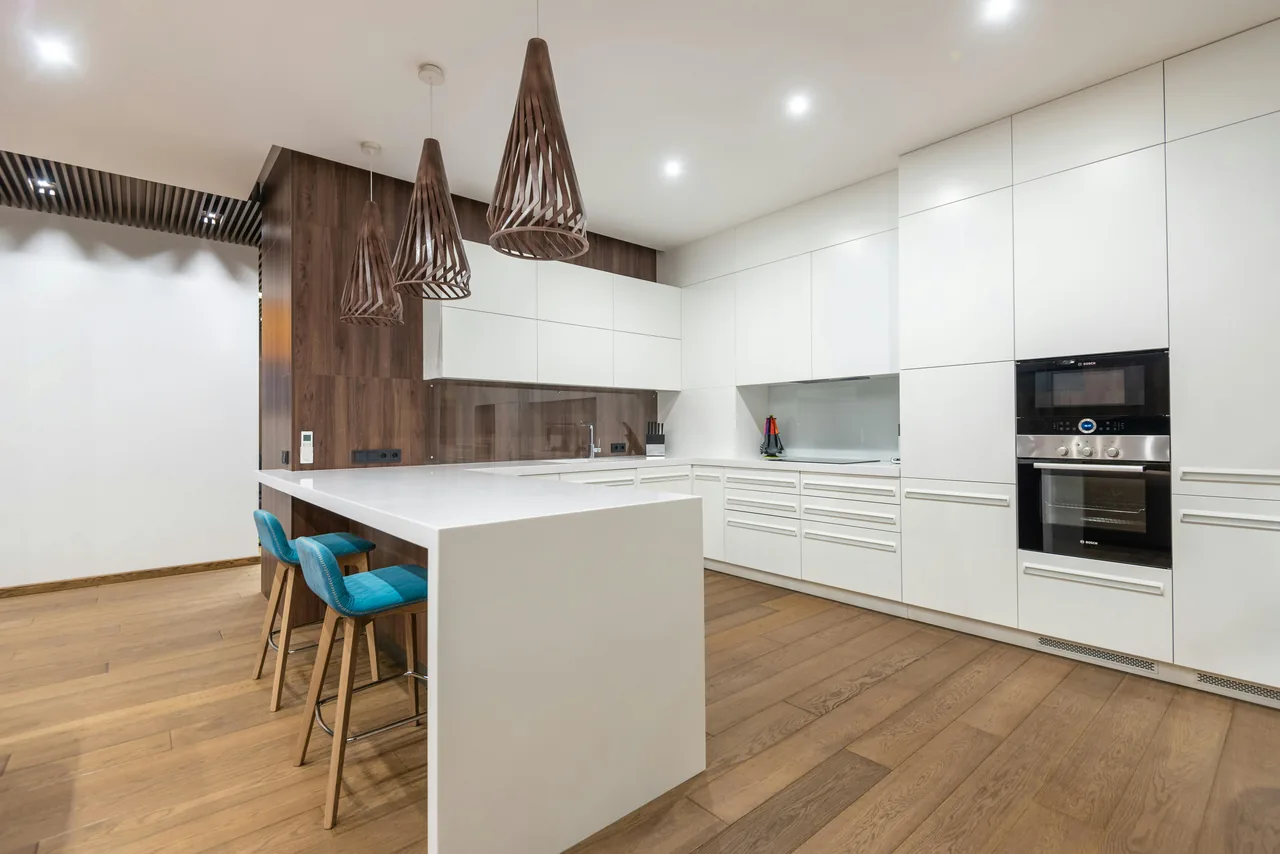
Bamboo flooring installation in Florida means laying a strand-woven grass floor — bamboo fibers shredded, resin-saturated, and compressed under heat into planks harder than most hardwoods. The number that sells it is hardness: quality strand-woven bamboo tests at a Janka 3,000 and up, well above red oak's 1,290. The number that decides whether it lasts in Florida is moisture. Bamboo is hygroscopic — it absorbs and releases water vapor with the air around it — so on a humid slab-on-grade home it will move unless the slab is tested and the planks are acclimated first. We check the slab's MVER, acclimate every box to your interior RH
Watch
See Bamboo Flooring Installation Done Right in Florida
Bamboo Flooring Installation in Hillcrest Heights: What Matters Locally
Hillcrest Heights isn't the same as inland Florida when it comes to bamboo-flooring-installation. The local factors below shape the right approach:
Inland homes in Polk County still need moisture control; we plan bamboo-flooring-installation around Florida humidity year-round.
Inland Hillcrest Heights, in Polk County, contends with slab moisture and sustained humidity more than salt exposure, which shapes subfloor prep and material choice for bamboo-flooring-installation.
We'll help you weigh the bamboo-flooring-installation materials that make sense for Hillcrest Heights conditions:
What Is Strand-Woven Bamboo, and How Hard Is It?
Strand-woven bamboo is a dense, resin-bonded floor milled from a fast-growing grass — not a tree — and it behaves differently from both hardwood and vinyl. Mature Moso bamboo stalks are shredded into fibrous strands, saturated with adhesive, and pressed under intense heat and pressure into solid or engineered planks. That process is why a grass ends up harder than oak.
- Strand-woven (the Florida choice) — shredded fibers compressed into a plank that tests Janka 3,000+, the densest and most dent-resistant bamboo format
- Horizontal / vertical grain — flattened stalks glued in layers; softer (Janka 1,300–1,600) and more dimensionally reactive, less suited to humid slabs
- Solid strand-woven — one piece through; can be sanded and refinished, best over conditioned space
- Engineered strand-woven — bamboo wear layer over a stable core; the more slab-tolerant build for Florida ground floors
- Click-lock or glue-down — floating click-lock for most rooms, full-spread glue-down where a slab demands a bonded floor
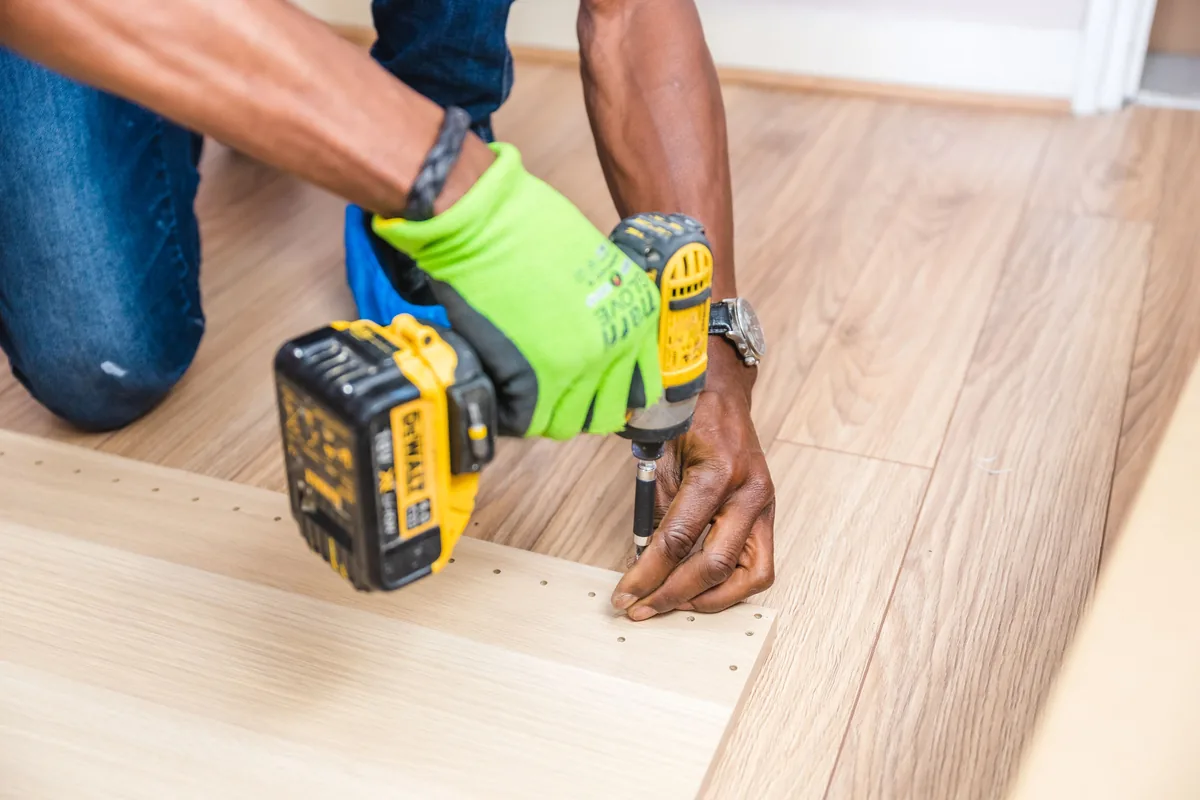
Is Your Slab Dry Enough for Bamboo?
Free in-home visit, slab moisture check, and an acclimation plan matched to your home's humidity — written estimate, no pressure.
Why Bamboo and Florida Humidity Are a Careful Match
Bamboo is hard, but it is not waterproof and it is not inert. It is a hygroscopic material, meaning it takes on and gives off moisture as the surrounding humidity rises and falls — and Florida's indoor RH can swing from the mid-40s in a conditioned winter to the mid-70s in a humid summer. That swing is exactly what makes bamboo gap, cup, or peak when it is installed without the right preparation.
- It moves with humidity — planks expand in damp months and shrink in dry ones, so expansion gaps at every wall and transition are non-negotiable
- It is water-resistant, not waterproof — strand-woven shrugs off a quick spill, but standing water from a flood or slab leak will still swell and stain it
- Slab vapor is the hidden threat — moisture rising through an untested slab-on-grade is absorbed from below, where you never see it until the floor cups
- Acclimation prevents most failures — letting the planks reach the home's RH before lock-in is the single step that separates a flat floor from a buckled one
Why Florida Bamboo Installs Are Different
The slab and the air do the damage, so the install has to answer both. Most Florida homes are slab-on-grade — concrete poured straight on the ground — and that slab releases vapor year-round. Bamboo over that slab needs moisture testing, a vapor strategy, real acclimation time, and, in coastal South Florida, awareness of HVHZ material rules.
- Slab moisture-vapor emission rate (MVER) checked before any glue-down or barrier decision — bamboo is less vapor-tolerant than rigid LVP
- Acclimation of every box to the home's interior temperature and humidity, often several days, before a single plank is locked in
- Expansion gaps sized for Florida's humidity swing at every wall, doorway, and transition so the floor can move without peaking
- A vapor barrier or moisture-control adhesive added where the slab tests high, protecting the underside the homeowner never sees
- FBC-aware detailing, with HVHZ-considered materials for coastal and South Florida projects where applicable
Brands We Install for Bamboo Flooring
Bargain horizontal-grain bamboo from a big-box shelf is softer and far more reactive to humidity than the strand-woven product Florida slabs need.
- Cali Bamboo Fossilized strand-woven
- Ambient strand-woven bamboo
- Teragren bamboo flooring
- Plyboo architectural bamboo
- EcoFusion strand bamboo
- Home Legend strand-woven planks
- Bostik / Mapei moisture-control adhesives
- Schluter transitions & movement profiles
Will Your Slab Need a Moisture Barrier or Leveling First?
Older Florida slabs are rarely flat, and many read high on moisture — both of which bamboo punishes harder than vinyl. Self-leveling underlayment corrects dips and humps so the floor sits flat, and a vapor barrier or moisture-control adhesive handles a slab that tests above the manufacturer's limit.
We bundle slab prep into the same visit and the same crew — moisture test, grind or patch, self-level, then acclimate and install — so your project does not bounce between a prep contractor and an installer. Floor Leveling Estimate
Florida Building Code, HVHZ, and Permits for Bamboo
A like-for-like bamboo install over an existing floor usually does not require a permit, because it is a floor covering rather than a structural change. The picture changes when the job touches the subfloor, the slab, or a moisture assembly — that work can fall under the Florida Building Code, and in High-Velocity Hurricane Zone areas (Miami-Dade, Broward, and other coastal South Florida jurisdictions) certain assemblies and materials carry product-approval requirements.
We tell you during the estimate whether your specific project triggers any FBC or HVHZ requirement, and we detail the install — expansion gaps, transitions, and vapor control — to the manufacturer's specification.
Our 6-Step Bamboo Flooring Process
- Free in-home consultation. We measure, check the existing floor, and identify any leveling or moisture work. You see strand-woven options and finishes matched to your traffic. No commitment.
- Written estimate. Line-item breakdown — material, slab prep, acclimation, install labor, transitions, and timeline. Delivered after the visit so you see exactly what you are paying for.
- Slab moisture test & prep. MVER check, then grinding, patching, or self-leveling so the slab meets the flatness and moisture spec. Vapor barrier added where the slab tests high.
- Acclimation. Planks rest in the home — often several days — to reach interior temperature and humidity before installation. The step that prevents gapping, cupping, and peaking later.
- Installation. Floating click-lock or full-spread glue-down per the room, with correct expansion gaps at every wall and transition. Daily cleanup, single point of contact.
Skip the Big-Box Install Gamble
Fast reply. Slab moisture-tested, planks acclimated. Bamboo done right, the first time.
How to Identify a Qualified Florida Bamboo Installer
The plank matters less than the hands that lay it. A Janka 3,000 floor installed over an untested, unleveled slab — or locked in before it acclimates — will still cup. Verify all of the following before signing anything:
- Slab moisture testing as standard
- A qualified Florida installer tests the slab's moisture-vapor emission rate before glue-down or barrier decisions. Bamboo is less forgiving of vapor than vinyl, so if moisture testing is not in the scope, the install is a guess.
- A written acclimation plan
- Bamboo must reach the home's humidity before lock-in. Ask how many days the planks will acclimate on-site. An installer who wants to deliver and install the same day is setting your floor up to move.
- Correct expansion gaps for Florida humidity
- Bamboo swells and shrinks with the seasons. It needs expansion gaps at every wall and transition or it peaks. Confirm the installer details for movement.
- Slab flatness and leveling included where needed
Florida Bamboo Flooring Case Study
Our Installation Standards
Every Pro Work bamboo flooring project meets these installation standards:
- Florida Building Code compliance
- Installed to FBC moisture and assembly requirements, with HVHZ product-approved materials where coastal South Florida requires them.
- Moisture-tested installation
- Slab MVER testing and, where needed, a vapor barrier before install — the step that prevents the cupping a hygroscopic floor is prone to on Florida slabs.
Why Florida Homeowners Choose Pro Work for Bamboo
Most flooring crews treat bamboo like any plank and skip the two steps that decide its fate in Florida — moisture testing and acclimation. We treat the slab and the air as the project. The same installer who recommends your strand-woven product also tests the slab, acclimates the planks, and details the floor for humidity movement.
- Acclimation built into every job. Planks reach your home's humidity before lock-in — the most-skipped step, and the one that causes the most cupping.
- Slab moisture-tested every job. Bamboo is less vapor-tolerant than vinyl, so we never glue or lock a floor over an untested slab.
- Free in-home estimate. On-site measurement, slab check, line-item breakdown, no high-pressure sales tactic.
- One crew, prep to finish. Moisture test, leveling, acclimation, and install under one schedule — no bouncing between contractors.
Related Flooring Work We Coordinate
A bamboo project in Florida often pairs with prep and finishing work. We hold it all under one crew so the floor goes down flat, stable, and finished:
- Floor Leveling — self-leveling underlayment so the slab meets the bamboo flatness spec before install.
- Subfloor Repair — slab and vapor correction after moisture or flooding, done before the new floor.
- Baseboard Installation — moisture-resistant baseboard to finish the perimeter over the expansion gap.
- Stair Installation — matching bamboo stair treads and risers tied into the new floor.
Bamboo Flooring Installation by Hillcrest Heights Neighborhood
Pro Work Flooring serves Hillcrest Heights neighborhood by neighborhood. Pick yours for local detail and a service-area map:
Bamboo Flooring Installation Near Hillcrest Heights
We also handle bamboo-flooring-installation in cities near Hillcrest Heights, across Polk County and Central Florida: