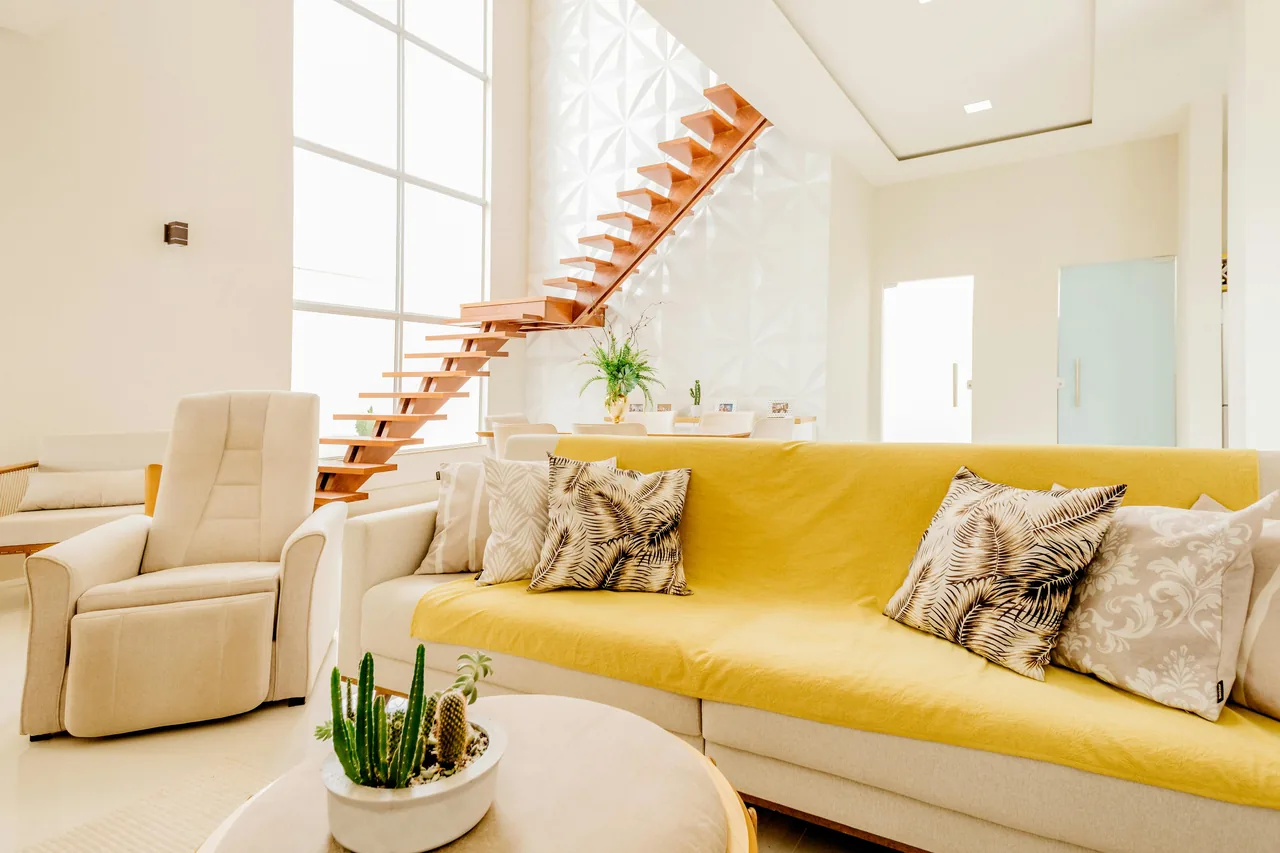
Stair installation in Florida is the work of building or rebuilding an interior staircase — fabricating and fitting the treads (the steps you walk on), risers (the vertical faces), and the stringers that carry them — so the result is uniform, safe, and visually tied into the floor that meets it top and bottom. It sits at the intersection of carpentry and code: the Florida Building Code sets a maximum 7¾-inch rise, a minimum 10-inch run, and a uniformity tolerance so tight that the difference between the largest and smallest step in a flight cannot exceed 3/8 inch — because a step that varies by even a half-inch is exactly where people fall. On top of geometry, Florida adds a material question most installers skip: coastal humidity moves wood, so the tread species and construction have to be chosen for dimensional stability, not just looks. We measure the rise and run, match the treads to your new LVP, hardwood, or engineered floor, and build to the code so the staircase passes inspection and feels solid for decades.
Watch
See Stair Installation Done Right in Florida
Stair Installation in Islamorada: What Matters Locally
Smart stair-installation in Islamorada means designing around Florida's realities, not ignoring them:
Coastal living in Islamorada is tough on floors. We plan stair-installation to handle salt, moisture, and heat together.
As a coastal Monroe County community, Islamorada sees salt air and high humidity all year, so moisture control and material selection lead every stair-installation decision.
Not every product suits South Florida. For stair-installation in Islamorada, here's what we recommend and why:
What Stair Installation Covers, and Why It Is Not Just Carpentry
Stair installation ranges from re-surfacing an existing staircase to fabricating a new flight from the framing up. What unites every version is that the staircase is a life-safety component governed by code, not a decorative finish you can eyeball.
- New treads and risers over existing stringers — the most common Florida job: the structural stringers stay, and we cap them with new hardwood or engineered treads and risers, often to convert carpeted stairs to a hard surface that matches the floor.
- Full staircase build — fabricating stringers, treads, and risers for a new opening, an addition, or a remodel that relocates the stairs.
- Carpet-to-wood conversion — pulling worn carpet, repairing or replacing the substrate, and installing finished treads and risers, the single most popular stair upgrade in Florida homes.
- Tread caps for LVP and laminate — color-matched stair-nose and tread caps that carry a rigid-core floor up the stairs without exposing a raw plank edge.
- Handrail, guards, and balusters — the code-governed safety hardware that we coordinate so the railing height and baluster spacing pass inspection.
Converting Carpeted Stairs to Wood?
Free in-home visit, rise-and-run measurement, and a tread match to your new floor — written estimate, no pressure.
Why Florida Stair Installs Are Different
Coastal humidity is what separates a Florida stair job from one anywhere else. Indoor relative humidity in a Florida home swings wide across the year, and wood expands and contracts with it. A solid-wood tread cut and installed without regard for that movement can cup, gap at the riser, or squeak within a couple of seasons. The species and construction of the tread are a Florida decision, not an afterthought.
- Material chosen for humidity stability — engineered stair treads and dense, dimensionally stable species hold their shape through Florida's humidity swings better than soft solid wood, which is the same reason engineered wood is favored on Florida floors.
- Treads acclimated before install — wood and engineered treads rest in the home to reach interior humidity before they are fastened, so they are at their stable dimension when locked in.
- Salt air near the coast — coastal homes see faster corrosion on fasteners and metal baluster hardware, so we specify coated or stainless fasteners where the exposure calls for it.
- Stairs tie a multi-floor home together — the staircase usually connects a tiled or LVP ground floor to a different upstairs surface, so the tread color and the stair nose are matched to make the transition read as one continuous floor.
- Substrate checked for moisture damage — in flood-prone or older homes, the existing stringers and subfloor at the base of the stairs can hide moisture or termite damage that we address before new treads go on.
Materials We Install for Stairs
The right tread material is the one that stays flat in Florida humidity and matches the floor it meets. We install treads and risers from manufacturers with documented species, grades, and finishes, and we color-match stair noses to the floor going in. We pair the treads with the same finishes and adhesives that protect Florida floors.
- Oak & hard maple solid treads (acclimated)
- Engineered stair treads for humidity stability
- Stair-nose & tread caps color-matched to LVP
- Poplar & primed risers paint-grade
- Bona / DuraSeal tread finishes
- Titebond / construction adhesive squeak-free bond
- Coated & stainless fasteners for coastal exposure
- Iron & wood balusters to code spacing
Will the Existing Stringers or Substrate Need Repair First?
On a re-tread, the staircase is only as good as the structure under it. Older Florida stairs sometimes hide a cracked stringer, a loose connection, or moisture and termite damage at the base where the stairs meet the floor. All of it is checkable before any commitment, and all of it is cheaper to handle before the new treads go on than after.
We inspect the stringers and the substrate during the same visit, repair or reinforce what needs it, and address any moisture or pest damage before fabricating the new steps — so the finished staircase is solid, quiet, and built on sound structure. Subfloor Repair Estimate
Florida Building Code and Permits for Stairs
Stairs are one of the most code-scrutinized parts of a home, because they are a primary fall hazard. The Florida Building Code governs the maximum rise, the minimum run, the uniformity of steps, the minimum headroom, and the height and graspability of the handrail, along with guard height and the spacing of balusters (the familiar 4-inch sphere rule). A re-tread that does not change the geometry is usually a finish upgrade, but building a new staircase, changing the rise or run, or altering the structure typically requires a permit and inspection — and coastal HVHZ jurisdictions add their own requirements.
We tell you during the estimate whether your specific project triggers a permit, build to the code's rise, run, uniformity, handrail, and guard requirements, and detail the connections so the staircase is solid and passes inspection.
Our 6-Step Stair Installation Process
Every Pro Work stair project follows the same six-step framework — built for a uniform, code-compliant staircase that matches your floor and holds up to Florida humidity.
- Free in-home consultation. We measure the rise and run, inspect the stringers and substrate, and discuss tread material and the floor it will match. You see options matched to your home. No commitment.
- Written estimate. Line-item breakdown — treads, risers, any structural repair, railing coordination, finish, and timeline. Delivered after the visit so you see exactly what you are paying for.
- Structure check & repair. Stringers, connections, and the base substrate are inspected and reinforced or repaired, with any moisture or pest damage addressed before fabrication.
- Material acclimation. Wood and engineered treads rest in the home to reach interior humidity before installation — the step that prevents later cupping, gapping, and squeaks.
- Fabrication & installation. Treads and risers are cut to the measured rise and run, bonded and fastened squeak-free, with handrail and guards set to code. Daily cleanup, single point of contact.
One Crew for Stairs and Floor
Fast reply. Code-compliant rise and run. Stairs that match the floor and survive Florida humidity.
How to Identify a Qualified Florida Stair Installer
A staircase is structural and code-governed, so the wrong hands create both a failed inspection and a fall hazard. Verify all of the following before signing anything:
- Rise and run measured to code
- A qualified installer measures the existing rise and run and builds to the Florida Building Code's limits and the 3/8-inch uniformity tolerance. If steps are eyeballed rather than measured, the staircase is a hazard and an inspection risk.
- Material chosen for Florida humidity
- Treads should be a species or engineered construction that stays flat through humidity swings, and they should be acclimated before install. An installer who treats the tread as a pure cosmetic choice is setting up cupping and squeaks.
- Structure inspected before re-treading
- On a re-tread, the stringers and the base substrate need a check for cracks, loose connections, and moisture or termite damage. Capping new treads over a compromised structure hides a problem instead of fixing it.
- Handrail and guards to code
- Handrail height and graspability, guard height, and baluster spacing are code requirements. Confirm the installer details the railing and guards, not just the steps.
- Written line-item estimate after a site visit
- A reputable installer measures on-site, checks the structure, and itemizes treads, risers, repair, railing, and finish. A phone quote with no measurement is a red flag.
Florida Stair Installation Case Study
Our Installation Standards
Every Pro Work stair installation project meets these installation standards:
- Florida Building Code compliance
- Built to FBC rise, run, uniformity, handrail, and guard requirements, with HVHZ requirements met where coastal South Florida applies.
- Humidity-stable materials
- Tread species and construction chosen for dimensional stability and acclimated to the home before install — the step that prevents the cupping and squeaks Florida humidity causes.
Why Florida Homeowners Choose Pro Work for Stair Installation
Most flooring crews stop at the floor and hand the stairs to someone else. We treat the staircase as part of the same floor, because a tread that does not match the floor or move with Florida humidity undoes the whole project. The crew that installs your floor builds the stairs to match it and to the code.
- Matched to your floor. Tread color and stair nose tied to your LVP, hardwood, or engineered floor so the transition reads as one surface.
- Built to code. Rise, run, uniformity, handrail, and guards to the Florida Building Code — solid and inspection-ready.
- Free in-home estimate. On-site rise-and-run measurement, structure check, line-item breakdown, no high-pressure sales tactic.
- Humidity-stable materials. Tread species and construction chosen and acclimated for Florida so steps stay flat and quiet.
- One crew, stairs and floor. Structure repair, treads, and matching floor under one schedule — no bouncing between contractors.
Related Flooring Work We Coordinate
A stair project in Florida almost always travels with a floor project. We hold the related work under one crew so the floor and the stairs match and finish together:
- Luxury Vinyl Plank — color-matched stair-nose and tread caps carry a rigid-core floor up the stairs.
- Hardwood Flooring — solid or engineered treads that match a wood floor tread-for-board.
- Stair Refinishing — when the existing treads are sound, refinishing instead of replacing to match a refinished floor.
- Baseboard Installation — skirt board and trim to finish the staircase against the wall.
Stair Installation Near Islamorada
Beyond Islamorada, our stair-installation crews regularly work these nearby areas: