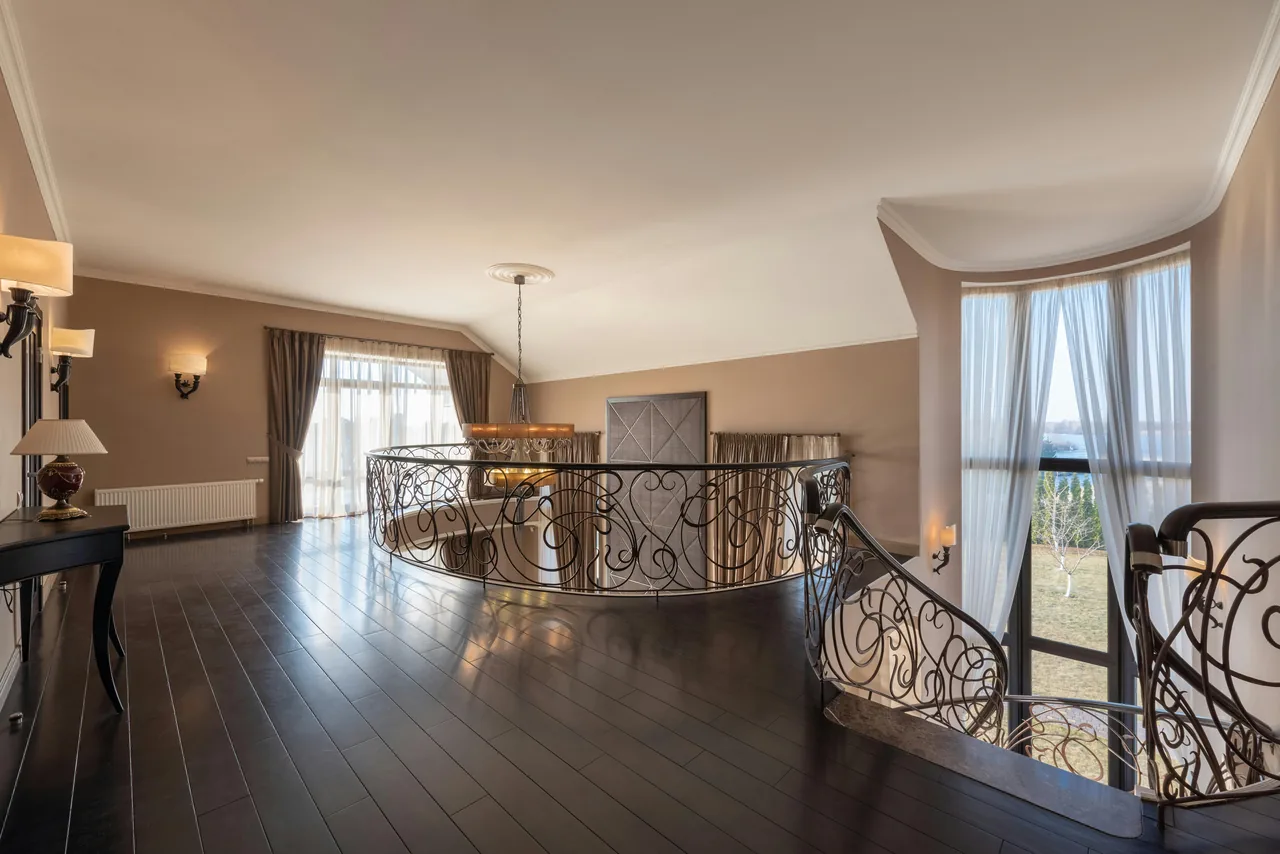
Cork flooring installation in Florida means laying a resilient floor made from tree bark — the harvested bark of the cork oak, ground, bound, and pressed into tiles or floating planks with a cushioned, insulating cell structure. What makes cork worth choosing is comfort: it is warm underfoot, it absorbs sound, and it gives slightly under your step. What decides whether it survives in Florida is moisture management. Cork is porous and organic, so on a humid slab-on-grade home it must be installed over a tested slab with a vapor strategy and finished with a sealed surface and sealed edges. We check the slab's MVER
Watch
See Cork Flooring Installation Done Right in Florida
Cork Flooring Installation in Longboat Key: What Matters Locally
Getting cork-flooring-installation right in Longboat Key means planning for what Tampa Bay puts a home through:
Coastal Longboat Key homes deal with moisture most inland areas never see — material choice matters even more here.
As a coastal Manatee County community, Longboat Key sees salt air and high humidity all year, so moisture control and material selection lead every cork-flooring-installation decision.
The best material for cork-flooring-installation in Longboat Key depends on your subfloor and how the space is used:
What Is Cork Flooring, and Why Do People Choose It?
Cork flooring is a soft, insulating, renewable floor made from the bark of the cork oak — a tree that regrows its bark, so the material is harvested without felling. Its cellular structure is millions of sealed air pockets, which is exactly why it feels warm and quiet and why it needs a deliberate moisture plan in a humid climate.
- Cushioned underfoot — the air-cell structure gives cork its signature give, easing standing fatigue in kitchens and studios
- Thermal insulator — cork resists heat transfer, so the floor never feels cold and adds a small comfort buffer
- Acoustic dampening — those same cells absorb sound, cutting footfall and echo in living areas and upper floors
- Glue-down tiles or floating planks — full-spread glue-down tiles for a bonded, edge-sealed result; floating click planks for faster installs over conditioned space
- Site-finished or pre-finished — pre-finished cork ships sealed; site-finished cork is sealed in place so seams and edges are locked against moisture
Does Your Slab Need a Vapor Strategy First?
Free in-home visit, slab moisture check, and a vapor and sealing plan matched to your room — written estimate, no pressure.
Why Cork Needs Sealing and a Vapor Strategy in Florida
Cork is comfortable, but it is porous and organic — the two traits Florida moisture punishes. Unsealed or under-protected, cork absorbs humidity through its surface and edges, swelling the joints, and standing water from a leak or flood can give mold something to colonize beneath the planks. The fix is not to avoid cork; it is to install it with the moisture plan its material demands.
- The surface must be sealed — a quality waterborne polyurethane or factory finish closes the cells so spills sit on top and wipe away instead of soaking in
- The edges and seams matter most — water finds the joints first, so glue-down tiles with sealed edges are the more moisture-secure build for Florida
- The slab needs a vapor strategy — a moisture-control adhesive or barrier stops vapor rising through slab-on-grade from reaching the cork's underside
- It is not a flood floor — cork is the wrong choice for flood-prone ground floors without a deliberate vapor strategy; for those rooms we steer to a fully waterproof option
Why Florida Cork Installs Are Different
The slab is the risk, and the seal is the defense. Most Florida homes are slab-on-grade — concrete poured straight on the ground — and that slab releases vapor year-round into a porous floor that wants to drink it. Cork over that slab needs moisture testing, a vapor barrier or moisture-control adhesive, a fully sealed surface, and, in coastal South Florida, awareness of HVHZ material rules.
- Slab moisture-vapor emission rate (MVER) checked before any glue-down — cork is far less vapor-tolerant than rigid LVP
- A vapor barrier or moisture-control adhesive specified to keep slab vapor off the underside of the cork
- Surface and edge sealing — waterborne polyurethane or a sealed factory finish so humidity and spills cannot penetrate the cells
- Room selection guidance — cork excels in bedrooms, studies, and living areas over conditioned space, and is steered away from flood-prone slabs
- FBC-aware detailing, with HVHZ-considered materials for coastal and South Florida projects where applicable
Brands We Install for Cork Flooring
Bargain unsealed cork from a big-box shelf is the most moisture-vulnerable product you can put on a Florida slab.
- Amorim / Wicanders cork flooring
- APC Cork glue-down tiles
- Globus Cork sealed cork tile
- Jelinek Cork flooring
- USFloors cork planks
- Bona waterborne sealers & finishes
- Bostik / Mapei moisture-control adhesives
- Schluter transitions & movement profiles
Will Your Slab Need a Moisture Barrier or Leveling First?
Older Florida slabs are rarely flat, and many read high on moisture — and cork shows both worse than firmer floors, telegraphing humps and absorbing vapor. Self-leveling underlayment corrects dips and humps so the cork sits flat, and a vapor barrier or moisture-control adhesive handles a slab that tests above the manufacturer's limit.
We bundle slab prep into the same visit and the same crew — moisture test, grind or patch, self-level, then install and seal — so your project does not bounce between a prep contractor and an installer. Floor Leveling Estimate
Florida Building Code, HVHZ, and Permits for Cork
A like-for-like cork install over an existing floor usually does not require a permit, because it is a floor covering rather than a structural change. The picture changes when the job touches the subfloor, the slab, or a moisture assembly — that work can fall under the Florida Building Code, and in High-Velocity Hurricane Zone areas (Miami-Dade, Broward, and other coastal South Florida jurisdictions) certain assemblies and materials carry product-approval requirements.
We tell you during the estimate whether your specific project triggers any FBC or HVHZ requirement, and we detail the install — vapor control, sealing, and transitions — to the manufacturer's specification.
Our 6-Step Cork Flooring Process
- Free in-home consultation. We measure, check the existing floor, and identify any leveling or moisture work. You see glue-down and floating options matched to your room and traffic. No commitment.
- Written estimate. Line-item breakdown — material, slab prep, vapor strategy, install labor, sealing, and timeline. Delivered after the visit so you see exactly what you are paying for.
- Slab moisture test & prep. MVER check, then grinding, patching, or self-leveling so the slab meets the flatness and moisture spec. Vapor barrier or moisture-control adhesive added where the slab tests high.
- Installation. Full-spread glue-down tiles or floating click planks per the room, with correct expansion gaps at every wall and transition. Daily cleanup, single point of contact.
- Surface & edge sealing. Waterborne polyurethane or a verified factory finish, with seams and edges sealed so Florida humidity and spills cannot penetrate the cells.
Skip the Big-Box Install Gamble
Fast reply. Slab moisture-tested, cork properly sealed. Cork done right, the first time.
How to Identify a Qualified Florida Cork Installer
The cork matters less than the moisture plan behind it. A beautiful cork floor installed over an untested slab, or left under-sealed, will swell and stain. Verify all of the following before signing anything:
- Slab moisture testing as standard
- A qualified Florida installer tests the slab's moisture-vapor emission rate before glue-down. Cork is one of the least vapor-tolerant floors, so if moisture testing is not in the scope, the install is a guess.
- A defined vapor strategy
- Ask exactly how slab vapor will be kept off the cork — a moisture-control adhesive, a barrier, or both. An installer with no answer is gambling with a porous floor.
- Surface and edge sealing included
- Cork must be sealed at the surface and the seams. Confirm the finish system and that edges are sealed; an unsealed cork floor in Florida is a swollen floor waiting to happen.
- Slab flatness and leveling included where needed
Florida Cork Flooring Case Study
Our Installation Standards
Every Pro Work cork flooring project meets these installation standards:
- Florida Building Code compliance
- Installed to FBC moisture and assembly requirements, with HVHZ product-approved materials where coastal South Florida requires them.
- Moisture-tested installation
- Slab MVER testing and a vapor strategy before install — the step that keeps a porous, organic floor off the mold-and-swell path Florida slabs invite.
Why Florida Homeowners Choose Pro Work for Cork
Most flooring crews install cork the way they would in a dry northern home and skip the moisture plan that decides its fate in Florida. We treat the slab and the seal as the project. The same installer who recommends your cork also tests the slab, builds the vapor strategy, and seals the surface and edges.
- Honest room guidance. We will tell you where cork shines and where a waterproof floor is the smarter Florida pick — not just sell you cork everywhere.
- Slab moisture-tested every job. Cork is one of the least vapor-tolerant floors, so we never glue it over an untested slab.
- Sealed surface and edges. The step that lets a porous floor survive humidity — done as part of every install, not as an upsell.
- One crew, prep to seal. Moisture test, leveling, vapor strategy, install, and sealing under one schedule — no bouncing between contractors.
Related Flooring Work We Coordinate
A cork project in Florida often pairs with prep and finishing work. We hold it all under one crew so the floor goes down flat, sealed, and finished:
- Floor Leveling — self-leveling underlayment so the slab meets the cork flatness spec before install.
- Subfloor Repair — slab and vapor correction after moisture or flooding, done before the new floor.
- Baseboard Installation — moisture-resistant baseboard to finish the perimeter over the expansion gap.
- Stair Installation — matching cork or wood stair treads tied into the new floor.
Cork Flooring Installation Near Longboat Key
Beyond Longboat Key, our cork-flooring-installation crews regularly work these nearby areas: