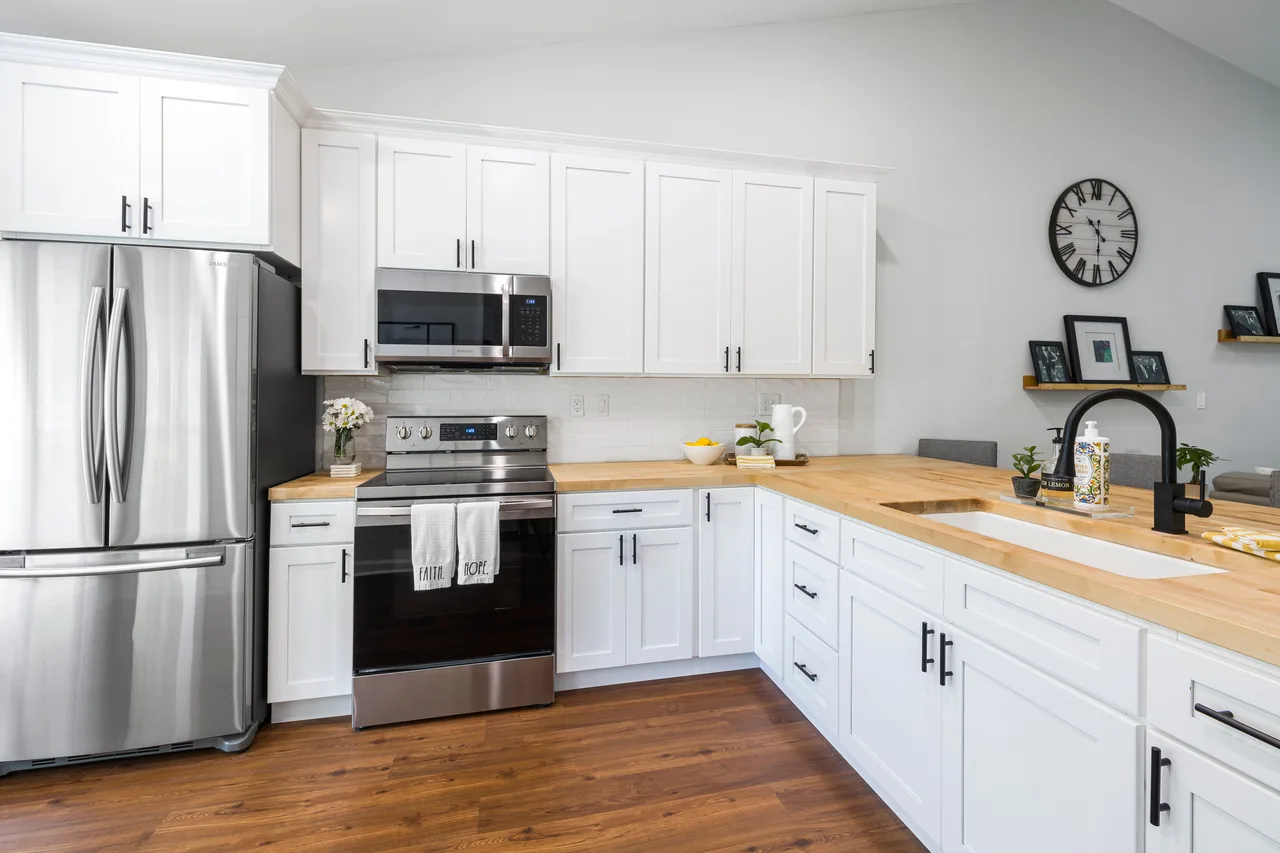
Butcher block countertop installation in Florida means installing a solid-wood work surface that stays flat, sealed, and mold-free in a climate that wants wood to move. A butcher block is a countertop built from strips of hardwood glued together — and because wood expands and contracts with the moisture in the air, the success of the job in Florida is decided by three things most installers ignore: the wood species and its Janka hardness, the grain orientation (edge, end, or face grain), and a diligent moisture-resistant seal. Done right, butcher block is the warmest counter in the house, knife-friendly, and the only countertop you can sand and refinish instead of replace. Done wrong in Florida humidity, it swells, cups, cracks at the glue lines, and grows mold underneath. We pick the species and grain for stability, acclimate the block to your home, and seal it for the Florida climate.
Watch
See Butcher Block Countertop Installation Done Right in Florida
Butcher Block Countertop Installation in Mary Esther: What Matters Locally
Mary Esther isn't the same as inland Florida when it comes to butcher-block-countertop-installation. The local factors below shape the right approach:
Coastal living in Mary Esther is tough on floors. We plan butcher-block-countertop-installation to handle salt, moisture, and heat together.
As a coastal Okaloosa County community, Mary Esther sees salt air and high humidity all year, so moisture control and material selection lead every butcher-block-countertop-installation decision.
The best material for butcher-block-countertop-installation in Mary Esther depends on your subfloor and how the space is used:
What Butcher Block Is — and Why Florida Changes the Spec
Butcher block is solid hardwood, not a veneer or a composite. That is its charm and its challenge: a real-wood surface that ages beautifully and can be refinished, but one that lives and breathes with the humidity around it. In Florida, the construction choices have to favor stability and the finish has to seal moisture out.
- Wood species — hard maple, walnut, oak, and cherry are the common choices, each with a different hardness, color, and movement
- Grain orientation — edge grain, end grain, and face grain look and behave differently; the right one balances durability against movement
- Finish type — a food-safe penetrating oil for a chopping surface, or a hard film finish for a sealed, low-maintenance counter
- Janka hardness — a measure of how well a wood resists denting; harder species hold up better under Florida kitchen use
- Acclimation & sealing — the block rests in your home to reach its moisture equilibrium, then is sealed on every face so humidity cannot get in
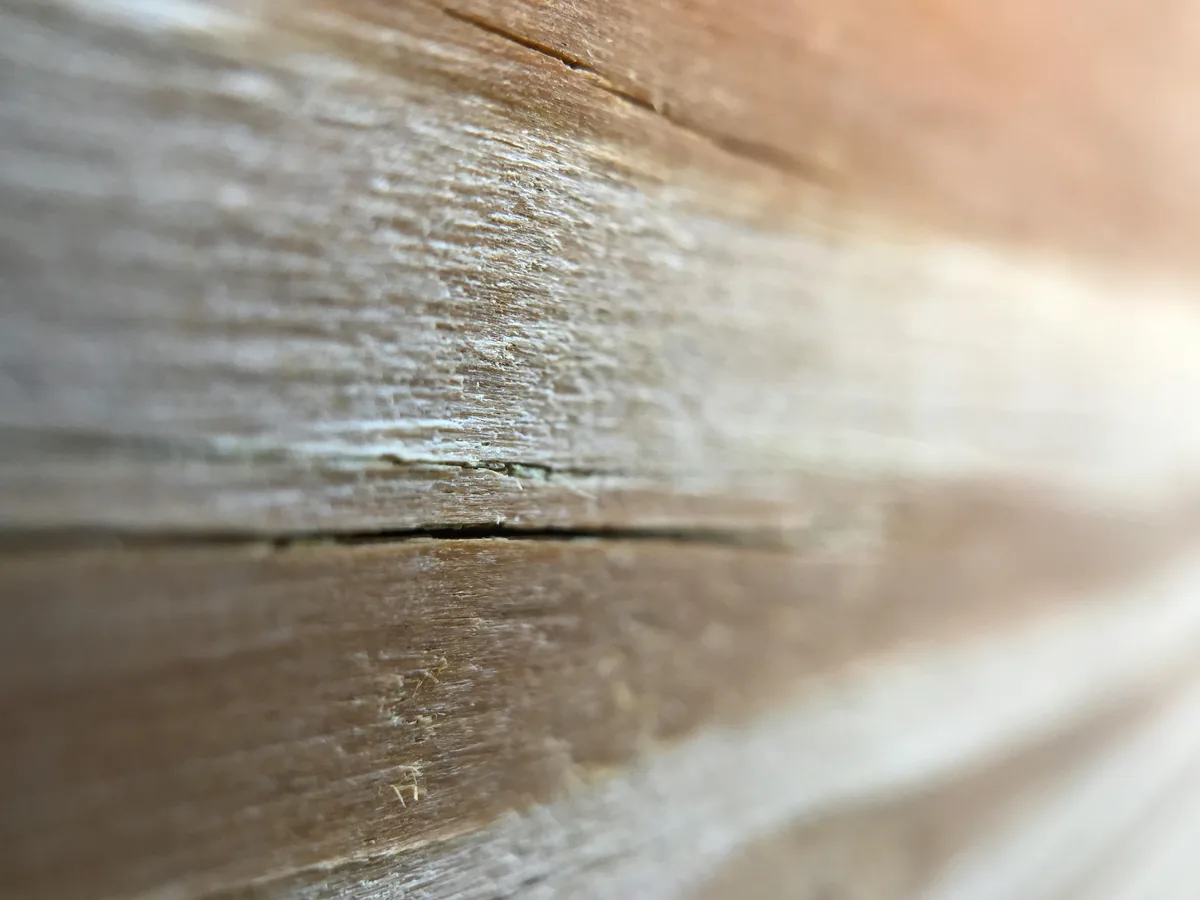
Which Wood and Finish Survive Florida?
Free in-home visit, a look at your kitchen, and a species, grain, and finish recommendation matched to the Florida climate — written estimate, no pressure.
Species and Grain: Picking Wood That Stays Flat
Species and grain orientation are the two specs that decide whether a butcher block lasts in Florida. A harder, more dimensionally stable species moves less with humidity, and the grain orientation changes both the look and how the block reacts to moisture. We match both to where the counter is going and how you will use it.
- Hard maple — the classic butcher block: light, very hard (high Janka), and dimensionally stable, the safest all-around Florida pick
- Walnut — rich and dark, slightly softer than maple but stable and beautiful, ideal as an island statement top
- Oak — strong and open-grained, durable but its open pores need thorough sealing to keep Florida moisture out
- Edge grain — long strips on edge; the most common, stable, and value-balanced orientation for counters
- End grain — the checkerboard chopping-block look; gorgeous and self-healing under a knife, but moves more, so it needs the most diligent sealing in Florida
Why a Florida Butcher Block Install Is Different
Humidity is the enemy of unsealed wood. Florida's indoor relative humidity swings wide and runs high, and bare or under-sealed wood drinks that moisture in, swells, and then cracks as it dries unevenly. Standing water at a sink or a spill that sits overnight is worse. That is why the finish and the detailing — not the species alone — are what protect a butcher block here.
- Acclimated before install — the block rests in your conditioned home so it reaches its moisture equilibrium before it is fastened, preventing post-install cupping
- Sealed on every face — top, bottom, ends, and edges are all sealed, because an unsealed underside lets humidity in and warps the block
- Moisture-resistant finish — a hard film finish (or a maintained oil-and-wax regimen) keeps Florida humidity and spills from reaching the wood
- Detailed at the sink and dishwasher — extra sealing and flashing around wet zones, because standing water is what rots a wood counter fastest
- Fastened for movement — elongated screw slots and a floating attachment let the wood expand and contract with the seasons without splitting
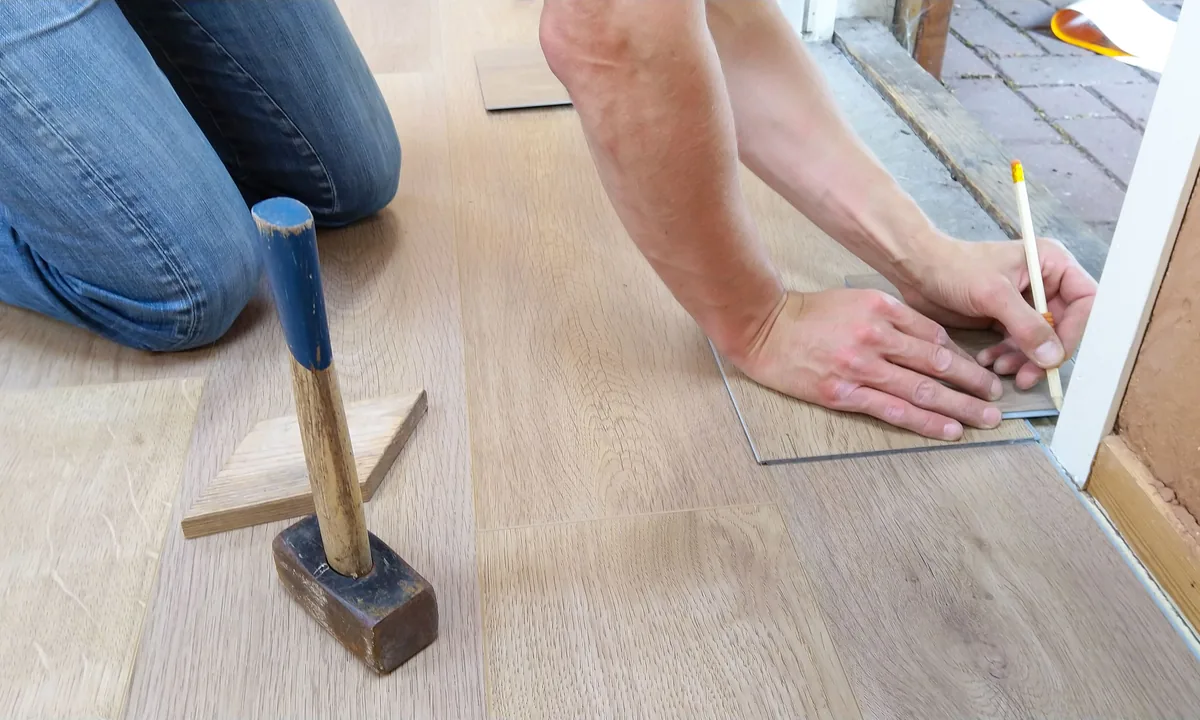
Wood & Finish Brands We Install
The wood source and the finish system decide how the counter ages and how well it resists Florida moisture. We coordinate the wood top with any stone counters in the same kitchen.
- John Boos hard maple & walnut block
- Hard Rock Maple edge & end grain
- American Walnut island tops
- Rubio Monocoat hardwax-oil finish
- Waterlox tung-oil sealer
- Odie's Oil food-safe finish
- Osmo Polyx hardwax oil
- Titebond III waterproof wood glue
Oil vs Film Finish: Maintenance in the Florida Climate
The finish you choose decides both the look and how much upkeep the counter needs in Florida. There are two paths, and we match the choice to how you will use the surface and how much maintenance you want to do.
A penetrating food-safe oil (or oil-and-wax) keeps the natural matte wood feel and lets you chop directly on the surface, but it has to be re-oiled on a schedule — more often in dry-AC Florida winters than people expect. A hard film finish seals the wood under a durable coat that resists humidity and spills with far less maintenance, at the cost of chopping directly on it. For most Florida kitchens that want a wood look without constant upkeep, we recommend a film finish on the perimeter and a maintained oil only on a dedicated chopping zone.
Code and Permits for a Butcher Block Counter in Florida
Installing a butcher block countertop on existing cabinets usually does not require a permit, because a countertop is a finish surface rather than a structural or system change. The picture changes when the job ties into plumbing or electrical — a new sink cutout, a relocated sink, or added outlets in an island — which falls under the Florida Building Code, and in coastal High-Velocity Hurricane Zone jurisdictions any added electrical carries its own requirements.
We tell you during the estimate whether your specific project triggers any FBC or permit requirement, and we coordinate any sink, plumbing, or electrical tie-in so the wood counter is detailed and sealed where it meets a wet or wired zone.
Our 6-Step Butcher Block Installation Process
Every Pro Work butcher block project follows the same six-step framework — built for a flat, sealed, humidity-resistant result in a Florida kitchen.
- Free in-home consultation. We measure, look at your cabinets and kitchen, and recommend the species, grain, and finish that suit the use and the Florida climate. No commitment.
- Written estimate. Line-item breakdown — wood, fabrication, finish, sink or edge detailing, and timeline. Delivered after the visit so you see exactly what you are paying for.
- Templating & fabrication. The counter is templated, cut to fit, and the edge profile and any sink cutout are fabricated, with the grain and seams planned for stability.
- Acclimation. The block rests in your conditioned home to reach its moisture equilibrium before install — the step that prevents later cupping in Florida humidity.
- Installation, sealing & fastening. The block is set, sealed on every face, the sink zone is detailed, and it is fastened with movement allowance so it can expand and contract without splitting. Daily cleanup, single point of contact.
Get Wood That Won't Cup in Florida
Fast reply. Acclimated and sealed for humidity. Butcher block done right, the first time.
How to Identify a Qualified Florida Butcher Block Installer
A wood counter that looks flawless on install day can cup within a season if the wrong species was used or the sealing was rushed. Verify all of the following before signing anything:
- Acclimates the wood before installing
- A qualified installer rests the block in your conditioned home until it reaches moisture equilibrium. If acclimation is not in the scope, the counter can cup the first humid season.
- Seals every face, not just the top
- An unsealed underside lets Florida humidity into the wood and warps it. Ask whether the bottom, ends, and edges are sealed — top-only finishing is a red flag.
- Matches species and grain to the use
- Hard maple and edge grain are the safest Florida defaults; end grain and softer species need extra care. An installer who cannot explain the trade-offs is guessing.
- Details the sink and wet zones
- Standing water rots wood fastest. Confirm the installer adds extra sealing and flashing around a sink or dishwasher so the wood counter survives the wettest spots.
- Fastens for wood movement
- Wood expands and contracts with the seasons. Elongated screw slots and a floating attachment prevent splitting. A rigidly screwed-down top will crack in Florida.
Florida Butcher Block Case Study
Our Installation Standards
Every Pro Work butcher block project meets these installation standards:
- Florida Building Code compliance
- Any sink, plumbing, or electrical tie-in handled to FBC requirements, with HVHZ rules followed where coastal South Florida applies.
- Humidity-sealed installation
- The block acclimated to your home, sealed on every face, and the wet zones detailed — the step that prevents the swelling, cupping, cracking, and mold a Florida wood counter is prone to.
Why Florida Homeowners Choose Pro Work for Butcher Block
Most installers treat butcher block like stone — set it and screw it down. Wood does not work that way in Florida. The same crew that picks your species and grain acclimates the block, seals every face, and fastens it for movement — so the warmest counter in your kitchen stays flat through every humid season.
- Species & grain for stability. Matched to the Florida climate and how you cook — not whatever is in stock.
- Sealed on every face. The step that keeps humidity out of the wood, and the one most installers skip.
- Free in-home estimate. On-site measurement, kitchen check, line-item breakdown, no high-pressure sales tactic.
- One crew, wood and stone. Butcher block coordinated with any quartz or granite in the same kitchen — under one schedule.
Related Countertop Work We Coordinate
A butcher block project in Florida often pairs with stone counters and finishing work. We hold it all under one crew so the wood and stone come together level, sealed, and finished:
- Quartz Countertops — a nonporous perimeter paired with a warm wood island for the best of both.
- Granite Countertops — hot-pan-safe natural stone alongside a butcher block prep zone.
- Kitchen Countertops — perimeter and island templated together so wood and stone meet cleanly.
- Kitchen Island Installation — a butcher block island top built with the right support and any prep sink.
Butcher Block Countertop Installation by Mary Esther Neighborhood
Pro Work Flooring serves Mary Esther neighborhood by neighborhood. Pick yours for local detail and a service-area map:
Butcher Block Countertop Installation Near Mary Esther
Beyond Mary Esther, our butcher-block-countertop-installation crews regularly work these nearby areas: