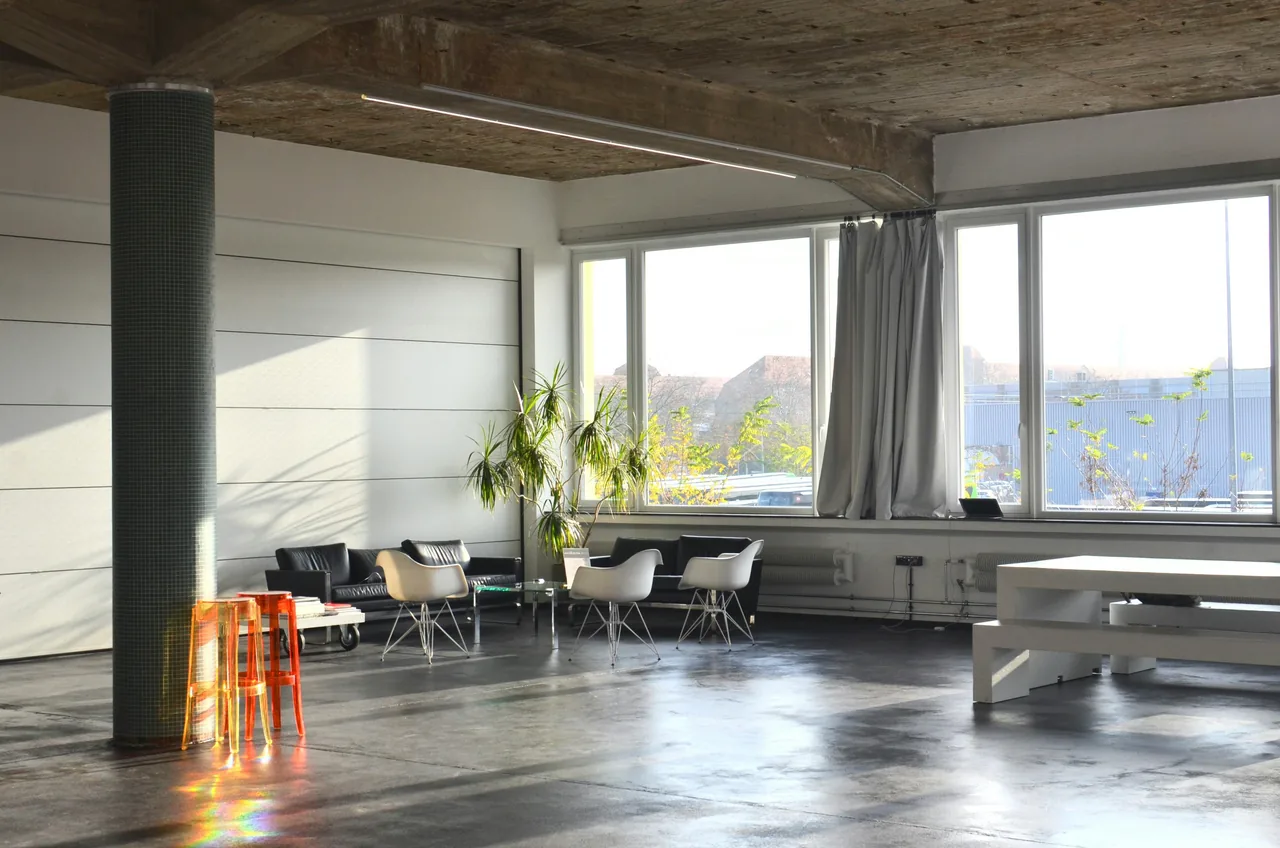
Concrete polishing in Florida is the process of turning a raw slab into a mechanically polished floor — grinding the surface with progressively finer diamond abrasives, hardening it with a chemical densifier, and refining it to a chosen sheen. Because most Florida homes sit on slab-on-grade concrete, the finished floor is the slab itself: there is no plank or tile on top to cup, swell, or grow mold. The specs that matter are the densifier that hardens the surface, the grit sequence (typically 400 to 800 grit, from satin to high gloss), and the slab's own soundness. We test slab hardness and the MVER, plan the densifier and grit, and finish with a guard sealer so the floor stays hard, bright, and easy to maintain.
Watch
See Concrete Polishing Done Right in Florida
Concrete Polishing in Melbourne Beach: What Matters Locally
Before any concrete-polishing in Melbourne Beach, these regional conditions drive the material and method choices:
Near the coast, salt air and high humidity are hard on floors. concrete-polishing in Melbourne Beach has to account for both.
As a coastal Brevard County community, Melbourne Beach sees salt air and high humidity all year, so moisture control and material selection lead every concrete-polishing decision.
For Melbourne Beach homes, material selection comes down to moisture, traffic, and budget. The contenders:
What Is Polished Concrete, and How Is the Sheen Built?
Polished concrete is a densified, multi-step diamond-ground floor — not a coating laid on top and not a paint. The shine comes from the concrete itself, refined the way a lapidary polishes stone: each finer grit removes the scratches of the one before until the surface reflects light.
- Grinding — coarse metal-bond diamonds open the slab, flatten it, and expose the aggregate to the chosen degree (cream, salt-and-pepper, or full aggregate)
- Densifier — a chemical hardener (lithium, sodium, or potassium silicate) reacts in the concrete to harden the surface and cut dusting
- Honing & polishing — finer resin-bond diamonds refine the surface through the grit sequence to the target sheen
- Grit / gloss level — roughly 400 grit for a low satin, 800 grit and up for a high reflective gloss; we match it to the room and traffic
- Guard / sealer — a penetrating guard or stain-resistant treatment that protects against spills and eases maintenance
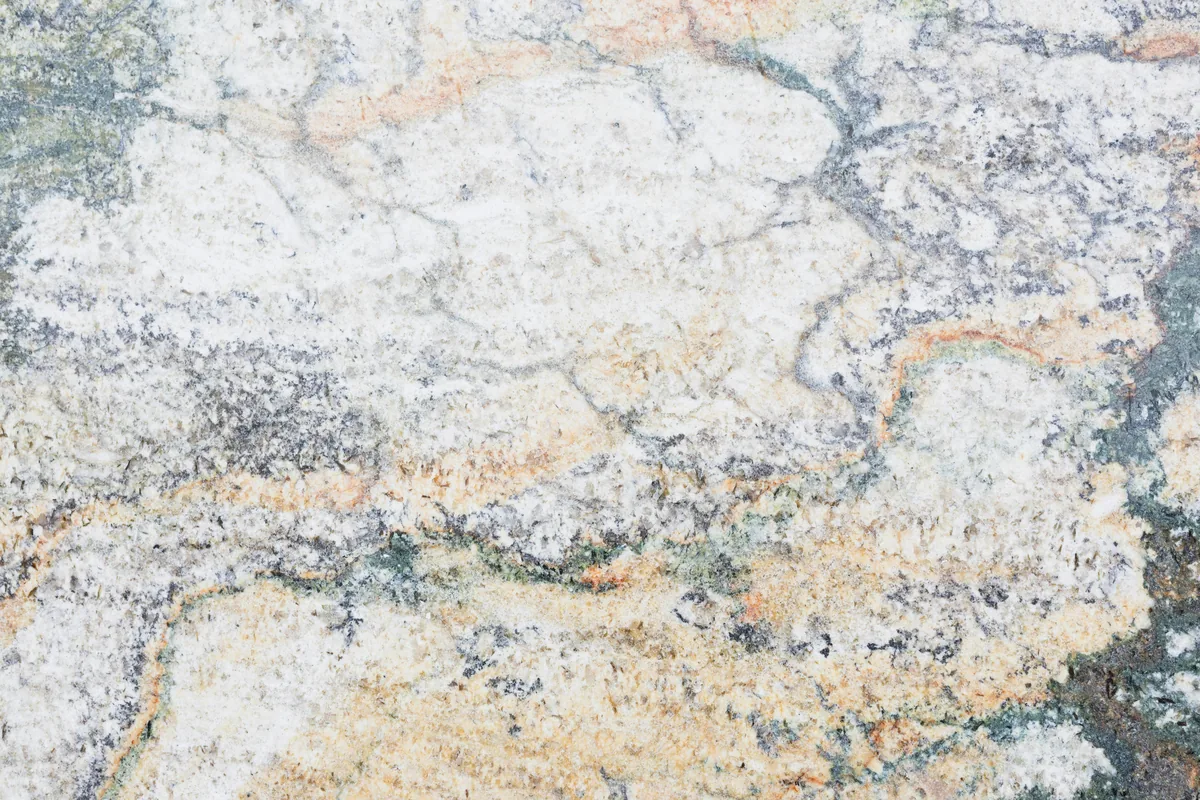
Will Your Slab Take a True Polish?
Free on-site visit, slab hardness and moisture check, and a densifier and grit plan matched to your space — written estimate, no pressure.
Why Polished Concrete Suits Florida's Moisture and Slabs
Polished concrete is one of the few floors that works with a Florida slab instead of fighting it. Because the slab is the finished surface, there is no covering and no adhesive layer for vapor to delaminate, and nothing organic for mold to colonize. That makes it a strong fit for the slab-on-grade construction that dominates Florida homes.
- No covering to fail — a polished slab cannot cup, peak, or swell the way wood, bamboo, or laminate can in humidity
- Moisture-tolerant by nature — concrete breathes, so a slab releasing vapor does not trap it under a film the way a coating can; high readings still get assessed and addressed
- Nothing for mold to eat — there is no paper, fiber, or wood, so an organic mold colony has no food source
- Densifier improves durability — hardening the surface raises abrasion resistance and reduces the dusting a bare Florida slab is prone to
Why Florida Concrete Polishing Is Different
The slab is both the canvas and the variable. Florida slabs differ widely in hardness, finish, and history — and a polish only succeeds when the process is tuned to the slab in front of it. A Florida-correct polish accounts for slab hardness, moisture, prior coverings, and, in coastal South Florida, the awareness that goes with HVHZ jurisdictions.
- Slab hardness assessed (a Mohs-style scratch check) so the densifier and diamond sequence match a soft or hard slab
- Slab moisture-vapor emission rate (MVER) checked — polished concrete tolerates moisture better than coatings, but high readings still inform sealer choice
- Old adhesive, coatings, and flooring removed and the slab opened before grinding so the polish keys into clean concrete
- Crack and joint treatment — chasing and filling cracks and saw joints so the finished floor reads clean
- FBC-aware detailing for projects where adjacent assemblies apply, including coastal South Florida HVHZ jurisdictions
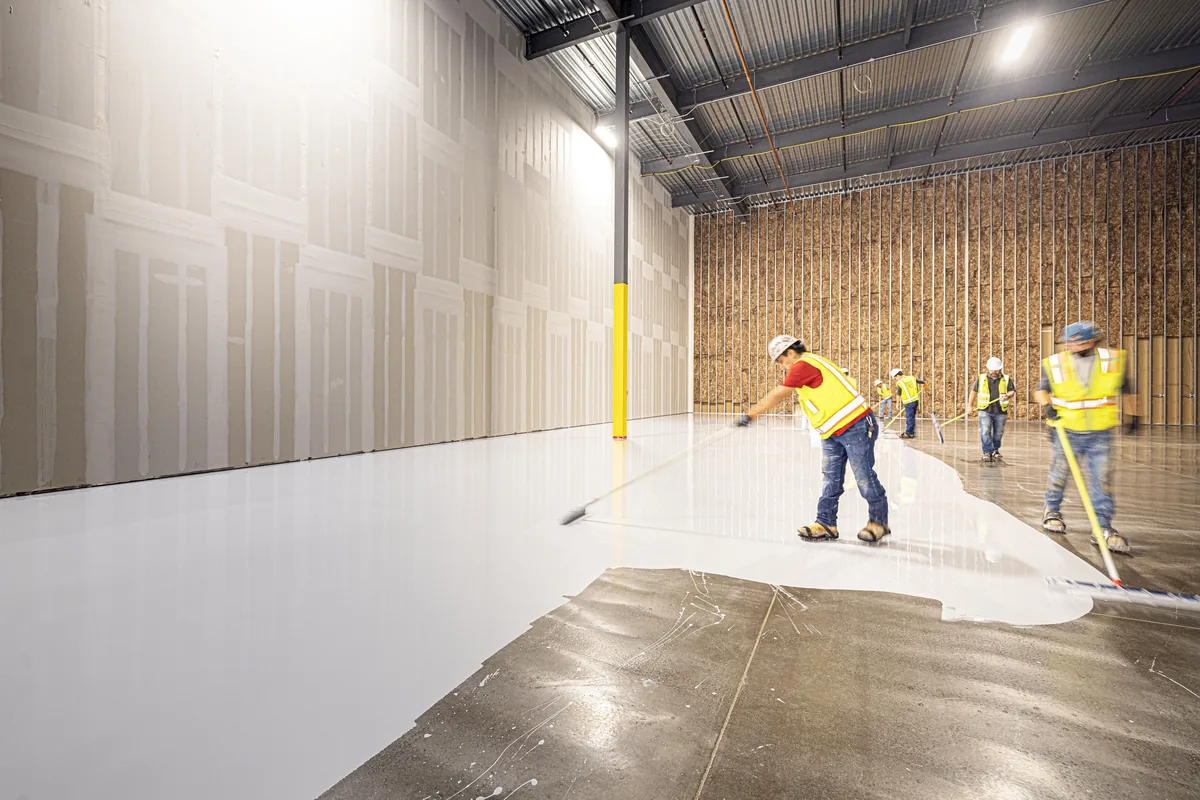
Brands We Use for Concrete Polishing
Densifier chemistry, diamond quality, and a stated guard performance matter more than the price sticker. A rushed polish with a cheap densifier and a single grit pass dusts and dulls within a season.
- Prosoco densifiers & guards
- Ameripolish dyes & sealers
- HTC / Husqvarna grinders & diamonds
- Scofield concrete treatments
- Sika / Sikafloor densify systems
- Convergent polishing chemistry
- Bona guard & maintenance
- Lavina grinding equipment
Will Your Slab Need Crack Repair or Grinding-Off First?
Many Florida slabs come with history — old tile and thinset, carpet adhesive, a failed coating, or cracks and spalls. All of it has to come off and be repaired before polishing, because the polish reflects exactly what is underneath. We remove coverings and adhesives, chase and fill cracks and saw joints, and open the slab so the diamonds key into clean concrete. Doing it before the polish is the only way to a clean, even finish.
We bundle slab prep into the same visit and the same crew — remove, repair, grind, densify, then polish — so your project does not bounce between a demo contractor and a polisher. Floor Leveling Estimate
Florida Building Code, HVHZ, and Permits for Concrete Polishing
Polishing an existing slab usually does not require a permit, because it refines a surface rather than changing the structure. The picture changes when the work touches the slab structurally or a moisture assembly — that can fall under the Florida Building Code — and in coastal High-Velocity Hurricane Zone areas (Miami-Dade, Broward, and other South Florida jurisdictions), adjacent assemblies and product approvals are worth considering.
Our 6-Step Concrete Polishing Process
Every Pro Work concrete polishing project follows the same six-step framework — built for a hard, bright, durable result on a Florida slab.
- Free on-site consultation. We assess slab hardness, moisture, and any existing covering or damage. You see aggregate-exposure and sheen options matched to your space. No commitment.
- Written estimate. Line-item breakdown — covering removal, crack repair, grinding, densifier, grit sequence, guard, and timeline. Delivered after the visit so you see exactly what you are paying for.
- Slab test & surface prep. Hardness and MVER checks, then removal of old coverings and adhesives, and crack and joint repair so the slab is clean and sound.
- Grinding & densifier. Coarse diamond grinding to flatten and expose the slab to the chosen aggregate level, then the chemical densifier applied to harden the surface and cut dusting.
- Honing, polishing & guard. Refinement through the grit sequence to your target sheen, then a penetrating guard or stain-resistant treatment. Daily cleanup, single point of contact.
Skip the Dull, Dusting Slab
Fast reply. Slab hardness and moisture-tested, densified and guarded. Polished concrete done right, the first time.
How to Identify a Qualified Florida Concrete Polisher
The equipment matters less than how the process is tuned to your slab. A rushed polish with the wrong densifier or a skipped grit step dusts and dulls fast. Verify all of the following before signing anything:
- Slab hardness and moisture assessed
- A qualified polisher tests slab hardness and the moisture-vapor emission rate before quoting, so the densifier and diamond sequence match your concrete. If neither is checked, the finish is a gamble.
- A densifier specified by name
- Densification is what hardens the surface and stops dusting. Ask which densifier (lithium, sodium, or potassium silicate) will be used; a polish with no densifier is just grinding.
- A full grit sequence, not a shortcut
- True polish comes from stepping through progressively finer diamonds. Confirm the target grit and that the sequence is not being skipped to save time, or the floor will haze.
- Covering and adhesive removal included
- Old tile, thinset, and carpet glue must come off and the slab be opened before polishing. Confirm removal and crack repair are in the scope, because the polish shows everything beneath it.
Florida Concrete Polishing Case Study
Our Installation Standards
Every Pro Work concrete polishing project meets these installation standards:
- Florida Building Code compliance
- Performed to FBC requirements where applicable, with HVHZ-considered detailing where coastal South Florida warrants it.
- Moisture-tested process
- Slab MVER and hardness testing before polishing — the assessment that matches the densifier, grit, and guard to your slab and keeps the finish durable.
Why Florida Homeowners Choose Pro Work for Concrete Polishing
Most crews run the same grit sequence on every slab and skip the testing that decides a Florida polish. We treat your specific slab as the project. The same installer who shows you sheen options also tests slab hardness and moisture, plans the densifier, and steps the grit to a finish that lasts.
- Tuned to your slab. Densifier and diamond sequence matched to your concrete's hardness — not a one-size pass.
- Slab tested every job. Hardness and moisture assessed before we quote, because both decide the finish.
- Densified for durability. A hardened surface that resists abrasion and stops the dusting a bare Florida slab is prone to.
- One crew, removal to guard. Covering removal, crack repair, grinding, densifying, polishing, and sealing under one schedule — no bouncing between contractors.
Related Flooring Work We Coordinate
A polishing project in Florida often pairs with slab and adjacent work. We hold it all under one crew so the finish reads clean and even:
- Garage Floor Coating — a UV-stable polyaspartic or epoxy coating where a coated finish fits better than a polish.
- Epoxy Flooring — seamless epoxy systems for utility, workshop, and commercial slabs.
- Floor Leveling — patching and leveling where a slab needs correction before a finish decision.
- Subfloor Repair — slab crack and spall repair after moisture or settling, done before polishing.
Concrete Polishing Near Melbourne Beach
Pro Work Flooring serves concrete-polishing in Melbourne Beach and nearby communities, including: