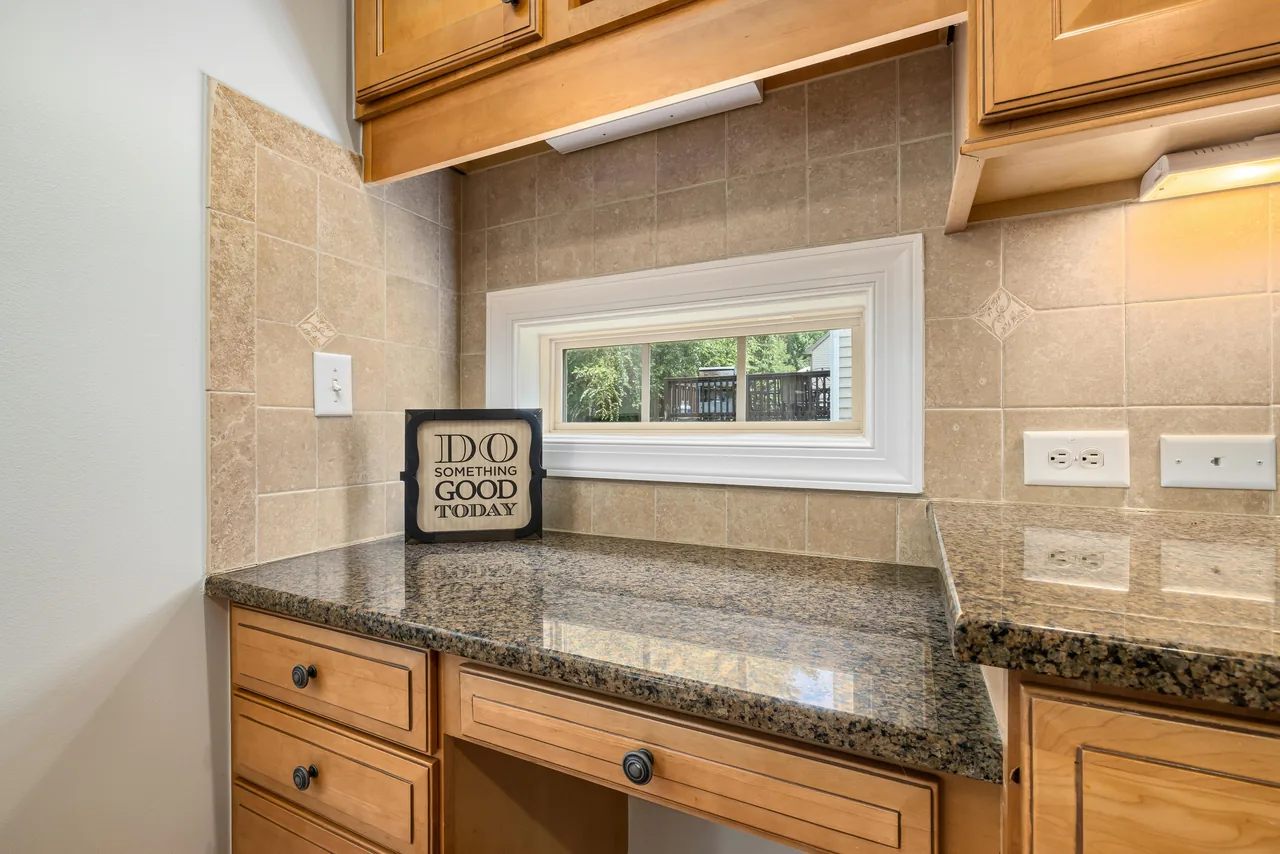
Backsplash tile installation in Florida means setting a protective tiled wall surface behind a kitchen counter, range, or bathroom vanity — a barrier that takes the splash, grease, and steam those zones generate while year-round humidity sits above 70%. A backsplash is decorative, but in Florida its real job is to keep water and moisture off the drywall and out of the wall cavity, where mildew otherwise grows unseen. The detail that decides whether a backsplash stays clean is the spec, not the price: sealed or epoxy grout that resists mildew, the right moisture-tolerant substrate, and a properly caulked tile-to-counter joint.
Watch
See Backsplash Tile Installation Done Right in Florida
Backsplash Tile Installation in Paxton: What Matters Locally
What makes backsplash-tile-installation in Paxton different starts with the environment your floors live in:
For waterfront and near-coast Paxton homes, we prioritize dimensional stability and moisture resistance.
As a coastal Walton County community, Paxton sees salt air and high humidity all year, so moisture control and material selection lead every backsplash-tile-installation decision.
The best material for backsplash-tile-installation in Paxton depends on your subfloor and how the space is used:
What Is a Backsplash, and Why Does It Matter More in Florida?
A backsplash is a tiled wall section that shields the surface behind a wet or messy zone — most often the kitchen counter and range, and the bathroom vanity. It earns its keep in Florida by stopping two things from reaching the drywall: direct splash and the ambient steam and humidity that never fully clear a closed room. Unlike a floor, a backsplash takes no foot traffic, so its specs are about moisture and cleanability, not abrasion or slip.
- Ceramic or porcelain subway tile — the classic, low-absorption backsplash that wipes clean of grease and splash
- Glass and mosaic accents — non-porous and easy to clean, popular over the range and as a vanity backsplash
- Natural stone — marble and travertine for a high-end look, sealed because stone is porous and stains in a kitchen
- Sealed or epoxy grout — the moisture-control spec; epoxy grout does not absorb water or grease, so humid Florida joints stay mildew-free
- Moisture-tolerant substrate — a sound, dry wall surface (and cement board in wet splash zones) so the tile bonds and the wall stays protected
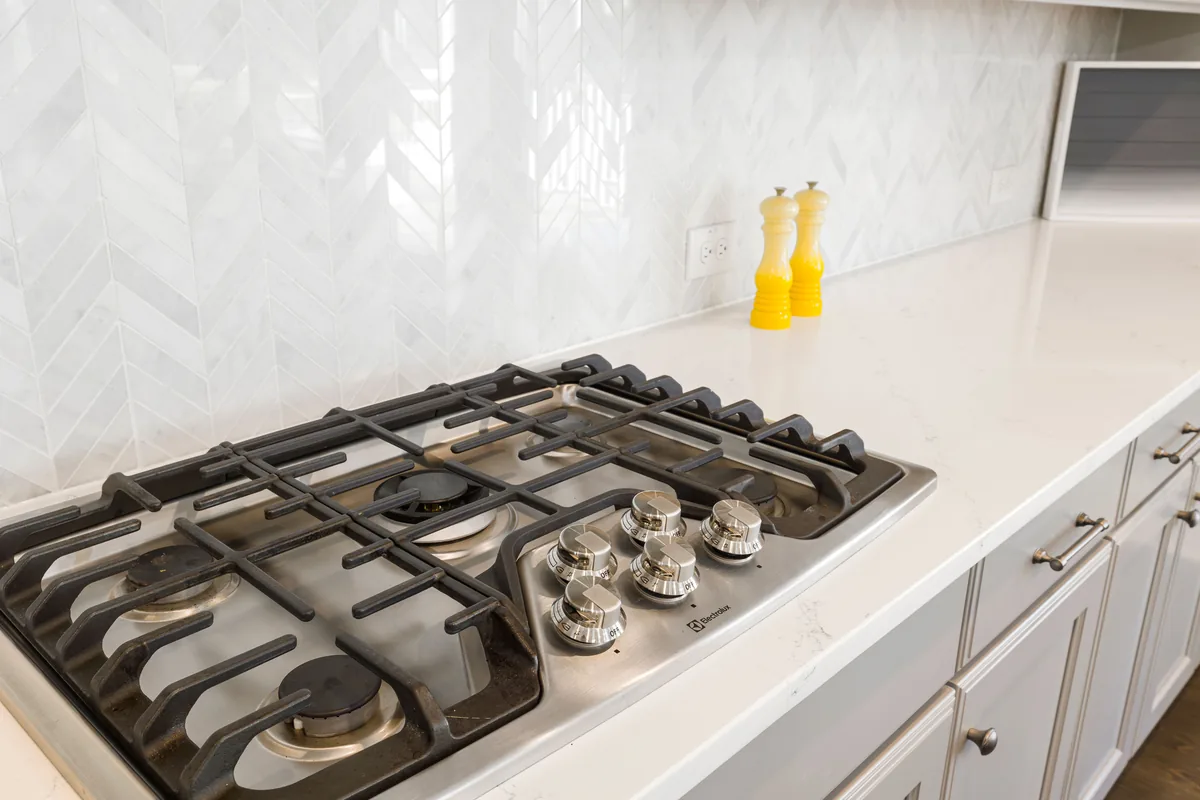
Subway, Mosaic, or Stone for Your Backsplash?
Free in-home visit, substrate check, and a tile-and-grout recommendation matched to your kitchen or bath — written estimate, no pressure.
Why Sealed Grout Is the Whole Game on a Florida Backsplash
The tile is rarely the problem — the grout is. Ceramic, porcelain, and glass backsplash tile are low-absorption and wipe clean, but standard cement grout is porous: it absorbs grease, splash, and the moisture that Florida humidity keeps in the air, and it darkens with mildew. On a backsplash that sits inches from a sink or range, the grout is where a Florida install succeeds or fails.
- Epoxy grout resists everything — it does not absorb water or grease, so it gives mildew nothing to feed on and wipes clean behind a busy range
- Sealed cement grout is the alternative — where cement grout is used, we seal it so splash beads off instead of soaking in
- The tile-to-counter joint gets caulk, not grout — that movement joint flexes as the counter and wall shift; rigid grout there cracks and lets water in, so we caulk it with a matching sealant
- Outlet and edge cuts are detailed — clean cuts around outlets, windows, and the cabinet line keep the protective surface continuous, with no raw drywall exposed to splash
Why Florida Backsplash Installs Are Different
Florida humidity turns a decorative detail into a moisture-control job. Indoor relative humidity in a Florida kitchen or bath can sit above 70%, and the steam from cooking and showering never fully clears. That ambient moisture, on top of direct splash, is what feeds mildew in an unsealed backsplash — and it is why the Florida spec leans on non-absorbent grout and sound substrates.
- Grout chosen for moisture and grease resistance, because humid Florida air keeps cement joints damp long after the splash dries
- Cement backer board, not bare drywall, behind heavy-splash zones like the area directly behind a sink or range
- Ventilation matters — without a range hood or bath exhaust fan, humidity stays high and even good grout works harder to stay clean
- Movement joints at the counter and inside corners caulked so seasonal shifts in a slab-on-grade home do not crack the grout line
- FBC-aware detailing, with HVHZ material approval for coastal and South Florida projects where assemblies require it
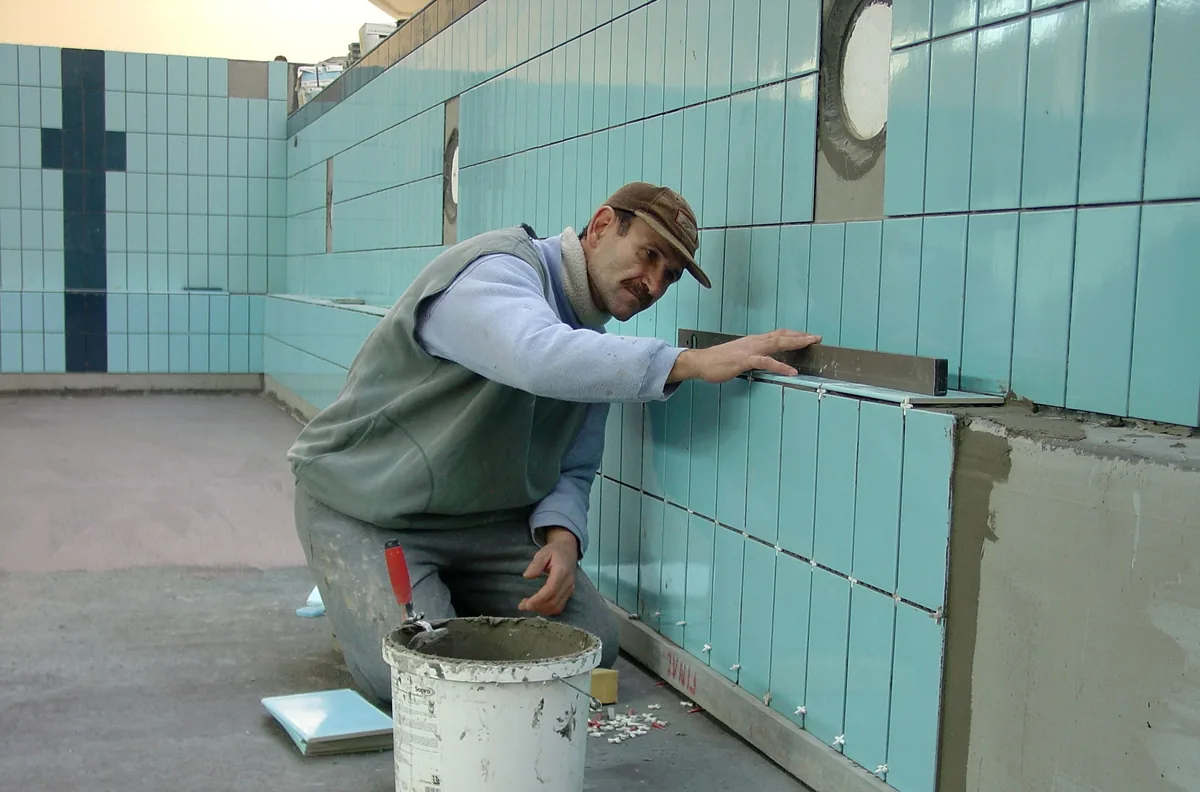
Materials We Install for Backsplashes
Grout type and tile absorption drive backsplash performance more than the pattern. Big-box and handyman installs often use unsealed cement grout and set tile straight to bare drywall behind the sink.
- Daltile / MSI ceramic & porcelain backsplash tile
- Florida Tile subway & field tile
- Laticrete SpectraLOCK epoxy grout
- Mapei / Custom Building Products sealed cement grout
- USG Durock / Schluter Kerdi-Board backer board
- Bostik color-matched sealant for counter joints
- Miracle Sealants stone & grout sealer
- Schluter edge trim & profiles
Will Your Backsplash Wall Need a New Substrate First?
Many Florida backsplashes we replace were set straight to drywall, or sit over a damaged, greasy wall that will not bond a new tile. Both are fixable, and both are cheaper to handle before the new tile goes up than after a joint fails. We assess the wall, install cement backer board in heavy-splash zones, and prep the surface so the tile bonds and the wall behind it stays protected.
We bundle wall prep into the same visit and the same crew — assess, repair, backer board where needed, then set — so your backsplash does not bounce between a drywall contractor and a tile setter. Wall Repair Estimate
Florida Building Code, HVHZ, and Permits for Backsplashes
A backsplash install almost never requires a permit on its own, because it is a decorative wall finish rather than a structural or plumbing change. The picture changes only when the surrounding work involves new plumbing, electrical relocation, or wall framing — that work can fall under the Florida Building Code, and in High-Velocity Hurricane Zone areas (Miami-Dade, Broward, and other coastal South Florida jurisdictions) certain materials carry product-approval requirements.
Our 6-Step Backsplash Tile Process
Every Pro Work backsplash follows the same six-step framework — built for a clean, mildew-resistant, wall-protecting result in Florida humidity.
- Free in-home consultation. We measure the run, check the wall and substrate, and review tile and grout options matched to your kitchen or bath. You see layout and pattern choices. No commitment.
- Written estimate. Line-item breakdown — tile, substrate prep, set labor, grout, sealant, and timeline. Delivered after the visit so you see exactly what you are paying for.
- Wall prep & substrate. We repair the wall, install cement backer board in heavy-splash zones, and prep the surface so the tile bonds and stays put.
- Layout & dry-fit. We set the pattern, balance the cuts at outlets, windows, and the cabinet line, and confirm the layout before any thinset goes on.
- Setting & grouting. Tile set in the correct adhesive, grouted with epoxy or sealed cement grout, and the tile-to-counter joint caulked with a matching sealant. Daily cleanup, single point of contact.
Skip the Mildewed-Grout Backsplash
Fast reply. Sealed or epoxy grout. A Florida backsplash done right, the first time.
How to Identify a Qualified Florida Backsplash Installer
The tile pattern matters less than the grout and the joints. A beautiful backsplash with unsealed grout set on bare drywall still grows mildew and lets water into the wall. Verify all of the following before signing anything:
- Sealed or epoxy grout in the scope
- A qualified Florida installer specifies epoxy or sealed cement grout, not bare cement. If the grout strategy is not in the estimate, the joints will darken with mildew within a season.
- Proper substrate behind splash zones
- Ask what goes behind the heavy-splash area at the sink and range. Cement backer board belongs there, not bare drywall, so a splash does not soak into the wall.
- Caulked tile-to-counter joint
- The joint where tile meets the counter is a movement joint — it needs flexible color-matched caulk, not rigid grout. An installer who grouts that line leaves a crack that lets water behind the counter.
- Clean cuts around outlets and edges
- Outlets, windows, and the cabinet line need clean, tight cuts so no raw drywall is exposed to splash. Sloppy edge work is both an eyesore and a moisture path.
- Written line-item estimate after a site visit
- A reputable installer measures the run on-site, checks the wall, and itemizes tile, substrate, and grout. A guess over the phone with no wall inspection is a red flag.
Florida Backsplash Tile Case Study
Our Installation Standards
Every Pro Work backsplash project meets these installation standards:
- Florida Building Code compliance
- Installed to FBC requirements where surrounding work applies, with HVHZ product-approved materials where coastal South Florida requires them.
- Moisture- and mildew-resistant grouting
- Epoxy or sealed cement grout and a caulked counter joint — the detailing that keeps Florida splash and humidity out of the joints and off the wall behind the tile.
Why Florida Homeowners Choose Pro Work for Backsplashes
Most installers treat a backsplash as pure decoration. We treat it as a moisture barrier that happens to look good. The same installer who lays out your pattern also specifies the grout, backer-boards the splash zones, and caulks the counter joint — so the backsplash you paid for protects the wall and stays clean in Florida humidity.
- Sealed where it counts. Epoxy or sealed cement grout so humid joints do not breed mildew.
- Right substrate behind the splash. Cement backer board where water lands, not bare drywall.
- Free in-home estimate. On-site measurement, wall check, line-item breakdown, no high-pressure sales tactic.
- Clean detailing. Balanced cuts at outlets and edges, and a caulked, flexible counter joint.
Related Tile Work We Coordinate
A backsplash in Florida often pairs with surrounding tile and finish work. We hold it all under one crew so the backsplash ties cleanly into the room:
- Wall Tile Installation — full-height or feature walls that extend the backsplash look across the room.
- Mosaic Tile — detailed mosaic accent strips and inlays within the backsplash field.
- Kitchen Flooring — a coordinated kitchen floor so the backsplash and floor read as one design.
- Tile Regrouting — replacing failed grout on an existing backsplash with a sealed or epoxy joint.
Backsplash Tile Installation Near Paxton
We cover backsplash-tile-installation across Walton County — communities close to Paxton include: