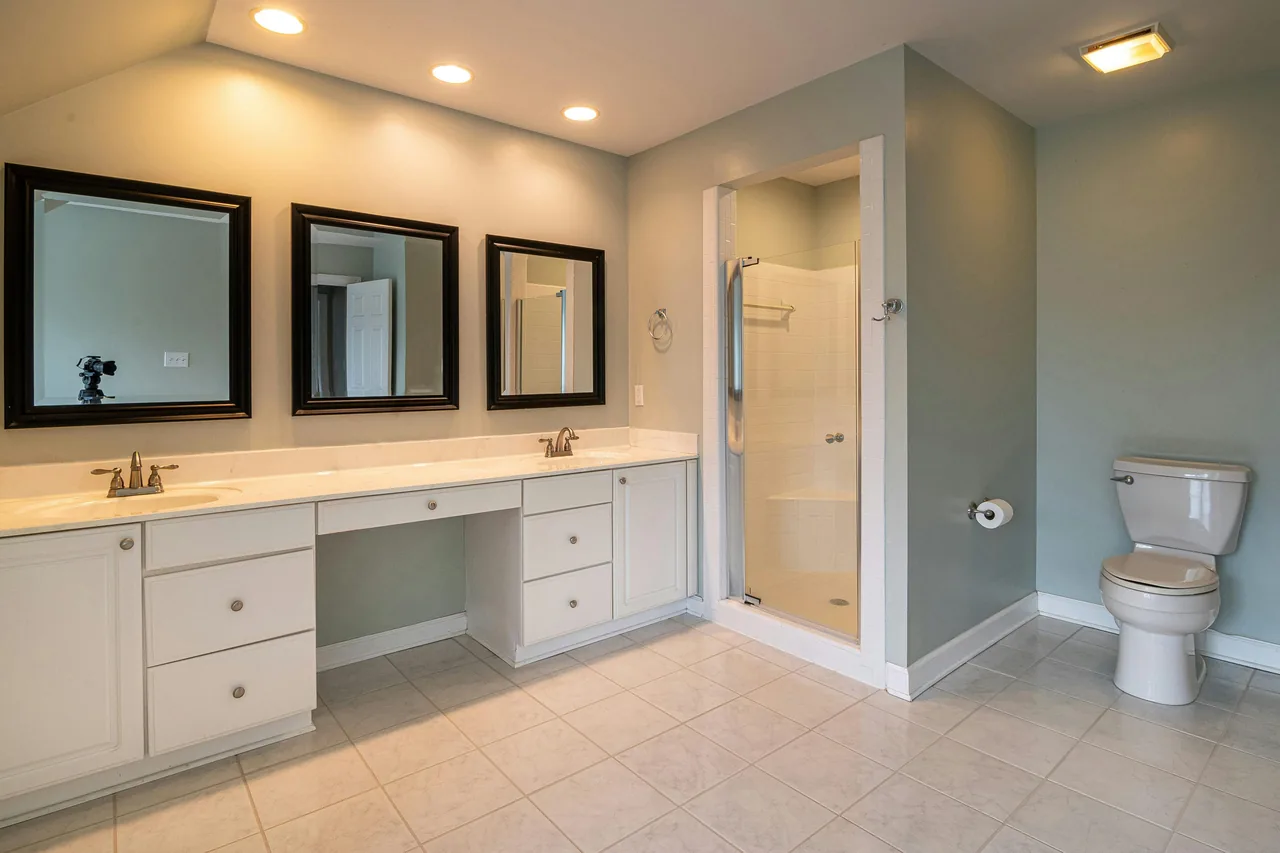
Bathroom flooring installation in Florida means building a waterproof floor assembly — not just laying a finish. A Florida bathroom floor takes shower splash, tub overflow, and condensation that other rooms never see, and it does it in air that holds humidity above 70% most of the year. The right floor here is waterproof on top and waterproofed underneath: porcelain or ceramic tile set over a bonded membrane, or rigid-core LVP with sealed transitions. The numbers that decide whether a bathroom floor lasts are the spec, not the price: a 100% waterproof wear surface, a wet-slip rating (DCOF) of 0.42 or higher, mold-resistant grout, and a substrate sloped to drain.
Watch
See Bathroom Flooring Installation Done Right in Florida
Bathroom Flooring Installation in Saint Leo: What Matters Locally
Local conditions decide a lot about bathroom-flooring-installation in Saint Leo. Here's what we account for:
Near the coast, salt air and high humidity are hard on floors. bathroom-flooring-installation in Saint Leo has to account for both.
As a coastal Pasco County community, Saint Leo sees salt air and high humidity all year, so moisture control and material selection lead every bathroom-flooring-installation decision.
We'll help you weigh the bathroom-flooring-installation materials that make sense for Saint Leo conditions:
What Is a Florida Bathroom Floor, and Why Is It Different?
A bathroom floor in Florida is an engineered wet-area assembly, not a single product. It survives the three things a humid bathroom throws at it — standing water, constant condensation, and tracked-in moisture — only when every layer is built for water. From the slab up, the assembly stacks a moisture-checked substrate, a bonded waterproofing membrane or board, the right thinset, a low-absorption finish, and sealed or epoxy grout.
- Porcelain or ceramic tile — dense, low-absorption finish that is the Florida bathroom default; survives standing water, sand, and humidity
- Rigid-core LVP — 100% waterproof plank for bathrooms where homeowners want a warmer, softer surface than tile
- Bonded waterproofing membrane — the real water barrier under tile; sheet or liquid membrane keeps moisture out of the substrate
- DCOF wet-slip rating — the wet-traction spec; 0.42 or higher is the wet-area benchmark for a bathroom
- Mold-resistant grout — epoxy grout or sealed cement grout so humid joints do not breed the mildew that darkens a Florida bathroom
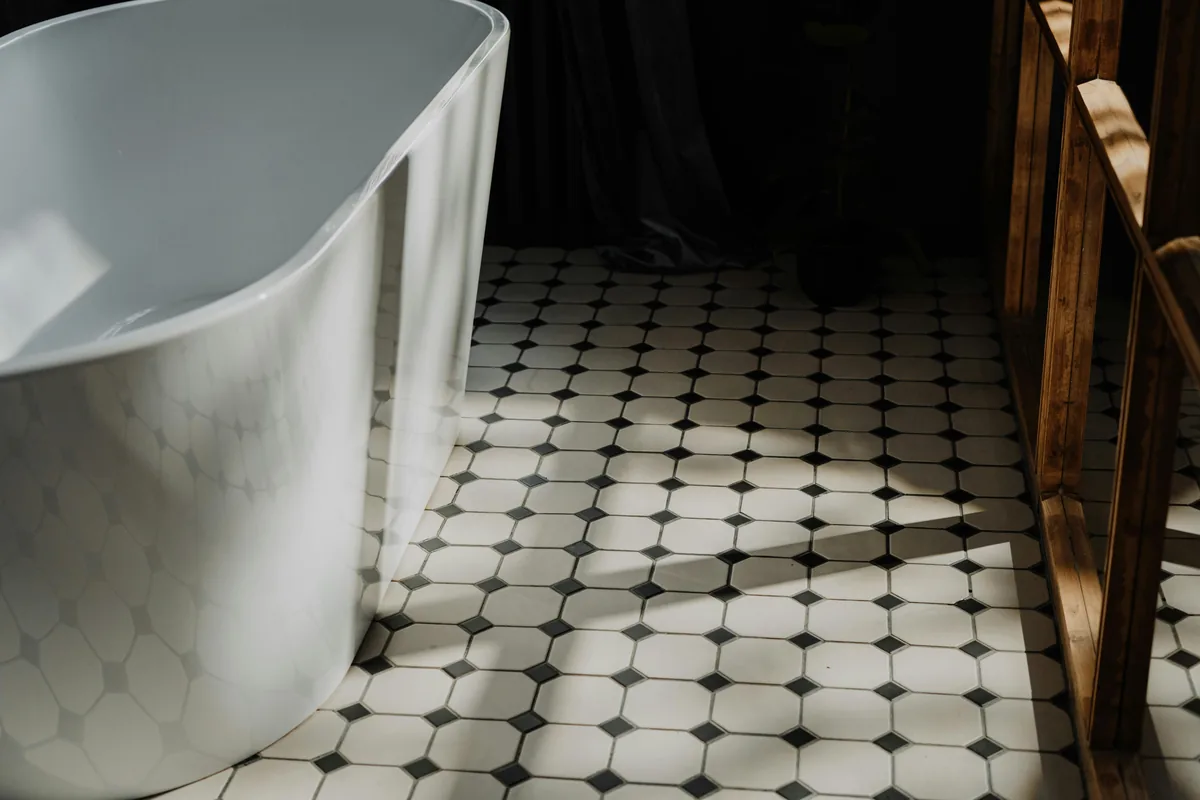
Tile or Waterproof Plank for Your Bathroom?
Free in-home visit, substrate check, and a material recommendation matched to your bathroom's water exposure — written estimate, no pressure.
Waterproof on Top Is Not the Same as Waterproofed Underneath
The finish you see and the barrier you do not see are two different jobs — and a Florida bathroom needs both. Porcelain tile is a low-absorption finish, but grout joints let water through to the substrate. Rigid-core LVP is waterproof plank, but water can still reach the subfloor through the perimeter. In a humid Florida bathroom, the layer that actually protects the structure is the waterproofing under or around the finish.
- The finish resists surface water — porcelain and rigid LVP do not absorb the splash, drips, and mopping a bathroom sees daily
- Grout is not a water barrier — water passes through cement grout joints, so the membrane beneath does the waterproofing, not the grout
- The substrate stays dry — a bonded membrane keeps moisture out of the slab or subfloor where, in Florida humidity, it would otherwise feed mold
- Transitions are detailed — at the tub, shower curb, and doorway we seal the joints so water has no path into the wall cavity or adjacent room
Why Florida Bathroom Floors Are Different
Florida humidity never lets a bathroom dry out completely. Most homes here sit on slab-on-grade — concrete poured on the ground — that releases vapor year-round, and indoor relative humidity in a closed bathroom can sit above 70% long after the shower runs. That combination is what turns a poorly built bathroom floor into a mildew problem, and it is why the Florida assembly differs from a dry northern install.
- Substrate moisture-vapor emission rate (MVER) checked before tile or glue-down, because Florida slabs push vapor that can undermine a finish
- Ventilation matters as much as the floor — without an exhaust fan, bathroom humidity stays high and mildew finds the grout no matter the material
- Slope to drain built into shower thresholds and curbless entries so standing water moves to the drain instead of sitting on the floor
- Slip resistance prioritized — a wet Florida bathroom floor with a low DCOF is a fall hazard, so we specify 0.42 or higher
- FBC-aware detailing, with HVHZ material approval for coastal and South Florida projects where assemblies require it
Materials We Install for Bathroom Floors
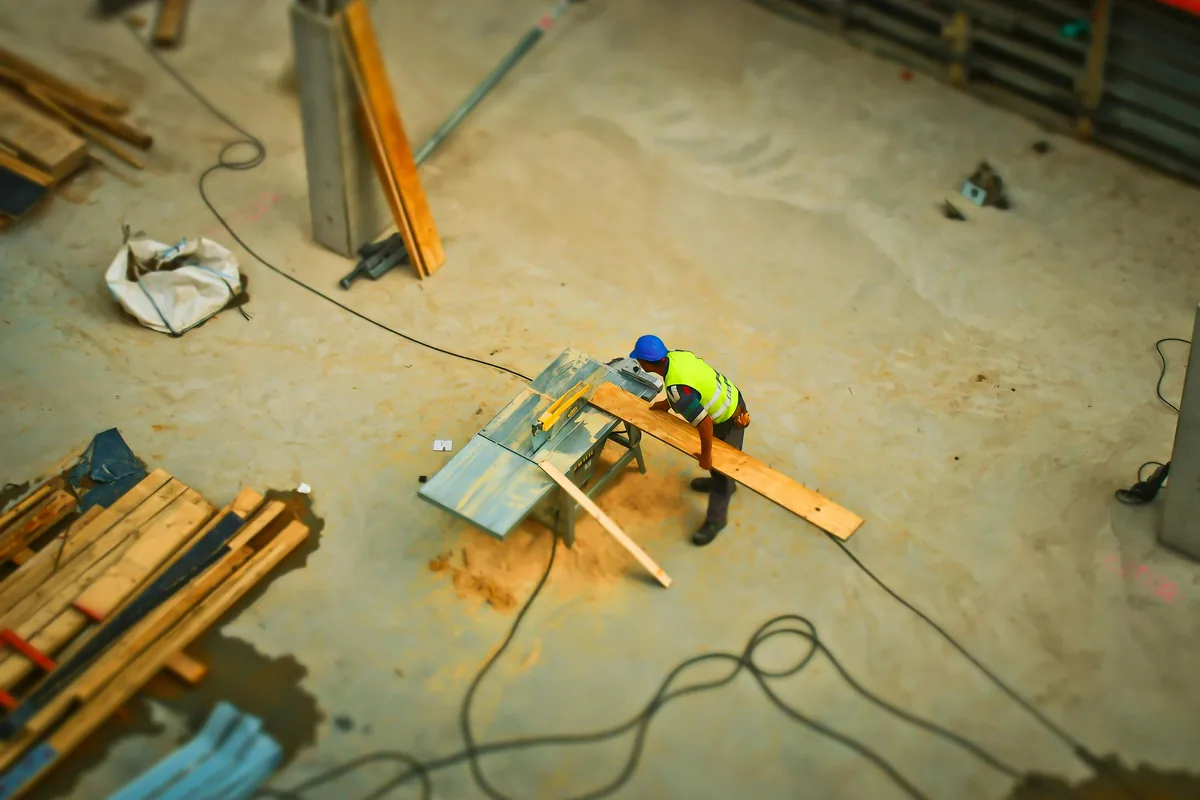
Absorption rating and slip resistance drive bathroom-floor performance more than the look. We install low-absorption porcelain, waterproof rigid-core LVP, and bonded waterproofing systems from manufacturers with stated DCOF Big-box stock often skips the membrane entirely and pairs a glossy, low-traction tile with unsealed grout.
- Daltile / MSI low-absorption porcelain
- Florida Tile slip-rated bathroom tile
- COREtec / Shaw waterproof rigid-core LVP
- Schluter Kerdi bonded waterproofing membrane
- Mapei / Laticrete waterproofing & thinset
- Laticrete SpectraLOCK epoxy grout
- Custom Building Products mold-resistant grout & sealer
- Schluter transitions & movement profiles
Will Your Bathroom Substrate Need Waterproofing or Slope First?
Most Florida bathrooms we re-floor were never waterproofed under the original tile, and many have no slope to the drain. Both are fixable, and both are cheaper to handle before the new floor goes down than after mildew gets into the wall. A bonded membrane waterproofs the substrate, and a sloped mud bed or pre-formed pan directs standing water to the drain.
We bundle substrate prep into the same visit and the same crew — moisture test, demo, slope, waterproof, then set — so your bathroom does not bounce between a demo contractor and an installer. Subfloor Repair Estimate
Florida Building Code, HVHZ, and Permits for Bathroom Floors
A like-for-like bathroom floor over a sound, already-waterproofed substrate usually does not require a permit, because it is a floor covering. The picture changes when the job involves new waterproofing, slope-to-drain, plumbing relocation, or subfloor work — that can fall under the Florida Building Code, and in High-Velocity Hurricane Zone areas (Miami-Dade, Broward, and other coastal South Florida jurisdictions) certain assemblies and materials carry product-approval requirements.
We tell you during the estimate whether your specific project triggers any FBC or HVHZ requirement, and we build the assembly — membrane, slope, and transitions — to the manufacturer's specification.
Our 6-Step Bathroom Flooring Process
Every Pro Work bathroom floor follows the same six-step framework — built for a waterproof, slip-safe, mildew-free result in Florida humidity.
- Free in-home consultation. We measure, check the substrate and existing waterproofing, and assess ventilation. You see tile and waterproof-LVP options matched to the bathroom's water exposure. No commitment.
- Written estimate. Line-item breakdown — material, waterproofing, slope, set labor, grout, and timeline. Delivered after the visit so you see exactly what you are paying for.
- Substrate prep & moisture test. MVER check, demo of old finish, and any subfloor or slope correction so the substrate meets the flatness and moisture spec.
- Waterproofing & slope. Bonded membrane over the substrate and slope to drain at thresholds — the step that keeps water out of the structure and moving toward the drain.
- Setting & grouting. Tile set in the correct thinset with movement joints, or waterproof LVP with sealed transitions; epoxy or sealed grout to resist mildew. Daily cleanup, single point of contact.
Skip the Mold-Behind-the-Tile Gamble
Fast reply. Substrate waterproofed and sloped. A Florida bathroom floor done right, the first time.
How to Identify a Qualified Florida Bathroom Floor Installer
The finish matters less than the assembly under it. A beautiful tile set over an unwaterproofed, unsloped substrate will still grow mold and pool water. Verify all of the following before signing anything:
- Waterproofing included in the scope
- A qualified Florida installer specifies a bonded membrane under the tile, not just grout. If waterproofing is not a line item, the substrate is unprotected and mold is a question of when.
- Slip resistance matched to a wet floor
- Ask for the DCOF rating of the proposed tile. A glossy, low-traction tile on a wet bathroom floor is a fall hazard; 0.42 or higher is the wet-area benchmark.
- Slope to drain where it applies
- Curbless and shower-adjacent floors need slope so water reaches the drain. An installer who tiles a wet floor dead-flat leaves standing water and a mildew line.
- Mold-resistant grout strategy
- Epoxy grout or sealed cement grout is standard in a humid Florida bathroom. Unsealed cement grout stays damp and breeds the mildew that darkens joints within a season.
- Written line-item estimate after a site visit
- A reputable installer measures on-site, checks the substrate and ventilation, and itemizes material, waterproofing, and labor. A phone quote with no substrate inspection is a red flag.
Florida Bathroom Flooring Case Study
Our Installation Standards
Every Pro Work bathroom flooring project meets these installation standards:
- Florida Building Code compliance
- Installed to FBC wet-area and moisture requirements, with HVHZ product-approved materials where coastal South Florida requires them.
- Waterproofed, moisture-tested installation
- Substrate MVER testing and a bonded waterproofing membrane before the finish — the step that keeps the Florida humidity out of the structure and the mildew out of the grout.
Why Florida Homeowners Choose Pro Work for Bathroom Floors
Most flooring crews tile a bathroom like any other room. We treat it as a wet-area assembly. The same installer who recommends your tile also waterproofs the substrate, builds the slope, and seals the grout — so the floor you paid for stays dry and mildew-free under Florida humidity.
- Waterproofed under the finish. A bonded membrane on the substrate, not grout doing a job it cannot do.
- Slip-rated for a wet floor. We specify DCOF 0.42 or higher so a wet Florida bathroom stays safe underfoot.
- Free in-home estimate. On-site measurement, substrate and ventilation check, line-item breakdown, no high-pressure sales tactic.
- One crew, prep to finish. Moisture test, slope, waterproofing, and set under one schedule — no bouncing between contractors.
Related Flooring Work We Coordinate
A bathroom floor in Florida often pairs with waterproofing and finishing work. We hold it all under one crew so the floor goes down waterproof, sloped, and finished:
- Shower Tile Installation — we tie the floor waterproofing into the shower membrane so water has nowhere to migrate.
- Bathroom Tile — coordinated wall and floor tile so the whole wet room is detailed as one waterproof assembly.
- Subfloor Repair — slab and vapor correction after moisture or a hidden leak, done before the new floor.
- Baseboard Installation — PVC or moisture-resistant baseboard to finish the perimeter without wicking water.
Bathroom Flooring Installation Near Saint Leo
We also handle bathroom-flooring-installation in cities near Saint Leo, across Pasco County and Tampa Bay: