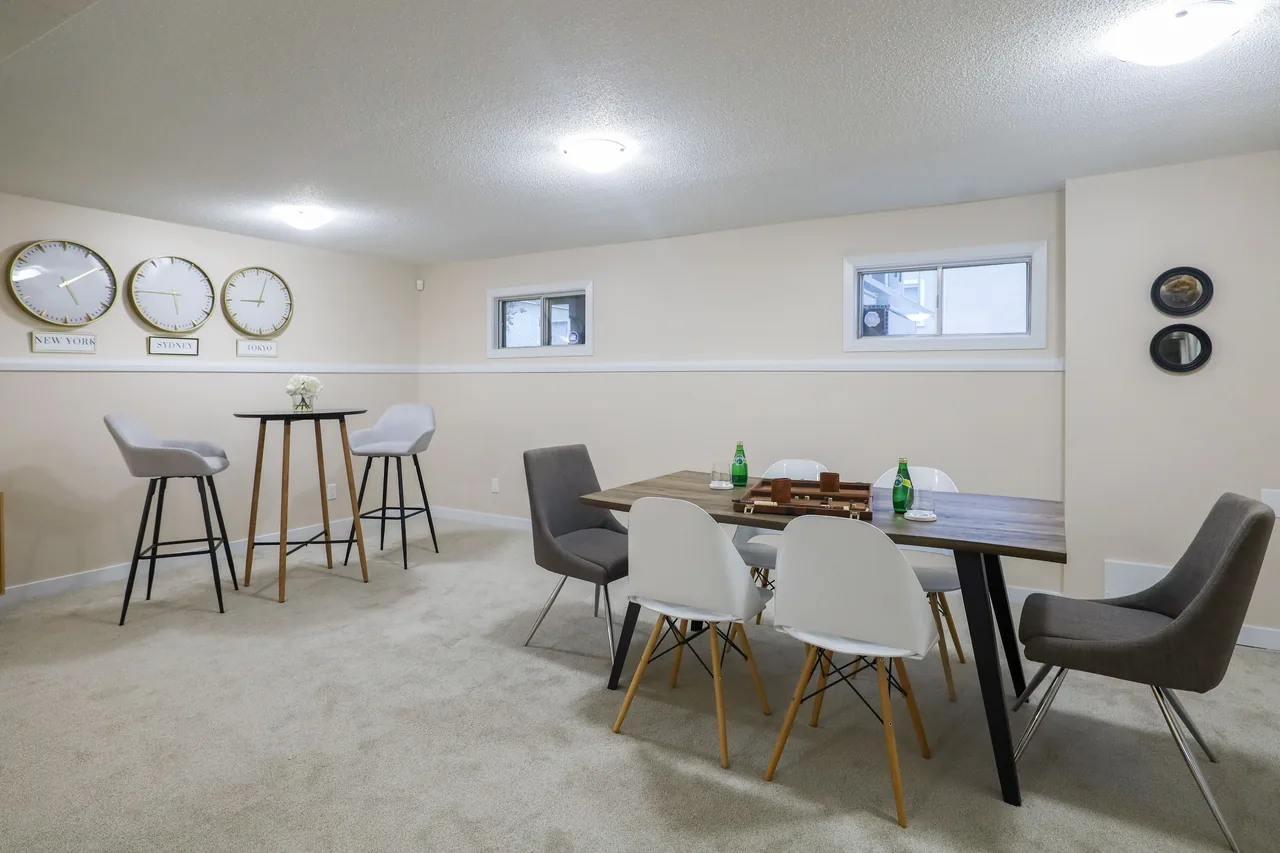
Basement finishing in Florida is a moisture problem before it is a design problem. Basements are uncommon across most of Florida because the water table sits close to the surface, so where one exists — in a higher-elevation pocket of the state or a daylight lower level on a sloped lot — the single decision that determines whether the finished room lasts is moisture and vapor management, not the floor plan. Below-grade walls and slabs release vapor and can take on bulk water in a heavy-rain event, and a basement finished the way a dry northern one would be — wood studs and paper-faced drywall tight to a damp wall — becomes a mold cavity. We test the space first, build a vapor-managed assembly that keeps the finish off the wall and lets moisture escape, and use flood-resistant materials low on the wall so a wet event is a cleanup rather than a teardown. The result is a dry, mold-free, genuinely usable lower level.
Watch
See Basement Finishing Done Right in Florida
Basement Finishing in Taylor County: What Matters Locally
Climate, code, and construction style all factor into basement-finishing in Taylor County. The essentials:
Coastal living in Taylor County is tough on floors. We plan basement-finishing to handle salt, moisture, and heat together.
As a coastal Taylor County community, Taylor County sees salt air and high humidity all year, so moisture control and material selection lead every basement-finishing decision.
The material under your feet matters most in North Central Florida. Options for basement-finishing in Taylor County:
What Basement Finishing Covers, and Why Moisture Comes First in Florida
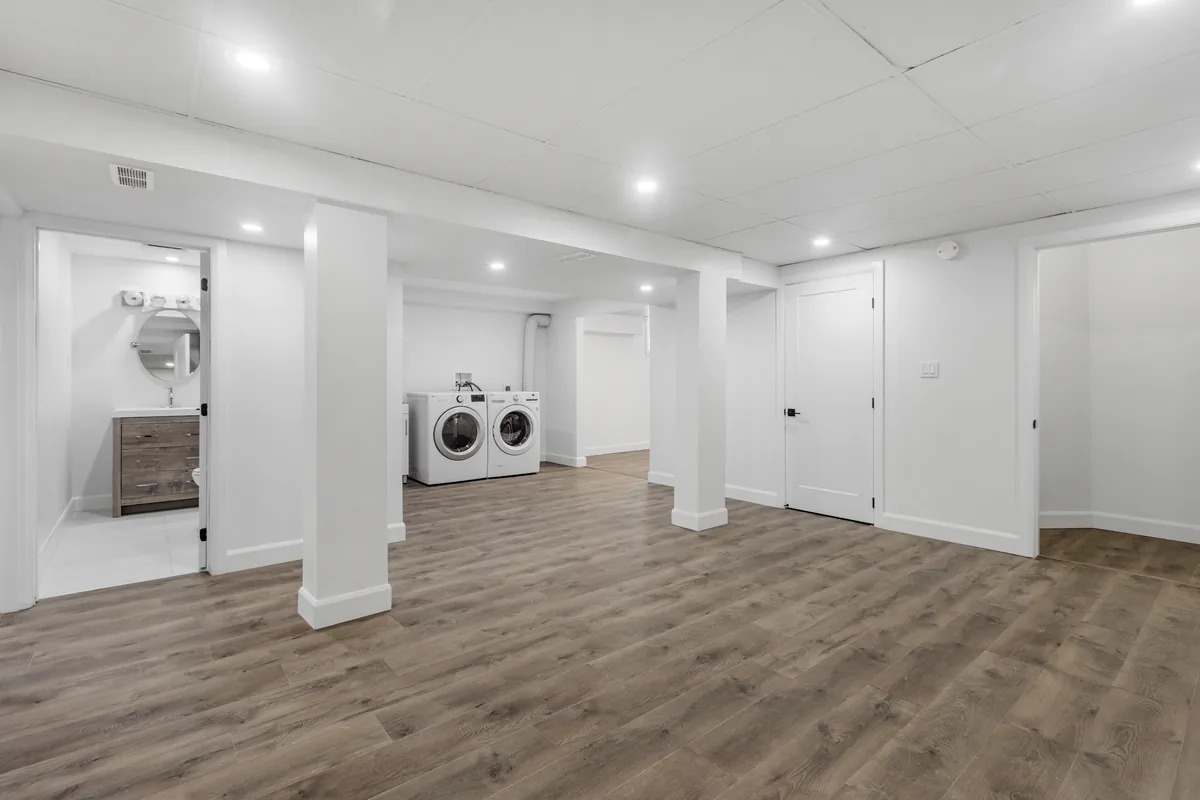
Basement finishing turns a bare below-grade shell into conditioned living space — framing, insulation, electrical, drywall, flooring, and finishes. In Florida, the moisture strategy comes first because the high water table punishes a finish built tight to a damp wall. Here is what a complete basement finishing project involves.
- Moisture assessment — testing the slab and walls for vapor and identifying any bulk-water intrusion before a single stud goes up
- Vapor management — a drainage or dimple layer and the right insulation strategy so the wall can dry and the finish stays off the damp surface
- Framing & insulation — moisture-tolerant framing held off the wall, insulated to suit a below-grade Florida space
- Flood-resistant finishes low on the wall — materials that survive and dry after a wet event near the floor, where water shows up first
- Electrical, drywall & finish — wiring, mold-resistant drywall, flooring, and trim to turn the shell into a finished room
Is Your Below-Grade Space Dry Enough to Finish?
Free in-home visit, a moisture assessment, and a recommendation matched to your space — written estimate, no pressure.
Vapor Management and Flood-Aware Materials: The Florida Basement Decision
The decision that makes or breaks a Florida basement finish is how the assembly handles moisture. A below-grade wall is in contact with damp soil, and Florida's water table and heavy rains mean it can see vapor constantly and bulk water occasionally. Building for that — rather than against it — is the whole game.
- Test before framing — slab and wall moisture checked, and any active water intrusion traced and corrected, before the finish is designed
- Drainage / dimple layer — a gap between the wall and the framing so any water has a path down and out instead of soaking the finish
- Moisture-tolerant framing & insulation — assemblies that tolerate a damp environment and let the wall dry rather than sealing moisture in
- Flood-resistant materials low on the wall — inorganic, washable materials near the floor where water arrives first, so a wet event does not mean gutting the room
- Mold-resistant drywall — paperless or treated board rather than standard paper-faced drywall that feeds mold in a humid below-grade space
Why Florida Basement Finishing Is Different
The high water table and heavy rain shape every Florida basement. A contractor used to dry climates finishes a basement with wood studs and paper-faced drywall straight against the wall. In Florida, where basements are rare precisely because of groundwater, that assembly traps moisture and grows mold. The finish has to be held off the wall, allowed to dry, and built low in materials that survive water.
- Slab and below-grade walls tested for moisture and bulk-water intrusion before any framing begins
- Vapor-managed wall assemblies with a drainage gap so the wall can dry instead of trapping moisture behind drywall
- Flood-resistant, inorganic materials used low on the wall where the high water table and rain events put water first
- Mold-resistant drywall and finishes throughout because a below-grade Florida space stays humid
- Work that touches structure, egress, or electrical detailed to the Florida Building Code, with permitting where the scope requires it
Egress, Headroom, and Code for a Finished Florida Basement
Turning a below-grade space into a habitable room brings code into the picture. A finished basement used as living space — and especially any bedroom — generally needs proper egress, adequate ceiling height, and code-compliant electrical, all of which can fall under the Florida Building Code. Where the lower level is a daylight or walkout on a sloped lot, egress is often easier; a fully sub-grade space can require more planning.
We tell you during the estimate exactly which parts of your project trigger permitting and code review, and we build to those requirements. See our drywall installation service for the wall build-out, and we coordinate any electrical work with licensed trades.
Our 6-Step Basement Finishing Process
Every Pro Work basement finishing project follows the same six-step framework — built for a dry, mold-free, code-aware lower level in a Florida home.
- Free in-home consultation. We assess the below-grade space, check for moisture and water intrusion, and talk through how you want to use the room. No commitment.
- Written estimate. Line-item breakdown — moisture management, framing, insulation, electrical, drywall, flooring, finishing, and timeline. Delivered after the visit.
- Moisture management. Slab and walls tested, any intrusion corrected, and a drainage/vapor layer installed so the wall can dry behind the finish.
- Framing, insulation & rough-in. Moisture-tolerant framing held off the wall, insulation suited to a below-grade space, and electrical rough-in coordinated with licensed trades.
- Drywall, flooring & finish. Mold-resistant drywall, flood-resistant flooring and finishes low on the wall, then trim and paint to a finished room.
A Lower Level That Stays Dry
Fast reply. Experienced crews. Moisture-tested, vapor-managed, flood-aware. Done right, the first time.
How to Identify a Qualified Florida Basement Finisher
A beautiful finish over an untreated, damp wall is a mold problem waiting to surface. Verify all of the following before signing anything:
- Tests for moisture before framing
- A qualified Florida contractor checks the slab and walls for vapor and bulk water before designing the finish. If moisture testing is not in the scope, the finish is a gamble below grade.
- Builds a vapor-managed assembly
- The wall has to be able to dry. A reputable crew holds the framing off the wall with a drainage or dimple layer rather than sealing moisture behind drywall.
- Uses flood-resistant materials low on the wall
- Where Florida's water table and rain put water first, inorganic, washable materials survive a wet event. An installer who runs carpet and paper-faced drywall to the floor is inviting a teardown.
- Specs mold-resistant drywall
- Below-grade Florida spaces stay humid. Paperless or treated board resists the mold that standard drywall feeds. Ask what board is going on the walls.
- Handles egress and code
- A habitable lower level needs egress, headroom, and compliant electrical. A contractor who addresses the Florida Building Code up front is protecting you.
Florida Basement Finishing Case Study
Our Installation Standards
Every Pro Work basement finishing project meets these installation standards:
- Florida Building Code compliance
- Egress, headroom, and electrical detailed to the FBC where the scope makes the space habitable, with permitting where required.
- Moisture-managed assembly
- Slab and wall moisture testing, a drainage/vapor layer, mold-resistant drywall, and flood-resistant materials low on the wall — the strategy that keeps a Florida basement dry.
Why Florida Homeowners Choose Pro Work for Basement Finishing
Most contractors finish a basement the same way everywhere. We treat the Florida water table and the moisture risk as the project. The same crew that frames and finishes the room also tests the space, builds the wall to dry, and uses flood-aware materials — so the lower level stays dry and usable.
- Moisture tested first. We check the slab and walls before framing — the most-skipped step in a below-grade Florida space.
- Built to dry. A drainage layer keeps the finish off the damp wall, not sealed tight against it.
- Free in-home estimate. On-site assessment, moisture check, line-item breakdown, no high-pressure sales tactic.
- Flood-aware materials. Inorganic, washable finishes low on the wall where water shows up first.
- Code handled. Egress, headroom, and electrical addressed to the Florida Building Code where the room is habitable.
Related Remodeling Work We Coordinate
A basement finishing project in Florida pairs with several trades. We hold it under one crew so the lower level comes together cleanly:
- Drywall Installation — mold-resistant board on the framed below-grade walls.
- Interior Painting — mildew-resistant paint to finish the new walls and trim.
- Basement Remodeling — reworking an already-finished lower level rather than finishing a bare shell.
- All Additional Spaces — room conversions and add-on living space under one crew.
Basement Finishing Near Taylor County
We also handle basement-finishing in cities near Taylor County, across Taylor County and North Central Florida: