Watch
Carpet Tiles vs Broadloom Carpet for Florida Homes
The Short Verdict
For most Florida homes over a concrete slab, modular carpet tiles are the safer format and broadloom is the more luxurious one. A carpet tile with an impervious backing can be lifted and replaced one square at a time after a spill or a slow leak, which keeps a small water event from becoming a whole-room mold problem. Broadloom feels seamless and plush, but a wet patch usually means cutting out carpet and pad together.
That is the headline, but the reasoning underneath it is what matters when you are choosing for a specific room. The difference is not the yarn on top — nylon, polyester, and olefin show up in both formats. The difference is what sits under the fiber and how the assembly behaves when water reaches it.
Format, Not Fiber, Is the Real Choice
People shop carpet by color and feel, then assume the fiber decides everything. In Florida the more consequential choice is format: broadloom versus carpet tile. The two are built so differently that they fail — and get repaired — in completely different ways.
What broadloom is
Broadloom is wall-to-wall carpet manufactured on a wide loom, typically 12 feet across, and rolled out, stretched over tack strips, and seated on a separate foam or rubber pad. The pad is absorbent by design — it is what makes broadloom comfortable. That same absorbency is a liability when water arrives.
What carpet tile is
Carpet tile is modular: square or plank pieces, commonly 18 or 24 inches, with the cushion and a stiff backing built into each unit. There is no separate pad and usually no stretching. Tiles are installed in one of three low-disruption ways:
- Loose-lay — tiles rest by weight and friction, lifting out by hand for the fastest swaps.
- Dot-glued — a small adhesive dab per tile holds position while still releasing cleanly.
- Peel-and-stick tabs — connector tabs join tile to tile rather than gluing the whole field down.
Each method shares the same trait that matters in Florida: a single damaged tile lifts out without disturbing its neighbors, which broadloom's stretched, glued field cannot do.
Where each one feels right
Broadloom still wins on plush, seamless luxury in a dry primary bedroom. Carpet tile wins anywhere a leak, a pet, or a slab moisture event is plausible — which, in Florida, is most of the house. Our crew installs both formats; the carpet we install is spec-matched to the room rather than sold by the square foot alone.
The Backing Decides the Moisture Story
The backing is the single most important spec in this comparison, because it governs whether water passes through to the slab and whether the piece stays flat in heat. Carpet tiles carry a rigid, low-absorption backing; broadloom does not.
Carpet tile backings
Modular tiles use one of a few engineered backings, each stiffer and less porous than a broadloom backing:
- PVC backing
- A dense, water-shedding vinyl layer that gives the tile rigidity and lets surface moisture bead rather than soak through. Common on commercial-grade tiles used in humid environments.
- Bitumen backing
- An asphalt-based backing popular on European tiles, prized for excellent dimensional stability and moisture resistance in heavy-traffic, damp-prone spaces.
- Fiberglass-reinforced backing
- A recycled-content backing with a fiberglass scrim that resists curling, shrinking, and edge lift even in demanding conditions — the trait Florida heat and humidity punish most.
Broadloom backing plus pad
Broadloom usually has a woven or synthetic secondary backing over an open weave, then sits on a separate cushion. Both the backing and the pad are organic or open-cell enough to wick and hold water. Once the pad is saturated, it stays damp against the slab for days, and the slab itself keeps feeding moisture upward.
Lift-and-Swap: The Repair Advantage
This is the practical heart of the comparison. With carpet tile, a localized water event becomes a localized repair; with broadloom, the same event becomes a room-scale demolition. The modular format turns a flood into a chore instead of a renovation.
How a tile swap actually goes
- Step1
Pull the wet tiles
Lift the affected squares while the water is still topical. Loose-lay and dot-glued tiles come up by hand or with a putty knife.
- Step2
Dry the slab underneath
Dry and check the exposed slab with a moisture meter. The impervious backing means most of the water stayed on top, so the slab is usually only damp, not saturated.
- Step3
Reset matching squares
Drop in attic-stock tiles from the same dye lot. Keeping a box of spares at install is the trick that makes a swap invisible a year later.
With broadloom, none of those steps applies cleanly: the pad has to come up, the carpet has to be re-stretched or re-seamed, and a perfect dye match across an old field is rarely possible. That is why a leak under broadloom so often becomes a full replacement — and why spot floor repairs are realistic with tiles and not with roll goods.
Mold and the 24-72 Hour Window
The repair advantage matters because of a clock. Under the IICRC S500 standard, mold can begin colonizing a wet organic material within roughly 24 to 72 hours when relative humidity stays high — and a clean Category 1 loss can degrade to a contaminated Category 2 after about 48 hours. Florida’s indoor humidity makes the short end of that window the realistic one.
Why broadloom loses the race
A saturated pad under broadloom traps moisture against the slab and is slow to dry in place. By the time a homeowner notices, the assembly is often already inside the colonization window, which is why restorers so frequently remove broadloom and pad outright rather than risk leaving a microbial reservoir.
The factors stacked against it
Three conditions combine to push broadloom past the window faster than a homeowner expects:
- Absorbent pad — open-cell cushion holds water against the slab and dries slowly in place.
- Hidden wicking — moisture spreads laterally under the carpet well beyond the visible wet spot.
- Slab feedback — slab-on-grade keeps emitting vapor upward, re-wetting the assembly from below.
Stacked together, those factors mean the practical drying time for broadloom usually exceeds the safe window, so the assembly comes out rather than dries in.
Why tiles usually beat it
Because each tile lifts independently and the backing kept most of the water topical, the wet pieces can be out and drying within hours — well inside the S500 window. A musty smell that lingers after a swap is a sign the problem moved below the surface; that points to substrate drying and repair, not just a new tile.
Flood Zones, FEMA, and Dimensional Stability
Two technical realities round out the comparison: how carpet is treated in a flood zone, and how a tile’s flatness is graded. Both favor going in with eyes open rather than assuming any carpet is a flood-zone material.
Carpet is not a flood-resistant material
Under FEMA Technical Bulletin 2, carpet — tile or broadloom — is not classified as a flood-damage-resistant material. The NFIP generally will not pay for finish materials installed below the base flood elevation, even flood-resistant ones. So in a true flood zone, neither format is a protected investment below the BFE; the case for tile there is purely cheaper, faster triage after the water leaves.
Reading dimensional stability
A carpet tile’s tendency to stay flat is measured by the Aachen test under ISO 2551. The tile is exposed to heat near 60°C and submerged in water, then dried and re-measured, and the result is reported as a percent change in dimension. A tile with a tight, low-percentage result is the one that will not curl at the edges in a sun-baked, humid Florida room. Broadloom has no equivalent per-piece rating because it is installed as one stretched field.
Which Wins, by Florida Room
Format choice gets concrete when you map it to specific rooms and risks. Use the condition, not the catalog photo, to pick.
Pick by condition
- If the room ever sees water — laundry-adjacent space, a slab known to read damp, a room near a frequently used bath — choose carpet tile with a PVC or fiberglass-reinforced backing.
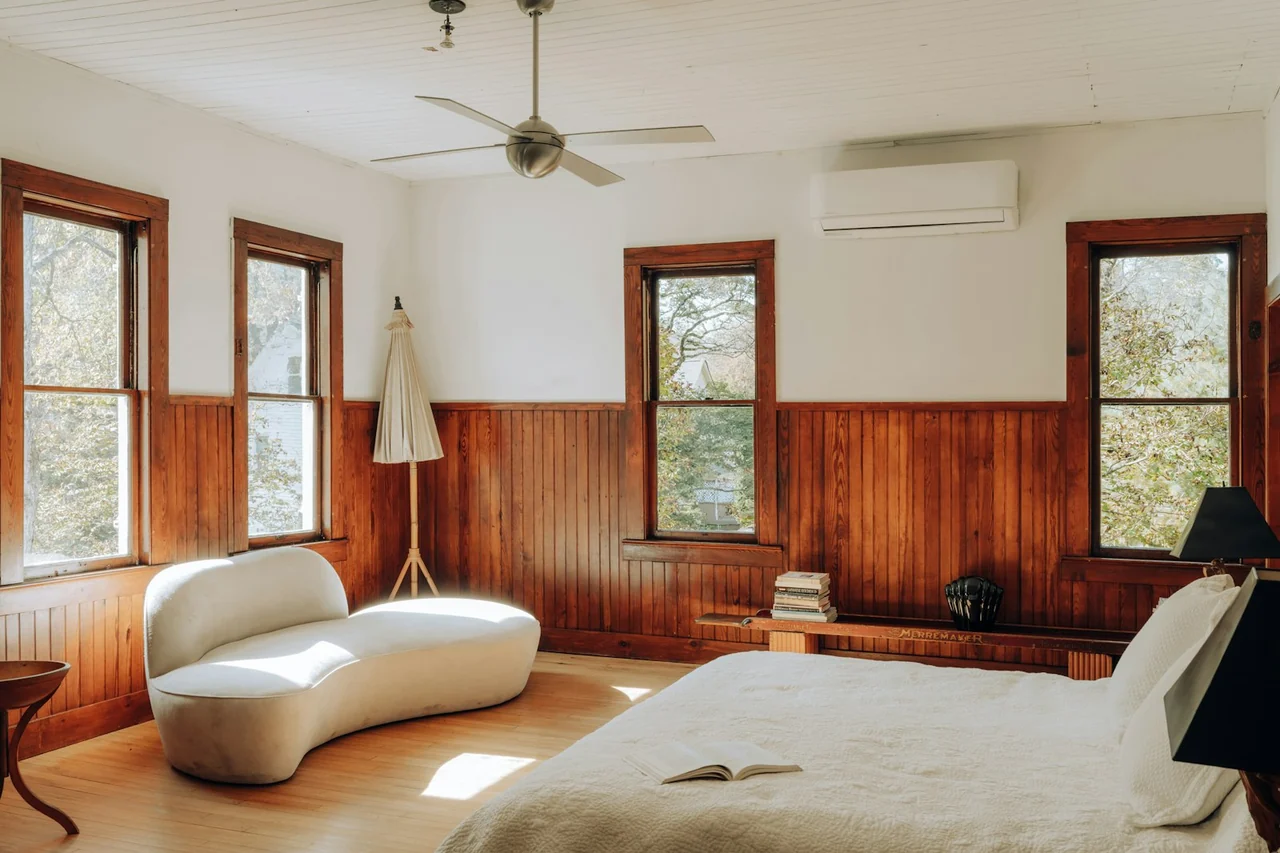
- If the room is a dry, upstairs primary bedroom and plush feel is the priority, broadloom over a quality pad is defensible.
- If pets or kids make spills routine — choose tile so accidents become single-square swaps, not stain maps across a whole field.
- If the room sits in a designated flood zone below the BFE — treat any carpet as expendable and lean to tile for the cheaper post-event cleanup.
| Factor | Carpet tile | Broadloom |
|---|---|---|
| Backing | PVC, bitumen, or fiberglass — low absorption | Woven/synthetic backing + absorbent pad |
| Spill repair | Swap affected squares | Cut out carpet + pad section or room |
| Mold race (IICRC S500) | Lift and dry inside 24-72 h | Pad traps water; often removed wholesale |
| Dimensional stability | Graded by ISO 2551 Aachen test | No per-piece rating |
| Feel underfoot | Firmer, modular | Plusher, seamless |
| Best Florida use | Slab rooms, pets, leak-prone areas | Dry, low-risk bedrooms |
Free In-Home Estimate
Not sure which format your room calls for?
A Pro Work Flooring project director tests the slab on site and sends a written estimate.
For a Florida bedroom over a slab the honest answer is split: if the slab tests dry and the room stays dry, broadloom’s comfort is real; if there is any moisture history, tile’s repairability wins. Either way, specify a CRI Green Label Plus product so the carpet is low-emitting indoors, and confirm the slab is moisture-tested before anything goes down.
Frequently Asked Questions
Are carpet tiles better than broadloom for a Florida home?
Can you really replace just one carpet tile after a spill?
Are carpet tiles good for a basement or flood-prone room in Florida?
Do carpet tiles trap less mold than broadloom?
What are the pros and cons of modular carpet versus wall-to-wall?
What is the best carpet for a Florida bedroom over a slab?
References & Sources
- ANSI/IICRC S500 — Standard for Professional Water Damage Restoration (5th Ed., 2021). https://iicrc.org/s500/
- CRI Green Label Plus — The Carpet and Rug Institute. https://carpet-rug.org/testing/green-label-plus/
- ISO 2551 — Machine-made textile floor coverings: determination of dimensional changes due to varied water and heat conditions. https://www.iso.org/standard/7570.html
- FEMA Technical Bulletin 2 — Flood Damage-Resistant Materials Requirements. https://www.fema.gov/sites/default/files/documents/fema_tb_2_flood_damage-resistant_materials_requirements_01-22-2025.pdf