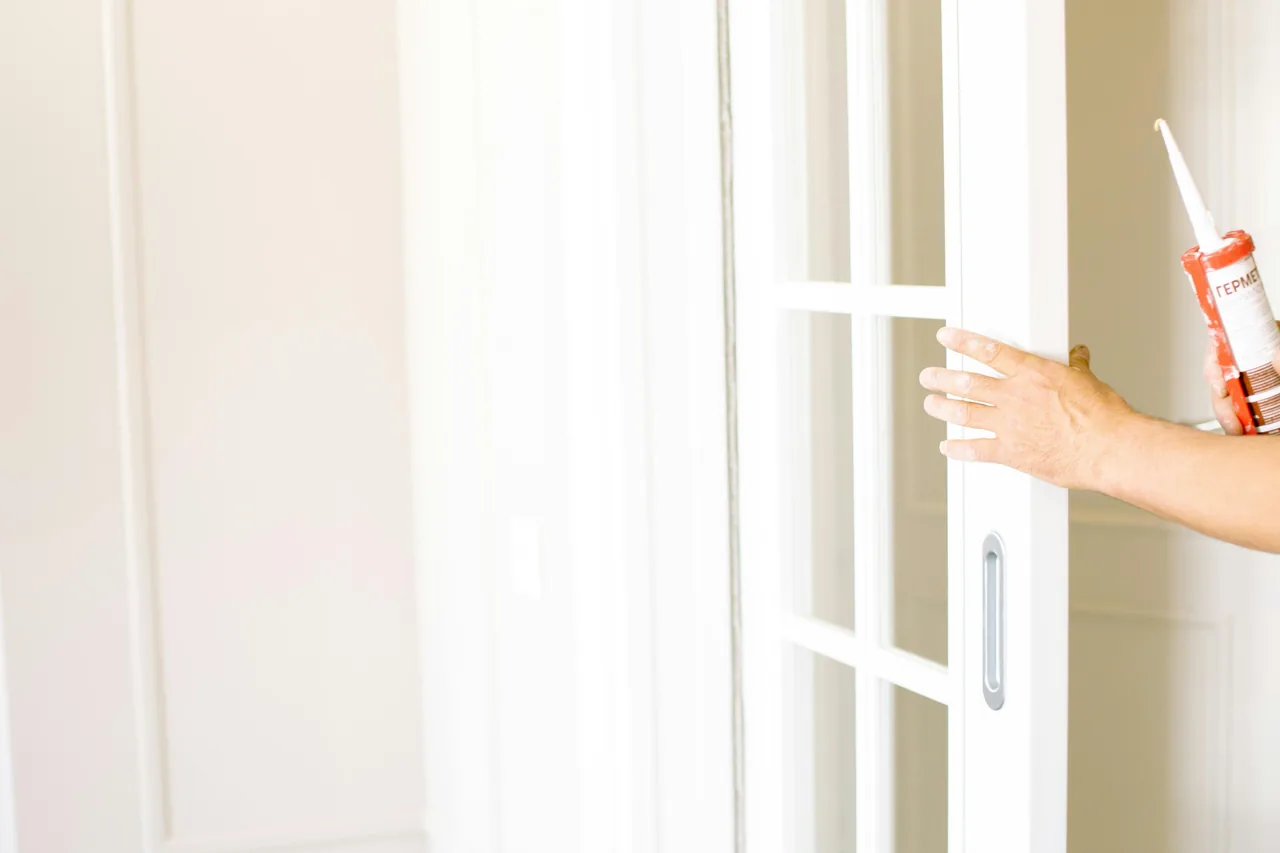
Baseboard installation in Florida is the finish carpentry that runs trim along the base of every wall — covering the joint between the floor and the wall, hiding the expansion gap that floating floors require, and protecting the wall bottom from mops, vacuums, and feet. It looks like a purely cosmetic step, but in Florida the material choice is a moisture decision. Standard MDF and finger-jointed pine baseboard act like a wick: in a bathroom, a laundry room, or a flood-prone ground floor, they pull up water, swell, blister their paint, and grow mold along the bottom edge — which is why we run cellular PVC and moisture-resistant baseboard wherever water is a risk. Baseboard is handled here in our flooring silo because it is installed as the last step of a floor project, covering the gap a new floor leaves at the wall, and we coordinate it with our wall and trim work on the same visit. We match the profile and height to your home, scribe it to uneven Florida walls, and caulk and finish it so the room reads as one continuous, water-tolerant detail.
Watch
See Baseboard Installation Done Right in Florida
Baseboard Installation in Brevard County: What Matters Locally
Local conditions decide a lot about baseboard-installation in Brevard County. Here's what we account for:
Coastal living in Brevard County is tough on floors. We plan baseboard-installation to handle salt, moisture, and heat together.
As a coastal Brevard County community, Brevard County sees salt air and high humidity all year, so moisture control and material selection lead every baseboard-installation decision.
We'll help you weigh the baseboard-installation materials that make sense for Brevard County conditions:
What Baseboard Does, and Why the Material Matters in Florida
Baseboard is more than a decorative band at the floor line — it does real work, which is why the material it is made from decides how long it lasts in a humid, flood-prone state.
- Covers the floor's expansion gap — floating floors like rigid-core LVP and laminate must leave a gap at every wall to expand in Florida heat. Baseboard hides that gap, which is why it is the final step of a floor install.
- Cellular PVC baseboard — fully waterproof, will not swell, rot, or feed mold, and takes paint like wood. The right choice for bathrooms, laundry rooms, and flood-prone ground floors.
- Moisture-resistant MDF and PVC-composite — engineered trims rated to resist humidity better than standard MDF, a step up for living areas in a humid climate.
- Solid wood and primed pine — appropriate for dry, conditioned spaces where the look of real wood is wanted and water exposure is low.
- Profile and height — from simple modern flat stock to traditional colonial and ranch profiles, matched to your home and the scale of the room.
The Florida insight most installers miss is simple: you do not have to trim the whole house in expensive PVC, but the wet rooms and the ground-floor perimeter should never be standard MDF. We mix materials room by room so you pay for waterproofing exactly where it earns its place.
Installing a New Floor Too?
Free in-home visit, profile match, and a moisture-resistant material plan room by room — written estimate, no pressure.
Why Florida Baseboard Installs Are Different
Water is the whole story. In a dry climate, baseboard material is a budget choice. In Florida — with high humidity, frequent baths and laundries on slab, and ground floors that flood — the bottom of the trim is exactly where water collects, and the wrong material fails there first. The Florida install is about choosing water-tolerant material where it matters and detailing it so water has nowhere to wick.
- Wet rooms get PVC — bathrooms, laundry rooms, and mudrooms see standing water and constant humidity at floor level, so cellular PVC baseboard is the standard there, not an upgrade.
- Flood-prone ground floors get PVC — on a ground-floor perimeter that can take on water in a hurricane or slab leak, waterproof baseboard means a wet event is a wipe-down, not a rip-out.
- Gap over the floor for drainage — on a floating floor we set the baseboard to cover the expansion gap without sealing it shut, so water that gets under the floor can still find its way out and the slab can dry.
- Caulk top, not bottom, in wet rooms — we detail the caulk lines so the trim sheds water rather than trapping it against the floor, an important distinction in a bathroom.
- Scribed to uneven slab-built walls — older Florida walls and slab floors are rarely perfectly straight or level, so baseboard is scribed and shimmed to sit tight without gaps that collect dust and moisture.
Materials We Install for Baseboard
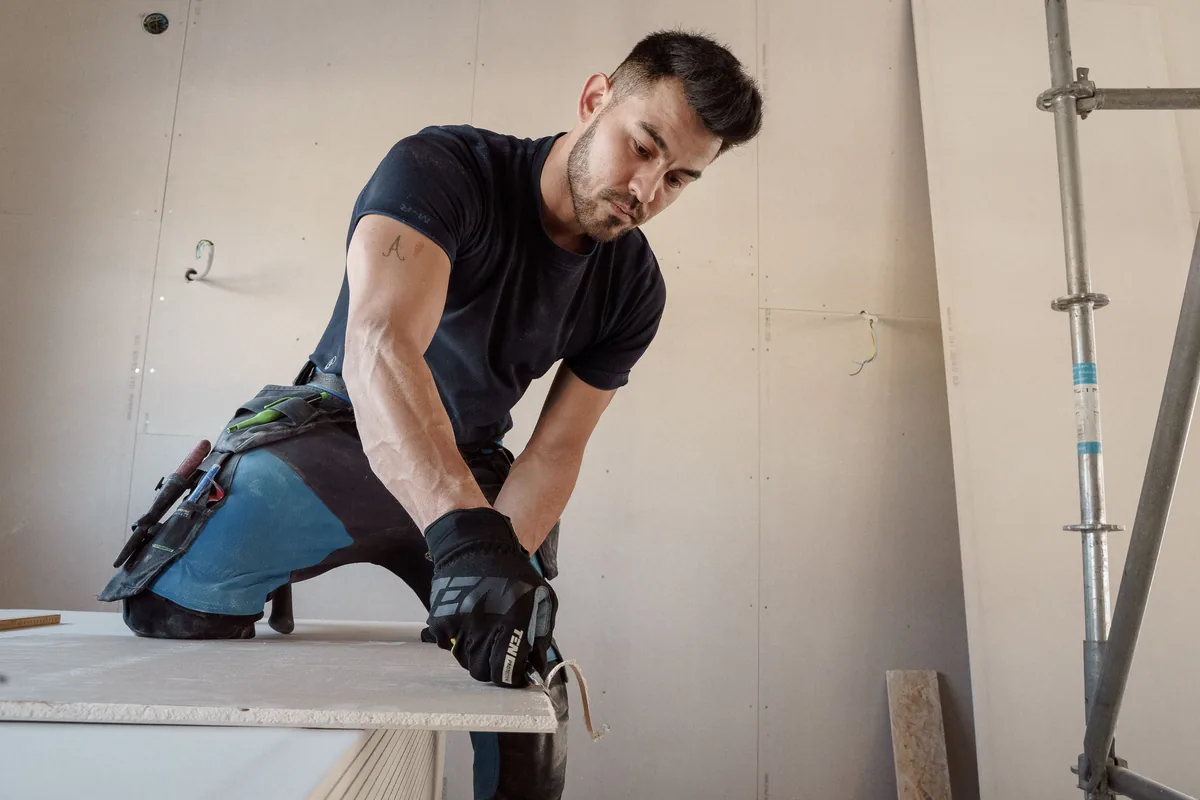
The right baseboard is the one that survives water where you install it. We carry cellular PVC, moisture-resistant composite, and solid-wood trim, matched to the profile of your home and the demands of each room — and we use the adhesives, fasteners, and caulks that hold up in Florida humidity.
- Cellular PVC baseboard waterproof, paintable
- Royal / Versatex / Kleer PVC trim
- Moisture-resistant MDF for living areas
- Primed pine & poplar for dry rooms
- Stair skirt & base shoe to finish transitions
- Paintable siliconized caulk for clean lines
- Corrosion-resistant fasteners for coastal homes
- Sherwin-Williams trim enamel
Will the Walls or Old Baseboard Need Prep First?
Good baseboard starts with a clean, sound base. We pull existing trim, inspect the wall bottom and the floor edge for moisture or mold — common in Florida baths and after flooding — and address any damage before new baseboard goes on. Uneven walls and floors are scribed and shimmed rather than gapped, and nail holes and seams are filled for a paint-ready finish.
If we find water damage behind old baseboard, we coordinate the wall and floor repair before installing new trim, so the new baseboard sits on a dry, sound substrate. Drywall Repair Estimate
Florida Building Code Notes for Baseboard
Baseboard installation is finish carpentry, so it does not require a permit on its own. Trim is a non-structural finish, and replacing or adding baseboard does not alter the building's structure or systems, so the Florida Building Code does not require a permit for the trim work itself.
The exception is when baseboard is the visible finish on a larger job — a flood repair, a wall rebuild, or a remodel — where the underlying work can carry permit and inspection requirements, and coastal HVHZ jurisdictions add their own rules. When your baseboard is part of that bigger scope, we handle the permitting for the work that needs it. On its own, baseboard is a clean, permit-free upgrade that finishes a floor and protects the wall.
Our 6-Step Baseboard Installation Process
Every Pro Work baseboard project follows the same six-step framework — built for a clean, water-tolerant finish that ties your floor to your walls.
- Free in-home consultation. We measure the linear footage, assess each room's moisture exposure, and discuss profile, height, and material room by room. You see PVC and wood options. No commitment.
- Written estimate. Line-item breakdown — material by room, removal of old trim, any wall repair, install, caulk, paint, and timeline. Delivered after the visit so you see exactly what you are paying for.
- Removal & inspection. Existing baseboard removed, the wall bottom and floor edge inspected for moisture or mold, and any damage flagged for repair before new trim goes on.
- Material selection. Cellular PVC specified for wet rooms and flood-prone ground floors, moisture-resistant or wood trim for dry living areas — so you waterproof exactly where it counts.
- Installation & scribing. Baseboard cut, coped at inside corners, scribed to uneven walls and floors, and fastened over the floor's expansion gap without sealing it shut. Daily cleanup, single point of contact.
Finish the Floor the Right Way
Fast reply. PVC where water threatens, clean profiles everywhere. Baseboard that finishes your floor and survives Florida.
How to Identify a Qualified Florida Baseboard Installer
Baseboard looks simple, which is exactly why so much of it is installed wrong for Florida. Verify all of the following before signing anything:
- PVC specified for wet rooms
- A qualified Florida installer runs cellular PVC or moisture-resistant baseboard in bathrooms, laundries, and flood-prone ground floors as standard. An installer defaulting to MDF everywhere is setting up swelling and mold at the floor line.
- Expansion gap covered, not sealed
- On a floating floor the baseboard must cover the expansion gap while leaving the floor free to move and the slab able to dry. Trim caulked tight to a floating floor can buckle it and trap water.
- Scribed to uneven walls and floors
- Older Florida walls and slabs are rarely straight. A skilled installer scribes and shims the baseboard to sit tight without gaps; a sloppy install leaves dust-and-moisture-collecting gaps along the top and bottom.
- Coped inside corners
- Quality finish carpentry copes inside corners rather than mitering them, so joints stay tight as the trim and house move. Mitered inside corners open up over time, especially with humidity.
- Written line-item estimate after a site visit
- A reputable installer measures on-site, assesses moisture room by room, and itemizes material, removal, repair, install, and finish. A phone quote with no walkthrough is a red flag.
Florida Baseboard Installation Case Study
Our Installation Standards
Every Pro Work baseboard installation project meets these installation standards:
- Florida Building Code awareness
- Baseboard is permit-free finish carpentry on its own; when it is the finish on a flood repair or remodel, we handle the permitting for the underlying work to FBC requirements, with HVHZ rules met where coastal South Florida applies.
- Moisture-resistant material
- Cellular PVC and moisture-resistant trim specified for wet rooms and flood-prone ground floors — the step that prevents the swelling, blistering, and mold that destroy standard baseboard in Florida.
Why Florida Homeowners Choose Pro Work for Baseboard Installation
Most crews treat baseboard as an afterthought and trim the whole house in whatever is cheapest. In Florida that is how bathrooms end up with swollen, moldy trim a year later. We spec the material to the room and install the baseboard as the proper final step of your floor — clean, scribed, and water-tolerant.
- Moisture-resistant where it counts. PVC in baths, laundries, and flood-prone ground floors; the right trim everywhere else.
- Finishes your floor correctly. Covers the expansion gap without sealing a floating floor shut, so the slab can still dry.
- Free in-home estimate. On-site measurement, room-by-room moisture assessment, line-item breakdown, no high-pressure sales tactic.
- Real finish carpentry. Coped corners, scribed runs, filled seams, and detailed caulk lines for a paint-ready result.
- One crew, floor and trim. Baseboard installed with your new floor and coordinated with wall work under one schedule — no bouncing between contractors.
Related Work We Coordinate
Baseboard is the finishing touch on a floor and a wall, so it travels with both. We hold the related work under one crew so the room finishes clean and water-tolerant:
- Luxury Vinyl Plank — baseboard covers the expansion gap a floating LVP floor leaves at every wall.
- Tile Flooring — trim or base shoe finishes the perimeter of a new tile floor in baths and kitchens.
- Stair Installation — skirt board and base that finish the staircase against the wall.
- Drywall Repair — fixing the wall bottom behind water-damaged baseboard before new trim goes on.
Baseboard Installation Near Brevard County
Pro Work Flooring serves baseboard-installation in Brevard County and nearby communities, including: