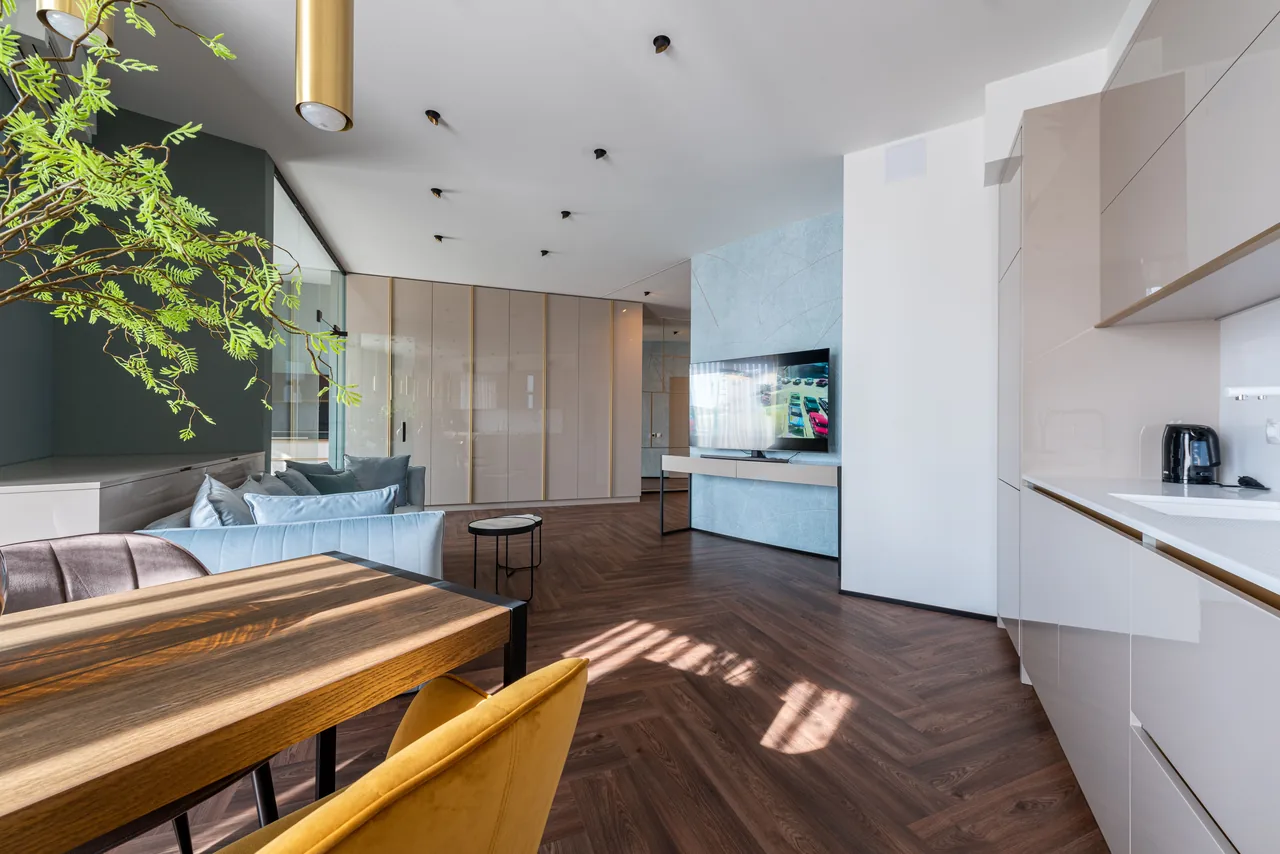
Laminate flooring installation in Florida is about two specs most installers skip past: the AC rating and the core. Laminate is a high-density fiberboard (HDF) core topped with a photographic wood-look layer and a clear melamine wear surface, then floated over an underlayment. It is the budget-smart way to get a convincing wood look — but in a Florida home, where indoor relative humidity swings wide and most subfloors are concrete slab-on-grade releasing vapor, the wrong laminate swells, peaks, and buckles. The numbers that decide a laminate job are the spec, not the sticker: the AC wear rating (AC4 to AC5 for Florida traffic), a water-resistant core, sealed seams in wet-prone rooms, and humidity-conscious expansion gaps.
Watch
See Laminate Flooring Installation Done Right in Florida
What Is Laminate Flooring, and How Does It Behave in Florida?
Laminate is a multi-layer floating floor with a printed wood look — durable, budget-friendly, and surprisingly tough underfoot, but built around a wood-fiber core that has to be protected from moisture in a humid climate. A modern laminate plank stacks a wear layer, a decorative print, an HDF core, and a backing balance layer, and it clicks together to float over an underlayment.
- Melamine wear layer — the clear, scratch-resistant top, rated by AC class for abrasion and traffic
- HDF core — high-density fiberboard; standard cores are water-resistant, and water-resistant cores add swell protection for Florida humidity and spills
- Photographic décor layer — a high-resolution wood or stone image, often with embossed texture for realism
- Click-lock floating install — planks lock edge-to-edge and float over underlayment; no glue, no nails
- Underlayment — a foam or cork pad, with a vapor barrier over slab, for sound and moisture control
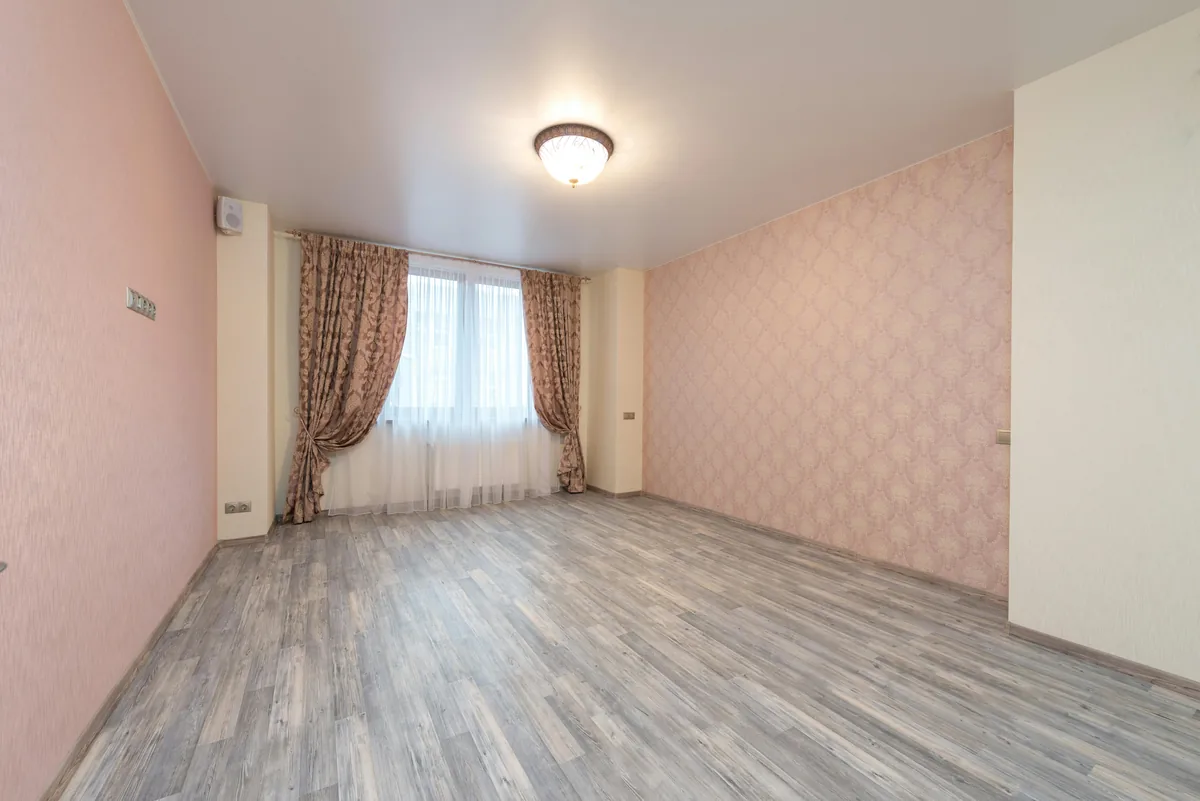
Which AC Rating Does Your Home Need?
Free in-home visit, slab moisture check, and an AC-rating and core recommendation matched to your traffic — written estimate, no pressure.
AC Rating: The Spec That Decides How Long Laminate Lasts
The AC rating is the single most important number on a laminate floor — it grades the wear layer’s resistance to abrasion, impact, and traffic on a scale from AC1 to AC5. In a Florida household with sand, pets, and steady traffic, a higher AC class is the difference between a floor that dulls in a year and one that holds its finish for a decade.
- AC3 — moderate residential
- Fine for light-use bedrooms and low-traffic rooms, but under-spec for busy Florida living areas. We rarely recommend it for main floors.
- AC4 — heavy residential / light commercial
- The practical Florida minimum for living rooms, hallways, and family spaces — handles sand, pets, and daily traffic.
- AC5 — heavy commercial
- Built for the toughest residential use, rentals, and light-commercial floors. The safe choice when you want maximum life and don’t want to think about it again.
Water-Resistant Cores: Why They Matter in Humid Florida
Standard laminate is water-resistant, not waterproof — and in Florida that distinction matters. The HDF core can swell if water sits on an unsealed seam, which is why core quality and seam treatment are part of the spec, not an afterthought.
- Water-resistant cores — treated HDF that resists swelling from spills and humidity, rated for a number of hours of surface water exposure
- Sealed locking joints — tighter click systems and edge sealing keep surface water from reaching the core in kitchens and entries
- Vapor-barrier underlayment — over a Florida slab, this keeps rising slab moisture out of the core from below
- Where laminate is the wrong call — for bathrooms, laundry rooms, and flood-prone ground floors, fully waterproof rigid-core LVP or porcelain tile is the safer fit, and we will say so
Why Florida Laminate Installs Are Different
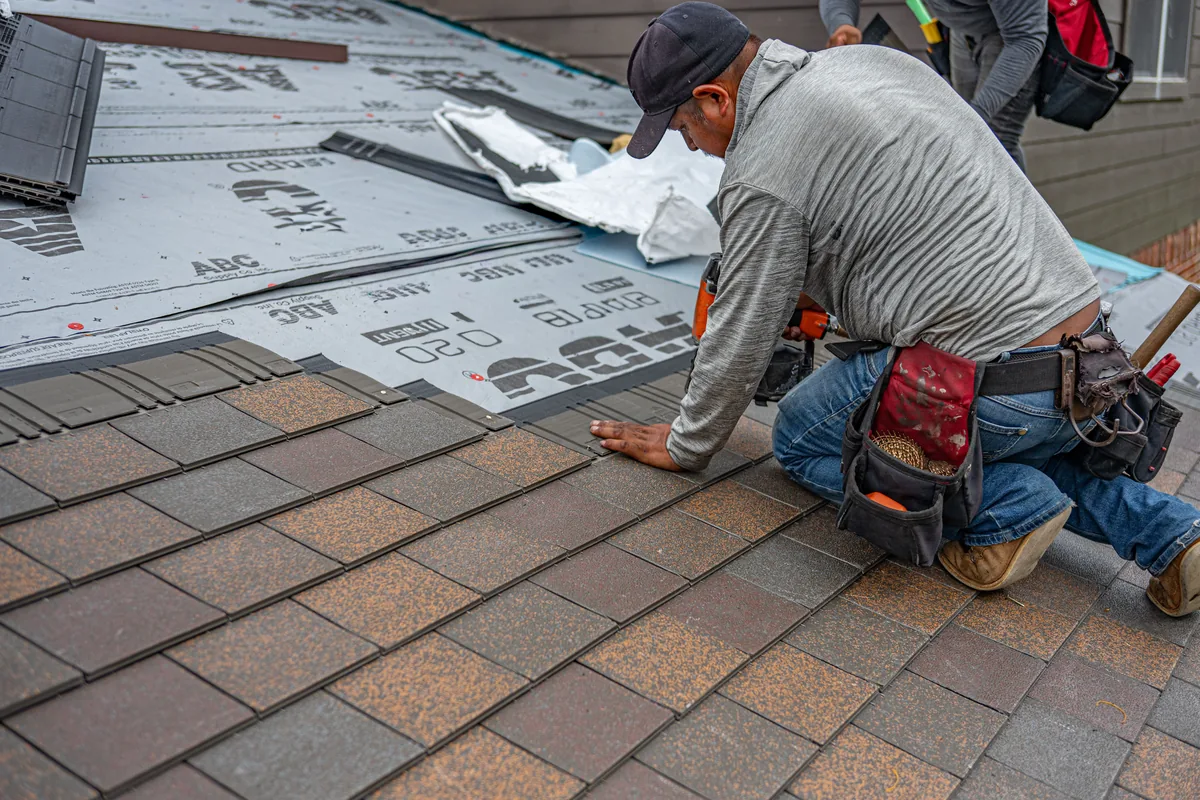
Slab moisture and expansion gaps are the whole game. Laminate is a floating floor, so it lives or dies by how it manages movement and how it’s protected from the slab below. A Florida install that skips the moisture check or shorts the expansion gaps is the reason laminate gets a bad reputation in this climate.
- Slab moisture-vapor emission checked before install — Florida slabs release vapor year-round, and a vapor-barrier underlayment protects the core
- Humidity-conscious expansion gaps at every wall and transition, sized for Florida’s wide temperature and RH swings, then concealed under the baseboard
- Acclimation of the planks to the home’s interior conditions so the floor is at temperature and humidity before it is locked in
- FBC-aware detailing, with HVHZ-considered materials for coastal South Florida projects where applicable
Laminate Brands We Install
AC rating and core quality drive long-term performance more than the printed look. Unbranded big-box stock often carries a low AC rating and a plain core that swells the first time it meets Florida humidity.
- Pergo water-resistant laminate
- Mohawk RevWood & RevWood Plus
- Shaw Repel water-resistant laminate
- Quick-Step AC4–AC5 laminate
- Mannington Restoration Collection
- AquaGuard water-resistant laminate
- MP Global / cork vapor-barrier underlayments
- Schluter transitions & movement profiles
Will Your Slab Need Leveling or a Vapor Barrier First?
Older Florida slabs are rarely flat, and floating laminate is unforgiving of dips and humps — a hollow under the planks leads to flex, clicking, and joint failure.
We bundle slab prep into the same visit and the same crew — moisture check, grind or patch, self-level, then install — so your project does not bounce between a prep contractor and an installer. Floor Leveling Estimate
Florida Building Code, HVHZ, and Permits for Laminate
A like-for-like laminate install over an existing floor usually does not require a permit, because it is a floor covering rather than a structural change. The picture changes when the job touches the subfloor, the slab, or a moisture assembly — that work can fall under the Florida Building Code, and in High-Velocity Hurricane Zone areas (Miami-Dade, Broward, and other coastal South Florida jurisdictions) certain assemblies and materials carry product-approval requirements.
We tell you during the estimate whether your specific project triggers any FBC or HVHZ requirement, and we detail the install — underlayment, expansion gaps, transitions, and perimeter — to the manufacturer’s specification.
Our 6-Step Laminate Flooring Process
- Free in-home consultation. We measure, check the existing floor, and recommend an AC rating and water-resistant core for your traffic and humidity. You see wood-look options matched to your rooms. No commitment.
- Written estimate. Line-item breakdown — laminate, underlayment, install labor, transitions, and timeline. Delivered after the visit so you see exactly what you are paying for.
- Slab moisture check & prep. Moisture-vapor check on the slab, then grinding, patching, or self-leveling so the slab meets the flatness spec. Vapor-barrier underlayment added over concrete.
- Acclimation. Planks rest in the home to reach interior temperature and humidity before installation — the step that prevents gapping and peaking later.
- Installation. Floating click-lock over a vapor-barrier underlayment, with sealed seams in wet-prone rooms and correct expansion gaps at every wall and transition. Daily cleanup, single point of contact.
Skip the Big-Box Install Gamble
Fast reply. Slab moisture-checked. Laminate done right, the first time.
How to Identify a Qualified Florida Laminate Installer
Laminate looks easy to install, which is exactly why so many Florida laminate floors fail — the prep and the gaps are invisible until they aren’t. Verify all of the following before signing anything:
- Checks slab moisture and uses a vapor barrier
- A qualified Florida installer checks the slab and floats laminate over a vapor-barrier underlayment. If a moisture check and barrier are not in the scope, the core is exposed to slab vapor.
- Leaves correct expansion gaps
- Floating laminate must have gaps at every wall and transition, hidden under the baseboard. An installer who butts the floor tight to the walls is setting it up to buckle in Florida heat.
- Recommends the right AC rating honestly
- A trustworthy installer specs AC4 or AC5 for busy Florida rooms and tells you when laminate is the wrong product for a wet area, steering you to LVP or tile instead.
- Levels the slab where needed
- If the installer skips leveling on a wavy slab, the floor flexes, clicks, and the joints fail.
- Written line-item estimate after a site visit
- A reputable installer measures on-site, checks the subfloor, and itemizes laminate, underlayment, and labor. A phone quote with no slab inspection is a red flag.
Florida Laminate Flooring Case Study
Our Installation Standards
Every Pro Work laminate flooring project meets these installation standards:
- Florida Building Code compliance
- Installed to FBC moisture and assembly requirements, with HVHZ product-approved materials where coastal South Florida requires them.
- Moisture-managed installation
- Slab moisture checked and a vapor-barrier underlayment over concrete, with humidity-conscious expansion gaps — the detailing that prevents the swelling and buckling Florida laminate is known for.
Why Florida Homeowners Choose Pro Work for Laminate
Most crews float the cheapest laminate the fastest way. We treat the slab and the expansion gaps as the project. The same installer who recommends your AC rating also checks the slab, levels it, and details the floor for Florida movement — so the budget floor you paid for actually lasts.
- Spec’d to your traffic. We match AC rating and core to pets, kids, and rentals — not a low-AC big-box plank.
- Slab moisture-checked every job. A vapor-barrier underlayment over concrete keeps the core dry from below.
- Expansion gaps done right. The most-skipped step in Florida laminate, and the one that causes buckling.
- Honest product advice. We tell you when a wet room needs waterproof LVP or tile instead of laminate.
Related Flooring Work We Coordinate
A laminate project in Florida often pairs with prep and finishing work. We hold it all under one crew so the floor goes down flat, stable, and finished:
- Floor Leveling — self-leveling underlayment so the slab meets the laminate flatness spec before install.
- Subfloor Repair — slab and vapor correction after moisture or flooding, done before the new floor.
- Baseboard Installation — PVC or moisture-resistant baseboard to finish the perimeter over the expansion gap.
- Stair Installation — matching laminate stair treads and risers tied into the new floor.