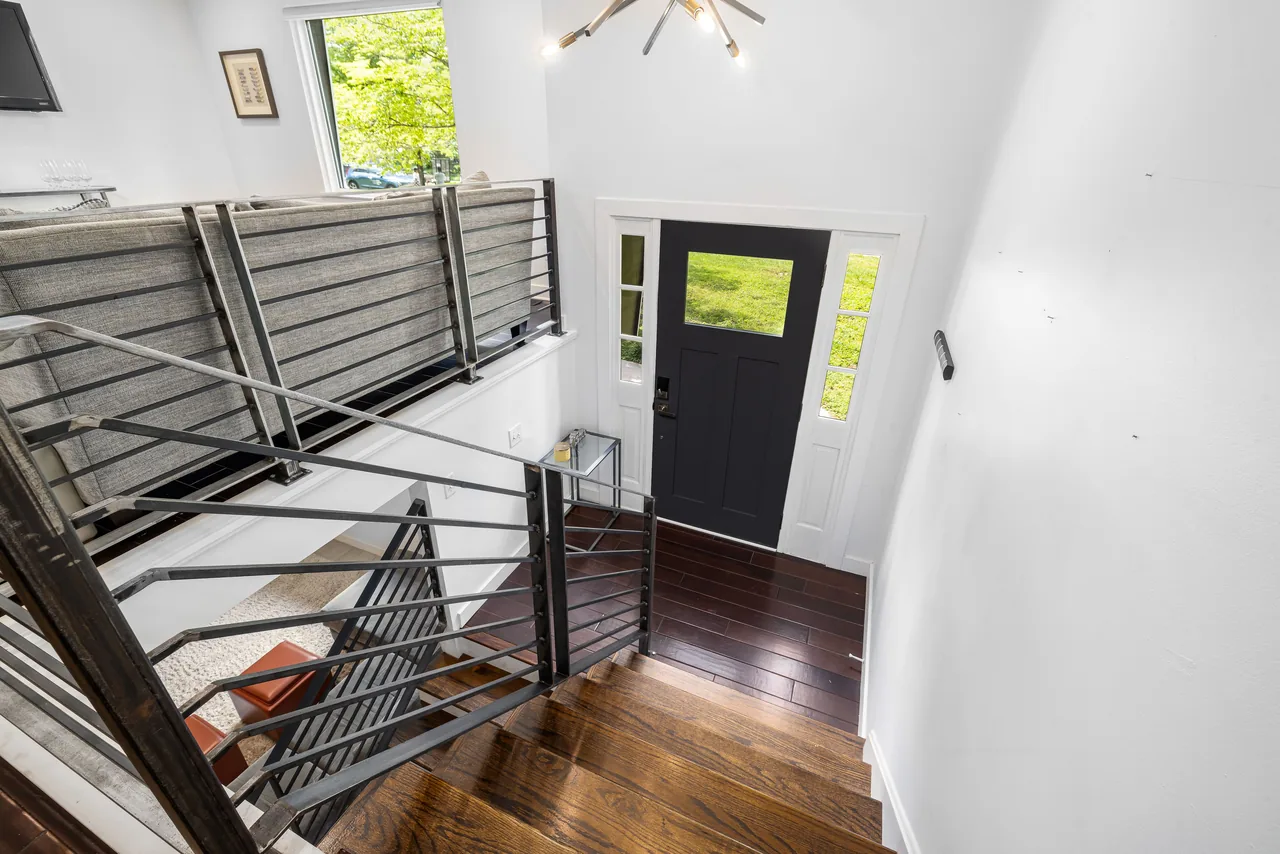
Stair refinishing in Florida is the process of restoring existing wood treads and risers — sanding off the worn finish, repairing dents and gouges, optionally re-staining, and recoating with a fresh protective topcoat — so a sound staircase looks new again and matches a refinished floor. Unlike stair installation, which replaces the treads, refinishing keeps the wood you have, which is why it costs far less and finishes faster when the treads are structurally sound. The single variable that decides whether a Florida refinish succeeds is the cure. High indoor relative humidity slows the chemical curing of every wood finish and, with the wrong product applied on a humid day, produces blushing — a milky haze trapped in the coat — or a surface that stays soft and tacky for days on a staircase you have to use. We choose the finish for the conditions, control the environment during cure, and color-match the stain and sheen to your floor, so the stairs harden properly and disappear into the floor they meet.
Watch
See Stair Refinishing Done Right in Florida
Stair Refinishing in Gretna: What Matters Locally
Getting stair-refinishing right in Gretna means planning for what Northwest Florida / Panhandle puts a home through:
North and central Northwest Florida / Panhandle see wider temperature swings, which affect how stair-refinishing materials move over time.
Inland Gretna, in Gadsden County, contends with slab moisture and sustained humidity more than salt exposure, which shapes subfloor prep and material choice for stair-refinishing.
For Gretna homes, material selection comes down to moisture, traffic, and budget. The contenders:
What Stair Refinishing Covers, and When It Beats Replacement
Refinishing restores the surface of a staircase rather than rebuilding it, and on sound treads it is the smarter spend. The work ranges from a light refresh to a full strip-and-recolor.
- Screen and recoat — a light abrasion of the existing finish and a fresh topcoat, ideal when the wood is sound and only the finish is dull or lightly scratched. The fastest, lowest-disruption option.
- Full sand and refinish — sanding the treads and risers back to bare wood to remove deep wear, then re-staining and building new coats. The choice when the finish is worn through or you want a new look.
- Stain color change — taking treads to bare wood and re-staining to a new color, most often to match a floor that was refinished to a different tone.
- Spot repair before refinish — filling dents, tightening loose treads, and addressing minor gouges so the refinished surface is uniform.
- Sheen matching — matte, satin, semi-gloss, or gloss matched to the adjoining floor so the stairs and floor read as one continuous finish.
When the treads are cracked, water-damaged, or structurally loose, refinishing is the wrong tool and replacement is the answer — we tell you honestly during the estimate which one your staircase needs.
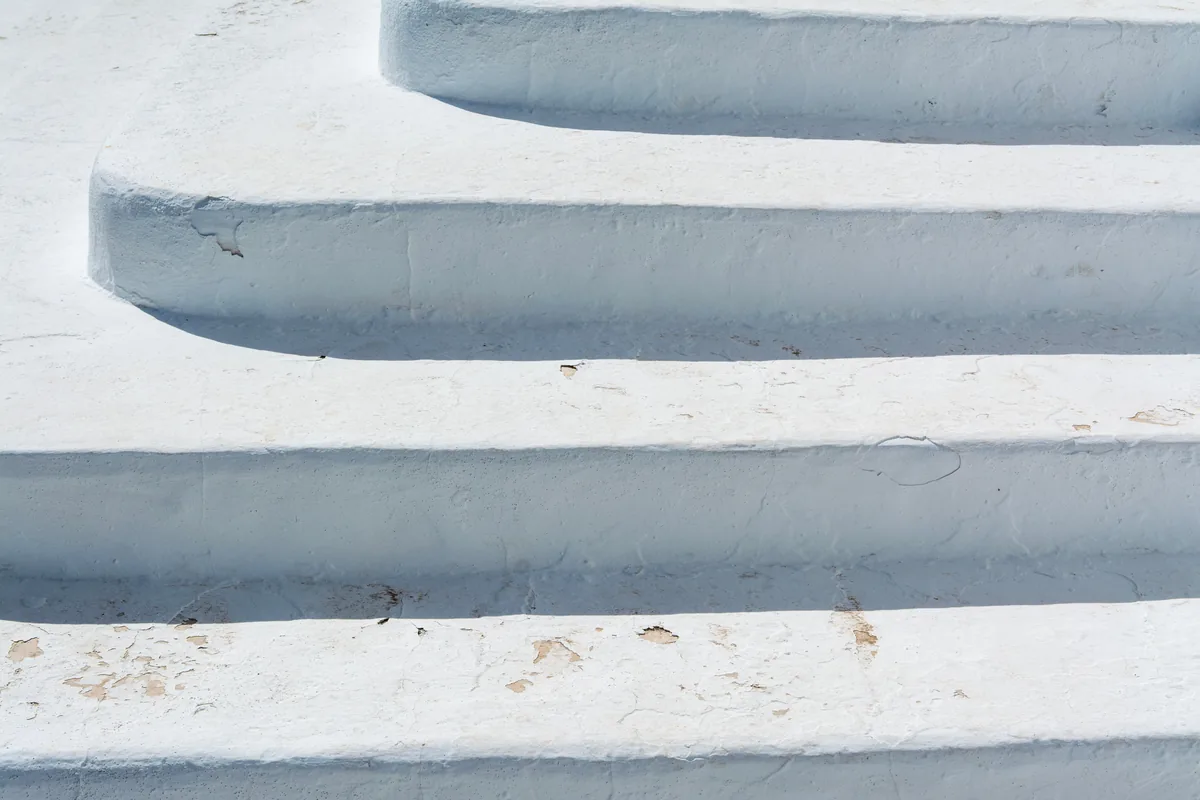
Refinishing Your Floors Too?
Free in-home visit, finish recommendation, and a stain-and-sheen match to your refinished floor — written estimate, no pressure.
Why Florida Stair Refinishing Is Different
In Florida, the finish does not fail on the brush — it fails during the cure. A wood finish hardens through a chemical reaction that humidity directly affects, and Florida's indoor relative humidity routinely sits high enough to slow that reaction, extend recoat windows, and risk a cloudy finish. The product choice and the timing are the craft of a Florida refinish, far more than the sanding.
- Humidity stretches cure times — high relative humidity slows solvent and water evaporation, so coats take longer to dry and the full cure (when the finish reaches its final hardness) extends. Rushing the next coat or foot traffic ruins the job.
- Blushing risk on humid days — applying certain finishes when the air is very humid can trap moisture in the film as a milky blush. We schedule the recoat for suitable conditions and run the home's air conditioning to pull humidity down during application and cure.
- Waterborne vs oil-based — fast-curing waterborne finishes are often the better Florida choice for low odor and a quicker return to use, while oil-based finishes give a warmer tone but cure slower; we match the product to your tone, traffic, and timeline.
- Stairs can't be closed for long — a staircase is a daily-use path you cannot rope off like a guest room, so a finish that returns to light foot traffic quickly matters more on stairs than almost anywhere in the house.
- Match a humidity-affected floor — if the adjoining floor was refinished, its tone and sheen are the target; we color-match the stairs to it so the two surfaces read as one.
Finishes We Use for Stair Refinishing
The finish is the product that has to survive Florida humidity and daily stair traffic, so we use professional systems with documented cure data.
- Bona waterborne stains & topcoats
- DuraSeal penetrating stains
- Loba / Pallmann commercial-grade finishes
- Rubio Monocoat hardwax oil
- Bona Traffic high-durability waterborne
- Minwax tone-matched stains
- Low-VOC sealers for low odor in occupied homes
- Anti-slip additives for tread safety
Are Your Treads Sound Enough to Refinish?
Refinishing only makes sense on structurally sound wood. Before sanding, we check each tread for cracks, deep water damage, loose connections, and squeaks — issues common in older or flood-prone Florida homes — because a finish over a failing tread just delays the inevitable. Minor dents, gouges, and loose boards are repaired as part of the prep.
If a tread is cracked, rotted, or too worn to refinish, we tell you during the estimate and recommend replacing that tread or the staircase instead. Honest scope up front beats a refinish that fails in a year. Stair Installation Estimate
Florida Building Code Notes for Stair Refinishing
Refinishing a staircase is surface work, not structural work, so it generally does not require a permit. Because refinishing keeps the existing treads, risers, and railing in place, it does not change the rise, run, or geometry that the Florida Building Code governs, and there is no structural alteration to inspect.
The picture changes only if refinishing reveals damage that requires replacing treads or repairing the structure — that work can fall under the Florida Building Code, and coastal HVHZ jurisdictions add their own requirements. If your project crosses from refinishing into repair or replacement, we tell you during the estimate and handle it correctly. We also offer slip-resistant finish additives so the refreshed treads stay safe underfoot.
Our 6-Step Stair Refinishing Process
Every Pro Work stair refinishing project follows the same six-step framework — built so the finish cures hard and clear in Florida humidity and matches your floor.
- Free in-home consultation. We inspect every tread for soundness, assess the existing finish, and discuss color and sheen matched to your floor. You see waterborne and oil-based options. No commitment.
- Written estimate. Line-item breakdown — sanding, any tread repair, stain, topcoat, and timeline including cure. Delivered after the visit so you see exactly what you are paying for.
- Repair & prep. Dents and gouges filled, loose treads tightened, squeaks addressed, and the staircase contained for dust control before sanding.
- Sand & color match. Treads and risers sanded to the right level — screen-and-recoat or down to bare wood — and stained to match the adjoining floor's tone.
- Recoat with humidity control. Topcoat applied with the home's air conditioning managing humidity, scheduled for conditions that let the finish cure clear and hard without blushing. Daily cleanup, single point of contact.
Stairs and Floor, One Crew, One Match
Fast reply. Finish chosen and scheduled for Florida humidity. Stairs that match your refinished floor.
How to Identify a Qualified Florida Stair Refinisher
A refinish lives or dies on the cure, and a botched coat means re-sanding the whole staircase. Verify all of the following before signing anything:
- Humidity managed during application and cure
- A qualified Florida refinisher schedules the recoat for suitable conditions and runs the AC to control humidity. An installer who ignores the air on a humid day is risking a blushed, tacky finish.
- Finish matched to your tone and timeline
- Waterborne and oil-based finishes cure at different speeds and look different. The right pro recommends the product based on your color, odor tolerance, and how fast you need the stairs back, not just what is on the truck.
- Treads checked for soundness first
- Refinishing only works on sound wood. A reputable refinisher inspects for cracks, water damage, and loose treads before sanding, and tells you honestly when a tread needs replacement instead.
- Stain and sheen matched to the floor
- The point of refinishing stairs is usually to match a refinished floor. Confirm the installer matches both the stain color and the sheen so the surfaces read as one.
- Written line-item estimate after a site visit
- A reputable refinisher inspects on-site and itemizes sanding, repair, stain, topcoat, and the cure timeline. A phone quote with no inspection is a red flag.
Florida Stair Refinishing Case Study
Our Installation Standards
Every Pro Work stair refinishing project meets these installation standards:
- Florida Building Code awareness
- Refinishing is surface work and generally permit-free; if it reveals damage requiring tread replacement or structural repair, we handle that to FBC requirements, with HVHZ rules met where coastal South Florida applies.
- Humidity-controlled cure
- Finish selected for the conditions and applied with managed indoor humidity — the step that prevents the blushing and slow cure Florida humidity causes.
Why Florida Homeowners Choose Pro Work for Stair Refinishing
Most crews treat stair finish like any finish and ignore the air it has to cure in. In Florida that is exactly the mistake that produces a hazy, tacky staircase. We schedule and control the cure, and we match the stairs to the floor — because a refinish that does not harden or does not match is a refinish done twice.
- Cured for Florida. Finish chosen for the conditions and applied with managed humidity so it hardens clear, not cloudy.
- Matched to your floor. Stain color and sheen tied to your refinished floor so the stairs and floor read as one surface.
- Free in-home estimate. On-site tread inspection, finish recommendation, line-item breakdown, no high-pressure sales tactic.
- Honest scope. If a tread is too damaged to refinish, we tell you and recommend replacement rather than coating over a problem.
- One crew, stairs and floor. Stair refinishing matched to your floor refinishing under one schedule — no bouncing between contractors.
Related Flooring Work We Coordinate
Stair refinishing in Florida almost always rides along with floor refinishing. We hold the related work under one crew so the stairs and floor cure and match together:
- Floor Refinishing — sand and recoat the adjoining wood floor so its tone and sheen become the match target for the stairs.
- Stair Installation — when treads are too damaged to refinish, replacing them instead and matching to the floor.
- Hardwood Flooring — new wood floors finished to the same tone the stairs are matched to.
- Baseboard Installation — refresh or replace the skirt board and trim alongside the refinished stairs.
Stair Refinishing Near Gretna
Need stair-refinishing just outside Gretna? We work across Northwest Florida / Panhandle, including: